The Digital Divide(s)

These days it is difficult to imagine our world without the Internet. Since the invention of the Internet in 1989, Internet usage has increased tenfold. The Internet is now an integral part of everyday life for many individuals. While it may seem that a majority of the world has access to the Internet, this is far from the truth. For example, when conducting research for my capstone project, I discovered that out of Timor-Leste’s 1.2 million people population, a mere 14,030 individuals have access to the Internet from their homes.

While information and communications technologies (ICTs) grow rapidly, large portions of society remain largely disconnected from the Internet, thus perpetuating the digital divide. The digital divide refers to the difference in individuals who have access to information and communications technologies (ICTs) and those who do not. The digital divide describes the patterns of unequal access to information technology based on age, gender, race, ethnicity, geography, and broadband and bandwith access. The various types of digital divides have large implications in the movement toward inclusive sustainable development.

The MacBride Commission report, “Many Voices, One World,” published in 1980, under UNESCO, highlighted the imbalances between developed and developing countries in respect to information capacities, particularly relating to the media. As a result of its’ findings, UNESCO, promoted the establishment of a New World Information and Communication Order (NWICO) to address imbalances of the media and the unequal access to information and communication.

In “Falling through the Net, the National Telecommunications and Information Administration (NTIA), discovered a significant digital divide among the “haves” and the “have nots” in the United States. According to “Falling through the Net”, “Minorities, low-income persons, the less educated, and children of single-parent households, particularly when they reside in rural areas or central cities, are among the groups that lack access to information resources” in the United States. Despite the increasing prevalence of ICT’s in the United States, large disparities still exist.

The MacBride Report “Many Voices, One World,” and “Falling through the Net” emphasize the importance of equal access to ICTs. However, in bridging this gap, emphasis must not solely be placed on access to Internet, but on the capabilities of Internet access. As we spoke about in class, important considerations must include – how much information can flow through the pipe, is there access to broadband Internet, is there access to broadband remotely, and how much bandwith is available. The movement toward bridging the gap must not only focus on providing the infrastructure, but focusing on what can be done with the infrastructure provided.

In order to achieve inclusive sustainable development, it is essential that universal service of information and communications technologies be achieved. The success in achieving universal service of ICTs is dependent on innovation, investment, and multistakeholderism. For example, incentivizing the private sector to get involved in bridging the digital divide is highly important. Encouraging competition and investing resources is also vital to bridging the digital divide.

ICTs and Universalizing Important Information

The 2030 Agenda for Sustainable Development focuses on enabling effective decision-making with extra attention paid specifically vulnerable groups and populations that have historically faced a significant impediment to development. These groups include  women (SDG target 5.5), developing countries, including African countries, least developed countries, land-locked developing countries, small-island developing States and middle-income countries (SDG target 10.6). Additionally Sustainable Development Goal 16.7 aims to “Ensure responsive, inclusive, participatory and representative decision-making at all levels”.  Goal 16 in general focuses on providing information for decision-making and emphasizes that, in sustainable development, everyone is a user and provider of information considered in the broad sense. That includes data, information, experience and knowledge. The need for information arises at all levels, from that of senior decision-maker at the national and international levels to the grass-roots and individual levels.

Maybe the most obvious place in which information freedom should be prioritized is in the specific context of private international law. Private international law can best be accessed by a population that has access to individuals with expertise in private international law. This United Nations summit “WSIS” was created to help integrate the “multi-stakeholder platform aimed at addressing the issues raised by information and communication technologies through a structured and inclusive approach at the national, regional and international levels” The organization expands on the purpose of the forum by describing their ideal society where people are free to create, access, utilize, and share information. This is an admirable ideal for which to work, but in today’s global society, this information they discuss is some form of intellectual property. At some point the organization may be so successful that information can flow as freely in as many directions as possible, but now the generation or examination of this information is governed by patent laws, the use of the information is governed by contract laws, the security of the information is governed by the laws of search and seizure, and the logo for the conference itself is protected by copyright laws. An organization that seeks to ease the legal bindings around information in a multi-stakeholder, international group simply has to consider several dimensions of private international law. This group literally cannot fully succeed without some significant progress made towards SDG 16 and towards the lowering of the information barrier that prevents the producers and users and seekers of this information society from safely engaging in it. People around the world cannot use this information in a legal way without understand what is and is not legal.

Disability-Inclusive Education

Persons with Disabilities are often neglected from equal opportunity initiatives and face discriminatory policies and prejudices in their daily lives (Rieser). This is a particularly prevalent problem within educational institutions, where in many places, children with disabilities are sent to institutions and thus segregated from mainstream schools, or are excluded from getting an education all together. According to the 2011 World Disability Report, approximately 93 million children live with a disability (about 5% of the world’s population) (UNICEF). Because of this there needs to be significant attention placed on inclusive education, specifically in regards to curriculum content, teaching methods, and materials, so that disabled students are able to fully participate in schools and receive quality education (Rieser). Disability-inclusive education is an approach to education that acknowledges the special educational needs of students with disabilities, without excluding them from educational environments and opportunities. Students with disabilities spend most if not all their with with non-special needs students, rather than be separated into other classrooms or sent to “special” schools. This approach recognizes the inherent right to every child to have equal opportunities to learn, and adapting classroom settings to meet their needs along with everyone else’s. The United Nations Educational, Scientific, and Cultural Organization (UNESCO) partnered with Global Initiative for Inclusive Information and Communication Technologies (G3ICT) to create a model policy to facilitate the implementation of the UNCRPD. The purpose of this joint effort was to document and distribute a template to better assist UNESCO Member States in effectively utilizing ICTs for all students, but particularly learners with disabilities. Furthermore, its intention was to promote the establishment of policies that strive to achieve inclusive education across all educational sectors and settings (G3ICT Model Policy for Inclusive ICTs in Education for PWDs). In order to achieve quality education for all learners, as mandated by SDG #4, it is imperative such models are put into place so that inequities are diminished and schools are truly inclusive educational institutions. Individualized services and approaches to learning must be offered for all students, including those with disabilities.

SDGs and HPLF: Acronyms for Progress?

The Sustainable Development Goals, often referred to as the SDGs, are a set of universal goals designed to meet the urgent environmental, political, and economic challenges of our world today. To quote UN Secretary General, Ban Ki-Moon, “The… Sustainable Development Goals (SDGs) are our shared vision of humanity and a social contract between the world’s leaders and the people. They are a to-do list for people and planet, and a blueprint for success.” Composed of 17 goals and 169 targets, the SDGs were designed to wipe out poverty, fight inequality and tackle climate change over the next 15 years. They seek to fill the gaps left by the Millennium Development Goals (MDGs) and address the conditions that have remained, worsened, or arisen since the MDGs were put forth. To clarify, sustainable development is a development buzzword that can be interpreted by many people in many different ways. The best definition by my standards is that as put forth in the 1987 Bruntland Report that says,

“Sustainable development is development that meets the needs of the present without compromising the ability of future generations to meet their own needs. It contains within it two key concepts:

  • the concept of needs, in particular the essential needs of the world’s poor, to which overriding priority should be given; and
  • the idea of limitations imposed by the state of technology and social organization on the environment’s ability to meet present and future needs.”

The High-Level Political Forum (HLPF) is the UN’s attempt at ensuring the inclusion is so wishes, but continually fails, to support. As described by the UN, the HLPF is the “central platform for the follow-up and review of the 2030 Agenda for Sustainable Development and the [SDGs]…”   While this marks a great step towards more participatory decision-making in UN agendas, the HLPF still has several flaws that need to be address if the UN really wants the SDGs and their other work to truly be inclusive. The main challenges, to be brief, have mostly to do with the prevailing bureaucratic nature of UN conferences that benefit those with resources and experience in this arena.

The Sustainable Development Goals will continue to serve as a guiding framework in global development for the next 14 years and the HLPF will continue to meet regularly to assess and discuss the ongoing successes and failures of the SDGs. While it is easy to criticize and point out the flaws of these processes, it is important to still recognize the potential positive change that these transformations in agendas and policy-making could contribute.


Development Theory

Development, as so many other terms in the field of International Studies, is not easily definable. It has many interpretations, argued by extensive academics and practitioners with diverse backgrounds. Traditional development studies were largely based on the concept that development was directly related to development. Acemoglu and Robinson uphold this focus on economics for development in their recent work, Why Nations Fail, along with the concept of strong institutions. For this pair, these two concepts are the fundamental keys to whether a nation will prosper or, as titled, fail. While there are strengths to their arguments, their conviction in the economic model of development did not do much to change the minds of most development scholars and practitioners who have come to largely accept more humanistic approaches to development.

Thus far in my studies and work experience, Amartya Sen seems to be the leading figure in explaining what it means for a nation to be “developed.” Sen challenged the traditional beliefs that development is directly related to economic prosperity and income levels by proposing that, instead, development is much more dependent on freedom. In his own words, “Development consists of the removal of various types of unfreedoms that leave people with little choice and little opportunity of exercising their reasoned agency. The removal of substantial unfreedoms, it is argued here, is constitutive of development” (xii).

This view was innovative in that it essentially supports individuals as actors who contribute to the overall development of a nation and, more generally, the world, as opposed to policy-makers and national leaders. Additionally, Sen’s concept is very inclusionary as it supports freedom for all and recognizes the need for representation from every group in a country, not just the usual elites who lead decision-making. Acemoglu and Robinson do make mention of the importance of inclusion, explaining, “Inclusive economic institutions…are those that allow and encourage participation by the great mass of people in economic activities that make best use of their talents and skills and that enable individuals to make the choices they wish” (74). However, their exploration of inclusion is limited by the emphasis on economic institutions.

With the adoption of international frameworks like the past Millennium Development Goals and the current Sustainable Development Goals, it seems as if development practices are becoming increasingly attuned to the needs of individuals. However, as the MDGs continue to be criticized as a failure, it remains unclear if the SDGs and similar frameworks will do their job in supporting the assurance of freedom that Sen so avidly promotes and that many, including myself, have come to accept as the true nature of development.


Habitat III and the New Urban Agenda

One of the most significant driving forces of recent global development has been Urbanization. More than half the people on earth live in cities and the World Bank projects that this proportion could increase to seventy percent by the year 2050. Urbanization has provided a pathway out of poverty for decades. Cities are often centers of things like trade, government, and public services, all of which are critical to effectively developing a community. As of the beginning of this year, cities accounted for approximately eighty percent of worldwide GDP. To capitalize on this type of economic engine, the international community has included the need to create more inclusive cities in the Sustainable Development Goal 11 which seeks “inclusive, safe, resilient and sustainable” cities. The Goal recognizes that in 2016, approximately one third of people living in cities in the developing world live in what the United Nations call slums. The Habitat III Conference held in Ecuador in October of this year was intended to be a large step towards remedying this issue.

The Habitat III Conference was considered a resounding success by those who hosted it. Their most convincing evidence to this effect is the incredible number and variety of people who attended. Of the thirty thousand people in attendance, there were approximately ten thousand international participants from one hundred and sixty-seven countries. In the span of four days almost the Habitat III organization hosted over one thousand events hosting eight Plenary sessions, six High-level Roundtable sessions, four Assemblies, sixteen Stakeholder’s Roundtables, ten Policy Dialogues, twenty-two Special Sessions, three Urban Talks, an Urban Journalism Academy, and fifty-nine United Nations events. However, the organization cites not the quantity of their functions but the quality of the functions. Press releases from the organization and attendees show excellent progress forward in all three of what Habitat III calls the Transformative Commitments for Sustainable Urban Development. The transformative commitments for sustainable urban development have social, economic, and environmental dimensions which they consider integrated and indivisible. The social dimension focuses on issues like and tenure, the value of public space, and the sustainable leverage of natural and cultural heritage. The economic dimension involves housing policies as well as policies involving access to knowledge, skills, education, and the promotion of investments, innovations and entrepreneurship. The environmental policies address issues like climate change, unsustainable resource consumption, slum upgrading, energy efficiency and the social and ecological function of land.

Efficacy of Global Frameworks

The MDGs expired in 2015 without successfully achieving their very ambitious goal of eradicating poverty. Consequently, this remained the greatest global challenge and requirement for sustainable development. The MDGs failed in part because they only specified a desired outcome and didn’t adequately establish a process for achieving their objectives. The MDGs also didn’t recognize that nation states have individual priorities that often weren’t aligned with or put before the MDGs (Nayyar). The 2030 Agenda for Sustainable Development and the SDGs established a more inclusive and detailed plan in an attempt to counter the poor efficacy of the MDGs. The SDGs expanded upon the eight MDGs by extending the framework to include 17 specific objectives not only focused on eradicating poverty, but also on protecting the planet and fighting inequalities. Since the SDGs only went into effect at the start of this year, it’s far too early to tell how productive and impactful they will be, but their potential seems far more promising. The HLPF will be helpful in determining the progress of the SDGs’ targets and bring special attention to thematic areas each year. Moreover, specific aspects of the SDGs are connected to other global frameworks and thus the potential for sustainable collaborations is encouraging. In particular, cultivating stronger partnerships (SDG #17) between the SDGs, CRPD, NUA, and WSIS will help maximize development resources, global assistance, financial support, and political attention in fulfilling all 17 goals and their ties to all of these frameworks.

The United Nations Convention on the Rights of Persons with Disabilities (CRPD) is particularly important in realizing the “inclusive” aspect of sustainable development since it supports equal opportunities and access to the approximately 1 billion people (15% of total world population) living with a disability. There are several direct links between the language of the CRPD and the SDGs, with 33 of the CRPD’s core articles encompassing aspects of specific SDGs.  The New Urban Agenda (NUA) that was adopted in October 2016 as a result of the Habitat III Conference in Quito, Ecuador, is another important framework that relates to the SDGs and inclusive sustainable development. Habitat III provided a great opportunity for local and regional governments to work together and explore the interrelations of the NUA and the 2030 Agenda for Sustainable Development. The NUA is directly related to and strengthened by Goal 11: “Sustainable Cities and Communities” and its efforts to make “cities and human settlements inclusive, safe, resilient, and sustainable.” Both the NUA and the SDGs have policy frameworks that can be supported by local institutions and authorities as bottom-up approaches. Actors at the local and municipal levels are just as essential as world leaders in implementing the SDGs, particularly in regards to Goal 11’s targets. However, most communities lack the necessary financial and technical support or are constrained by political and institutional regulations to effectively implement Goal 11 and its similar targets. Because of this, it is vital for the NUA to help foster the required conditions to succeed in producing smarter cities and communities. Because the SDGs and the NUA are voluntary, though highly encouraged, frameworks, the support of a wide range of actors is necessary, as is effective communication and engagement with a larger audience. Lastly, the World Summit on the Information Society (WSIS) is another extensive framework that has significant overlap with the SDGs and its efficacy capabilities. The linkages between WSIS and the SDGs are comprehensive and explicit in a detailed report sponsored by the ITU, entitled “WSIS-SDG Matrix: Linking WSIS Action Lines with Sustainable Development Goals.” Since the main objective of WSIS is to advocate for the ability of ICTs to promote and contribute to development goals, its influence to the progress of the SDGs is undeniable. In conclusion, when considering the potential efficacy of sustainable initiatives, it’s necessary to understand how they complement one another rather than isolate or overshadow others.


Inclusive Cities and the Urban Poor

Just over a month ago, in October, the UN Conference on Housing and Sustainable Development was held in Quito, Ecuador. Often referred to simply as Habitat III, this event attracted some 30,000 people from 167 countries with the purpose of concluding the adoption of the New Urban Agenda. The New Urban Agenda is an “action-oriented document” that outlines the methods and practices the global community should follow in the quest to achieve sustainable urban development. The document pushes for cooperation between all relevant stakeholders and urban actors in both the private and public sectors.  This conference is the third of its type, following Habitat I in 1976 and Habitat II in 1996. With the urban population constituting over half of the total global population and continuing to grow at a steady rate, urban development is an increasingly important topic. While there are many aspects of this development, the one I find most interesting is the idea of “inclusive cities.”

Inclusive development seeks to ensure no groups are excluded in the development process. Commonly accepted marginalized groups include women, children, and persons with disabilities. In a report entitled “Inclusive Cities”, published by the Asian Development Bank, calls for the explicit inclusion of poor populations in urban development. In the introduction, authors Michael Lindfield and Florian Steinberg argue for the Asian community to focus on addressing not only urbanization but more importantly the “urbanization of poverty” (2). This term mainly has to do with the major consequence of urbanization: increasing slum populations.

After living and working in Nairobi for eight months, slum conditions and the matter of addressing these settlements without negatively affecting their populations has been an issue of great interest to me. One story that always perplexed me was the failed attempt by the Kenyan government to resettle residents of informal settlements to brand new apartment complexes. While it seemed, in theory, to be a great plan, it was actually a huge failure. Most people who were relocated ended up moving back to their original homes where they felt comfortable and knew there would be a sense of community, among several other additional reasons. The relocation plan failed to take the needs and wants of the slum communities into account, and instead, officials thought they knew what would be best. The New Urban Agenda plans to improve upon these cases of exclusionary decision-making processes by promoting approaches that involve various stakeholders who can contribute more rounded and inclusive practices. While processes like Habitat 3 and the New Urban Agenda are becoming increasingly open to participation, it is unclear just how much representation there is from the urban poor, which will likely pose problems similar to the case in Nairobi as nations move forward with urban development plans. To summarize this topic with a quote,

“If cities do not begin to deal more constructively with poverty, poverty may begin to deal more destructively with cities”

-1975, World Bank President, Robert McNamara

Habitat III and the New Urban Agenda

Habitat III is the UN Conference on Housing and Sustainable Urban Development. The conference focused on adopting the New Urban Agenda, which focuses on how the international community plans, manages, and lives in cities. The New Urban Agenda is a guide to building inclusive and sustainable cities. According to the United Nations, more than half of the world’s population is living in urban areas and by 2030, almost 60% of the world’s population will live in urban areas. The New Urban Agenda highlights the importance of the relationship between urbanization and development. A growth in population density can correlate to escalating adaption needs and substantial development deficits created by a shortage of human and financial resources. Instead of allowing urbanization to further exacerbate dilemmas, it is important to understand that urbanization presents an opportunity to incorporate inclusive and sustainable development practices in cities via policy, planning, and design. Given that the world’s concentration in urban areas is growing, it is critical that as cities grow, the practice of inclusive and sustainable development grows with it. This idea is culminated in both the New Urban Agenda and Sustainable Development Goal #11. Both international frameworks highlight the importance of inclusive cities.

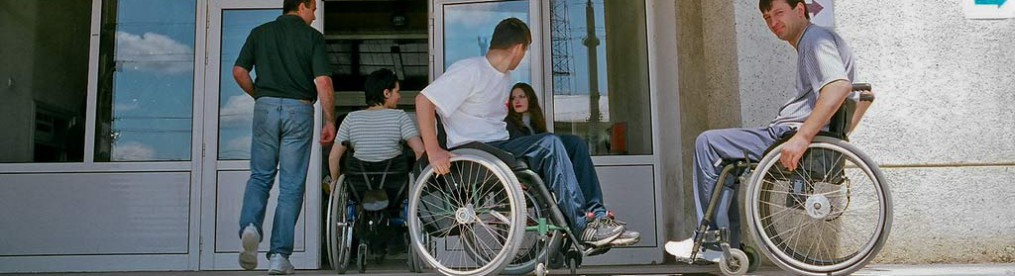
This emphasis on inclusive cities is especially important for persons with disabilities. In “Enabling Justice: Spatializing Disability in the Built Environment”, Pineda asserts that dominant models of disability fail to address the disabling role of the environment. Pineda mentions that persons with disabilities are often viewed without consideration of the environment. He asserts that it is crucial to view a person as being disabled with respect to the environment. Pineda argues “people with disabilities have for too long been an invisible constituency for architects and planning practitioners who build the public and private spaces we inhabit.”

Inclusive cities aim to combat the unfreedoms that persons with disabilities face in an urban environment. The idea of inclusive cities is that they are available to everyone, including people of different economic backgrounds and persons with disabilities. The New Urban Agenda shares this commitment to the freedoms of persons with disabilities; this is evident in its’ fifteen references to persons with disabilities within the New Urban Agenda.

The New Urban Agenda and SDG 11 also share a commitment toward “smart cities.” Smart cities attract a young professional demographic and drive innovation. Jordan raises a critical point in addressing the goal toward achieving smart cities. While the NUA and SDG 11 share a commitment to both, smart cities and inclusive cities do not always coincide with one another. Achieving a balance between smart and inclusive cities will prove to be rather challenging.


Intersectionality: A Crossroads

Intersectionality is the idea that we cannot address a single social condition without also addressing the other social conditions that exist. For example, “white feminism” defines the brand of modern feminism that often leaves out women of color, women who identify as LGBTQ+, women in poverty, or other important aspects of a women’s identity that need to be addressed under the umbrella of women’s rights. Without intersectionality, progress is simply not possible.

The same holds true for sustainable development. For example, we must acknowledge intersectionality that exists across the “major groups” framework as well as the discrimination that exists within each. For example, a queer disabled woman of color faces unique and important issues that should be addressed by AND across each of the major groups. Unfortunately, across global frameworks, we see limited mention of these intersectional identities and their importance in sustainable development. Their importance comes into mainly in that development is not sustainable or inclusive when it leaves out the issues or identities of an entire population.

However, even with the division the “major groups” framework presents, it also can be utilized as a unique opportunity for collaboration and creation of intersectional understanding. For example, women in the Indigenous People group may meet with the Women group in order to discuss their overlapping thoughts and issues. After meeting, the two groups can work together to ensure their experiences, needs, and suggestions are heard at the higher level.

In the past, the major groups framework also raised issue by excluding a large number of groups but thankfully, the NUA at Habitat III introduced sixteen other stakeholder groups who cover a large number of identities and issues.

In addition, other frameworks such as the SDGs are moving in the right direction such as SDG 4, which I focused on in my capstone project. SDG 4 focuses on the right to education and includes mention of multiple intersectionalities such as gender equality under education as well as the importance of granting access to education for persons with disabilities.

Overall, intersectionality serves as a crossroads for many identities and issues and when included in the global frameworks can have a huge impact in working toward truly inclusive sustainable development.