The Importance of ICTs in Development

ICTs or information and communications technology play a huge role in sustainable development. The Maitland Report and the NTIA report on Falling Through the Net both highlight the struggles found in rural and poor communities when ICTs are limited are difficult to come by. The Maitland report is officially referred to as the Missing Link. This first report on ICTs focused on the fact that developing and rural communities are often missing access to reliable communications infrastructure. Submitted in 1985, the report notes the differences between developed and developing countries when it comes to access to telephones. Limited access or even no access to telephones completely hinders development in developing countries. This problem has morphed with the creation of the Internet, which is where the Falling Through the Net report comes in to play. FTTN echoes the Maitland report in the sense that there is some key factor of development that is missing between developed and developing countries.

Technology plays an important role in development, and it is key in multiple of the SDGs. For example, ICTs are a big part of advancing SDGs 4,7,9, and 11. However, ICTs could play a role in all of the SDGs. Technology allows people to communicate all over the world, and without it, developing countries and entrepreneurs there are left out of the increased global market. Even beyond telephones, the importance of the Internet cannot be denied. It is not just in rural, developing communities either, even in places like DC, where there is a community of lower income residents, there are billboards that state the importance of having Internet so that children will have it for school. Technology affects everyone, not just adults. There needs to be a global push to provide all forms of ICTs to as many people as possible.

Another important element to providing ICTs to the developing world is the World Summit on the Information Society, which took place in two parts, Geneva and Tunis. The decision to use the two cities shows the importance of the developed and the developing world when it comes to ICTs. The developed world should serve as an example to the developing world and help them build the infrastructure needed to advance their own ICTs. WSIS+10 was the outcome document from the original conference that highlighted the actions and challenges to making ICTs more accessible and inclusive to everyone in the world. ICTs are important to global development and it is crucial that they are made accessible to everyone.

Disaster Risk Reduction and Inclusive Development

The UN classifies Disaster Risk Reduction (DRR) as the desire “to reduce the damage caused by natural hazards like earthquakes, floods, droughts and cyclones, through an ethic of prevention.” The UN Office for Disaster Risk Reduction (UNISDR) also takes the stance that there are no such things as natural disasters but only natural hazards. The UNISDR believes that there should be an importance placed on restoring and maintaining the environment. This is one aspect of the reduction element of DRR. If State parties were making better choices in how land and resources are managed, then it would be possible to reduce the disasters, or to at least minimize the damage that could happen. However, this does not mean that State parties are supposed to look for ways to stop natural disasters, much of the environmental impact that causes natural disasters to be more destructive than they once were have already happened. What State parties can do, on the other hand, is implement more advanced warning systems and improve the overall preparedness for dealing with natural disasters.

Disaster Risk Management follows a similar idea. Poor people are more frequently affected by natural disasters, and it is up to State parties to make sure that poor persons are able to survive during and after the natural disaster. DRM can include planning into urban areas, especially as more and more people are expected to move into urban areas by 2050. As natural disasters such as droughts push more people into cities, not only where there be a food shortage related disaster, there will also be a housing disaster. The international approach to disasters is a “culture of prevention.” The UN, along with governments at the national, state, and local level, civil society, and general collaboration between state actors, are all major players in DRR.

The UNISDR outlines a plan of vision, goals, objectives, and implementation when it comes to preventing disasters. There is an emphasis on research and including risk reduction into development plans that are already under way. The Sendai Framework—which was adopted in 2015—looks to reduce the loss of lives, livelihoods and health in disasters. The Sendai Framework also has nation states take over the role of leader when it comes to reducing disaster risk. Given that each nation state experiences different environmental factors, I believe that is important for states to take the leading role when it comes to disasters. By having individual states lead the way, more individualized plans—or regional plans for countries that experience similar climates—could be created for the greater benefit of the people living in those countries.


What is the World Urban Forum?

The World Urban Forum focuses on improving urban environments and is a sub-category under the UN Habitat. WUF9 focuses on implementing the New Urban Agenda that was adopted in Habitat III. The conference will take place in Kuala Lumpur in 2018 and the theme of WUF9 will be sustainable urbanization and it incorporates the SDGs and the NUA. It is the first WUF to directly work with the New Urban Agenda. WUF9 allows for different stakeholders to come together to talk about issues surrounding urbanization and how it can be made more sustainable and inclusive. For example in WUF9 there will be four major assemblies during the conference. They center around gender equality, businesses, children and youth rights, and the grassroots movement. All of the assemblies focus on initiatives that strengthen the rights of their constituents in the increasingly urbanized world. Past WUF conferences have focused on multiple issues surrounding urban spaces. WUF7 focused on quality in urban areas and WUF6 highlighted the challenges for an urban future and how to incorporate the SDGs into advancing that urban future. All of the WUF conferences have centered around the problems that come with an ever advancing urban world. The WUF shows that cities and States must come together to make concrete plans to secure urban areas and make sure that everyone is considered when these mega urban centers are being created.

Given that the WUF falls under the consideration of Habitat III, then the GAP plays an important role in the outcome of WUF. I think that the addition of the GAP in the WUF allows for different constituencies to be able to come to the table and discuss what they hope to see out of urbanization. On the other hand, because WUF works within the boundaries of Habitat III, it is possible that center groups that are not apart of the GAP are then left out of the discussion. However, the GAP encompasses 16 different groups, all of which are clearly named and given equal representation in the eyes of Habitat III. Due to the more inclusive nature of the GAP, I do not foresee there being an issue of one group getting left out of the discussions. One issue that could present itself is that because there are so many groups trying to advance their own viewpoints, it could become difficult to reach a consensus. The GAP and WUF are beneficial in that everyone is given a spot at the table to come together and look for ways to solidify and inclusive urban future.


Inclusive Cities and their Role in Development

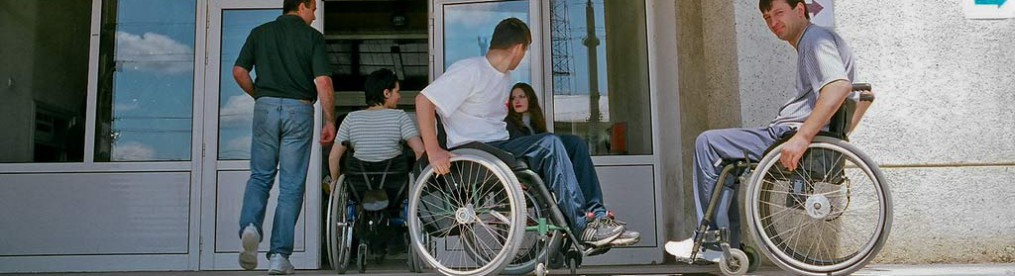
By 2050, the world population will nearly double what it is right now. That is why inclusive and sustainable cities are so important. Inclusive cities came out of UN Habitat and the idea behind them is that cities need to be more inclusive in their design and infrastructure. This includes more accessible public transportation, and buildings with ramps and elevators that make getting into and around buildings easier for persons with disabilities. In addition to access for persons with physical disabilities, inclusive cities would include speaker systems and screens that announce when public transportation is arriving. That technology is also transferable to other sectors, such as having online systems or digital systems in all public sectors like libraries or hospitals.

Inclusive development and inclusive cities go hand in hand. Part of making the world more inclusive for persons with disabilities is making their environment more accessible. The CRPD requires State Parties to make the lives of persons with disabilities better, and one way would be to increase the accessibility of the environment around them. The CRPD has initiatives that focus on monitoring and evaluating disability-inclusive development. The CRPD is concerned with proper data collecting on persons with disabilities as well as inclusive housing initiatives. Under the CRPD .”..States parties have a general obligation “ to undertake or promote research and development of universally designed goods, services, equipment and facilities, as defined in article 2 of the Convention, which should require the minimum possible adaption and the least cost to meet the specific needs of a person with disabilities.” So the connection between the CRPD and inclusive cities is quite clear. State parties are obligated to make sure that research and money is devoted to advancing the lives of persons with disabilities.

Habitat III and the NUA (the outcome document which came out of the H3 conference) are also devoted to inclusive and smart cities. Through the GAP (General Assembly of Partners), a group of 17 constituency groups, of which one is Persons with Disabilities, Habitat III has a direct impact on persons with disabilities. The NUA is implemented at the state and local level at the discretion of the State parties themselves. Local governments play an important role in implementing the NUA and by working at the local level it is easier to introduce new policies that have direct impact on persons with disabilities. The NUA and inclusive cities all have an impact on persons with disabilities and through the GAP, those policies are being further implemented.


The SDGs and Development Progress

The sustainable development goals are a set of 17 goals that serve as a guide for the world for solving development-based challenges. Each individual goal has its on set of targets and indicators that are clearly measured. The SDGs focus on a wide range of topics, such as, eradicating poverty, gender equality, decent work and economic growth, sustainable cities, and clean energy. The other goals focus on improving the environment and providing quality education and working to provide other basic development needs. These goals came out of the Millennium Development Goals, which were a more generic 8 set of goals. The SDGs are more encompassing and have targets and indicators written within them and allows for states to have a clearer timeline of when they should be finding success in achieving the SDGs.

The SGDs were created by the UN and fall under the supervision of the HLPF or the High Level Political Forum on sustainable development, and it is up to the HLPF to oversee the implementation of the SDGs. Within the HLPF there are the Major Groups, which is a set of nine different groups who represent different constituency groups. The nine Major Groups are Women, Children and Youth, Indigenous Peoples, Non-Governmental Organizations, Local Authorities, Workers and Trade Unions, Business and Industry, Scientific and Technological Community and Farmers. In addition to these nine groups the UN lists “other stakeholders” who are able to attend and participate in the meetings and make recommendations, as so long as they are ECOSOC accredited. The structure of the Major Groups has its upsides and downsides, especially when it comes to the “other stakeholders,” who are more limited to what they are able to accomplish within the HLPF. These nine major groups—of which persons with disabilities are neither one of the major groups nor an additional stakeholder—enjoy more power within the HLPF, as they are able to advocate for this own constituencies. Additionally, the fact that there are only nine major groups makes coming to conclusions slightly easier than if there were to be more major groups that come from the additional important stakeholders.

Overall the SDGs have been worthwhile in advancing the rights of people all over the world. The SDGs are important measurements that provide the world’s governments with a pathway to completing development goals. The SDGs all promote a more inclusive world and it is up to NGOs, governments, and other stakeholders to come together to make sure that world becomes a reality.


Defining Development

According to Sen, development is the expansion of what he calls freedoms to all people. This contrasts with more traditional views of development, which consider increases in income and GNP as clear indicators of effective development policies. These two different approaches to development highlight which indicators are given preference when it comes to designing policies. Sen’s approach is to focus on freedoms and unfreedoms. That is removing barriers so that development can be achieved. Examples of unfreedoms are poverty, tyranny, limited economic and educational opportunities and social deprivation. Sen argues that in the process of reducing the unfreedoms, inputs like increasing income or GNP becomes more valuable. This alternative approach to development stresses that traditional methods take on a new role as a means to expanding freedoms instead of being their own separate solutions for achieving development.

There are three inter-related views of development that these two different approaches can use for their framework: long-term, short to medium-term, and development as discourse. These three different views are all different approaches to development policy. Sen’s approach fits into two of the three categories: long-term and development as discourse. The alternative approach challenges the standard perceptions of development and pushes the development community as a whole to consider different methods. By thinking of development in terms of Sen’s freedoms and unfreedoms, policy makers are able to create more innovative solutions to development challenges.

The level of development can different between countries in a specific region and even within a country itself. Cities often receive most of the development, industrialization and innovation in the developing world, and it is then hoped that the benefits of the urban development will then spread out into the rural areas. The wide range of development makes it difficult to enact any one-blanket policy and hope all aspects of the issue will be solved. Different regions of a country have different development challenges that need their own nuanced solutions. The same is true for similar areas in different parts of the world. The communities might earn the same amount of income and perform similar work, but what works in one area might not work in another. This could also be another challenge of thinking of development policy in terms of income or GDP. While Sen’s idea of unfreedoms and capabilities might not be a traditional approach, it could allow for policy makers and other actors to find more realistic solutions to solving development problems.

Grand Challenges in Development

Grand challenges are large-scale problems and challenges that require multifaceted approaches to solve. One famous example of a grand challenge is the moon landing, hence where another name for a grand challenge (a moonshot) derives its name. Grand challenges are not just extremely difficult problems the world needs to solve, there are issues so large it seems that no solution is possible. That is why a unifying factor for all grand challenges is the use of science and technology as a means to help solve these enormous problems. The global aspect of the grand challenges allows for increased innovation when it comes to attempting to solve them. Normal problem solving methods won’t make the cut where grand challenges are concerned. Researchers, scientists, and other “non-traditional” solvers must come together to think beyond what they believe to be possible to find solutions that can be applied to some of the must confounding problems the world faces today.

Science and technology are not only useful in terms of solving these grand challenges; they also spur innovation, creativity and job creation along the way. Through the process of solving grand challenges, an overall community of innovation can grow, which can them be applied to a wide variety of problems, grand challenges or not. One grand challenge that is now becoming more and more necessary to solve is the search for new energy resources. Other important grand challenges are cures for cancer, developing improved ways of teaching and learning, eradicating or finding vaccines for deadly diseases and improving food security.

In terms of development, USAID has come up with nine grand challenges. They believe that science and technology can lead to exceptional breakthroughs for the world as different organizations and disciplines come together to attempt to solve the grand challenges.

Development focuses grand challenges are all in the same domain as the grand challenges listed above. They focus on food security, eradicating diseases that plague the developing world, and finding different energy resources that can be used to provide fuel for people to power their homes and businesses. Grand challenges and the people that devote their careers to solving them are especially important as they allow for increased innovation in not just their own domain but in others as well as people are able to take ideas and apply them to their own area of focus. The innovation and creativity that come out of the attempts to solve grand challenges help make the world a more diverse and compelling place.

Creating an Inclusive Framework in the Field of Disaster Risk Reduction

When one thinks about Disaster Risk Reduction, very rarely does a layman include minority groups in their analysis. You may think about recent natural disasters and the lives and livelihoods lost. This field of study refers to the prevention of loss as much as possible during these natural hazards like earthquakes, floods, or hurricanes. The major document guiding these prevention principles is the Sendai Framework.

Following the Hyogo Framework for Action, the Sendai Framework, adopted in 2015 at the Third UN World Conference on Disaster Risk Reduction in Japan, has four priorities when advocating for prevention and safety:

(i) Understanding disaster risk

(ii) Strengthening disaster risk governance to manage disaster risk

(iii) Investing in disaster reduction for resilience and

(iv) Enhancing disaster preparedness for effective response, and to “Build Back Better” in recovery, rehabilitation and reconstruction.

By investing in these, the international community has the ability to create a safer world for all. It includes seven specific strategies for accomplishing these goals and ensures continuing innovation in the field.

It also places emphasis on the vulnerable populations by creating a “persons centered approach”. For instance, persons with disabilities are mentioned six times throughout the document, older persons are mentioned twice, women are mentioned seven times, and children are mentioned three. This inclusion is reaffirmed by the Dhaka Declaration, which places particular emphasis on the validity of persons with disabilities and their role in minimizing disaster losses. This is particularly done by linking the Sendai Framework back to the SDGs, CRPD, and other frameworks for poverty reduction and elevation of the voices of marginalized groups like persons with disabilities.The Dhaka Declaration also uses a multi stakeholder approach, including “members from Governments, UNISDR, regional and international non-government organizations working on disability and disaster risk management, professionals and academicians, groups and organizations of persons with disabilities, bi-lateral and multi-lateral development agencies and other development sector representatives” as signatories to the declaration to bring all these different groups to the table. Other examples of inclusiveness in the Disaster Risk Reduction field is through the 2017 Global Platform for Disaster Risk Reduction (which advocates for solutions like International Sign Language Interpretation, remote participation, web conferencing with closed captioning, and more) and the Global Facility for Disaster Reduction and Recovery (GFDRR). By working with different groups and emphasizing the existence and participation of persons with disabilities, the field of Disaster Risk Reduction is not only able to be more effective, it continues to work on affording natural human rights to a marginalized work. Examples like these will encourage growth in the conversation about inclusiveness and become the guiding principles in the industry to follow through the inclusion of goal setting and concrete strategies to accomplish them. In the future, thinking about the prevention of loss following natural hazards, vulnerable populations like persons with disabilities will be so normalized that thinking about them comes automatically.

Multi Stakeholder Governance at the World Urban Forum

The World Urban Forum was created in 2001 by the United Nations General Assembly resolution 56/206 as a biannual event to discuss the global trend of urbanization and its impact on communities everywhere. In fact, according to the UN, “in 2016, an estimated 54.5 percent of the world’s population lived in urban settlements. By 2030, urban areas are projected to house 60 percent of people globally and one in every three people will live in cities with at least half a million inhabitants”. This means that  building sustainable cities is an important issue that affects not only the majority of people, but people of marginalized groups across the board.

The WUF conference prides itself on its inclusive multistakeholder nature at the highest level, claiming that by bringing these groups to the table, conversations will be more productive and beneficial to those lives it wishes to help. Some of the included groups are “national, regional and local governments, non-governmental organizations, community-based organizations, professionals, research institutions and academies, professionals, private sector, development finance institutions, foundations, media and United Nations organizations and other international agencies”. These groups all have an interest in sharing best practices and engaging in conversation about city planning to promote economic growth, accessibility, human rights, and more. They have a framework for participation in the General Assembly of Partners (GAP), but it is unfortunately expensive and constantly pulled in many directions at once. However, the major benefit is that all fourteen Partner Constituent Groups (PCGs) under the GAP contribute to the advancement of sustainable urbanization.

WUF9 will be held in Kuala Lumpur, the capital of Malaysia, in February of 2018. This location connects Asia back to WUF after a hiatus since the 2008 hosting of WUF in China. UN Habitat reports that it is also the first WUF conference to be held after the most recent Habitat conference in Quito. Building off work done at HabitatIII, WUF9 is to be called “Cities 2030, Cities for all: Implementing the New Urban Agenda”, specifically the role of technology in NUA. It brings together a multitude of frameworks by including the guidance of the SDGs and NUA, working towards four major goals: raising awareness of sustainable urbanization, improve collective knowledge, increase multi stakeholder cooperation, and incorporate those the inputs of multilateral organizations. The momentum gained through these conferences cannot slow down, instead using WUF9 as an opportunity to make real gains, networks, and a plan to implement the right to a city for every individual. By specifically including PCGs in the decision making process, sustainable urbanization becomes a grand challenge that actually looks attainable.

How Net Neutrality is a Multi-stakeholder Internet Governance Issue

The internet is an international communications resource that allows the exchange of content between individuals across a network of devices. Because the internet has no centralized governing body, constituent networks are the ones that set the policies on internet usage. In the US, the Federal Communications Commission Chairman Ajit Pai recently proposed a plan to kill the net neutrality laws in the US, and this proposal will be officially voted on December 14th. This plans intends to give ICT corporations the right to speed up, slow down, and even block access to content. This would violate free access to information and technology, charging people more for better access and forcing others onto cheaper, slower networks. This course of action has been met with serious contention by the American public who feel like their freedom of speech rights are being violated.

With issues such as net neutrality, it is essential to have a multi-stakeholder framework in place. By having government, the private sector, and civil society take part in the governance of the internet, it establishes a framework that prevents the control and abuse of internet access. In the case of net neutrality, it is a plan that is pushed by the lobbying groups of large communications providers and that is being reviewed by the government in order to become official legislation. However, civil societies are advocating against it and through petitions and protest, are fighting to upkeep the net neutrality. Fundamentally, the internet is a public good and a key component of the freedom of speech rights that are the foundation of a democratic institution. It is up to the government to uphold these values and ensure the well-being of the population. Through actions of civil society, the official vote for/against net neutrality can be swayed to counter the actions of the private sector that seek to make profits off of the control of content. The multi-stakeholder internet governance therefore creates a system of checks and balances in order to create a just and equitable system for internet provision in the US.