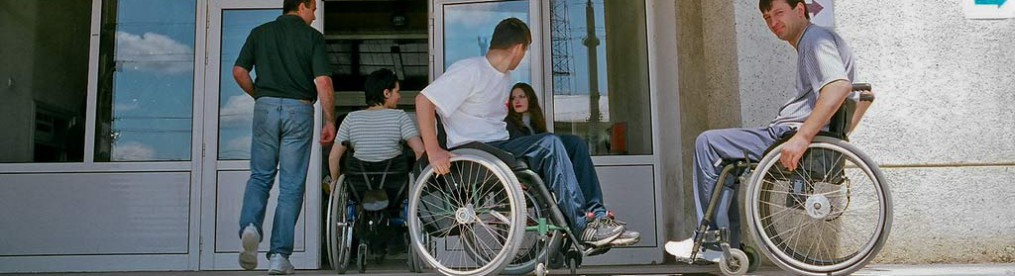
This week, I was particularly struck by what the representative from Special Olympics presented in her presentation the class. To start, I never realized how narrow the Special Olympics mandate is, narrow in the sense that they only work with individuals with cognitive and intellectual disabilities. This notion peaked my interest, as my work in inclusive education is purely defined by access for learners with disabilities. However, I now realize a major flaw in my approach to inclusive education research. Often, the concept of “disability” is assumed to refer to persons with physical disabilities rather than intellectual. This notion most certainly has informed my approach to inclusive education policy, a real detriment to my work. While many of the policies and programs I advocate for in my research do encompass the needs of persons with intellectual disabilities, having that population represented specifically can go a long way in ensuring they too have access to meaningful educations and more broadly city infrastructure, employment, etc. Continue reading
Month: September 2018
Smart Cities, Habitat III, and the New Urban Agenda
The main topic that was discussed this week was smart inclusive cities. International frameworks, such as Habitat III and the New Urban Agenda have created a guideline to make urban centers more inclusive and accessible to people with disabilities. These framework work with Sustainable Development Goal (SDG) 11 of sustainable cities and communities, which focuses on reducing inequalities in urban environments by supporting the development of inclusive and sustainable communities. Inclusive urban environments are metropolises where there are no barriers to empower individuals, no matter a person’s race, gender, wealth-status, etc.
This subject reminded me of the Sen’s theory of development because these cities allow for more freedom. They make it possible for individual choices to be universal. This goes with education, housing, transportation, etc. Absolute individual choice means complete accessibility, no barriers or obstacles. This is fundamental to be inclusive to persons of disabilities.
Cities or urban centers hold most of the world’s general population. They are the political, economic, and cultural engines of their respected countries. Urban Centers are where most innovations and changes happen. These international frameworks are needed for cities because they allow for the subject to be aware in society. If cities contain policies and tools that help and include persons with disabilities in their societies than this will hopefully spread to other regions. In addition, it is much easier to make an issue heard in a city than going to representatives of a country’s national government. City governments are influential and more connected to individuals than a national government is. Cities can be used as a platform to bring rights of people with disabilities to the national government.
In my research, I will be discussing inclusivity when it comes to internet access, smartphones, and people with disabilities. Articles that I have read show more internet concentrations in urban centers of developing countries, leaving rural areas without internet and disconnected to innovation. Even when there is internet in an urban center, apps and programs may not able to run because of internet service and hardware. For example, an Android Go device may not be able to run extensive Android apps that high-end Android phones can run. The most expensive service and hardware can support these extensive programs, but they are only accessible to the rich class. Apple and Microsoft are regarded as leaders in providing accessibility to persons with disabilities, but their hardware is expensive or not available in the market. Cheap Smartphones are now being used as a tool to help connect people to the internet, but Google may have trouble in making accessibility features and apps in cheaper models.
Smart Cities, Habitat III, and the New Urban Agenda
This week, we discussed smart, inclusive cities, as well as international frameworks, such as Habitat III and the New Urban Agenda. In this post, I will elaborate on the goals of Habitat III, how it relates to Sen’s theories on development, and how it relates to my capstone project on inclusive recreation.
Inclusive Cities
As the world’s population has increased, so has the sizes of its cities. This does not particularly refer to the area cities occupy, but rather the number of people living in cities. Though cities only take up about 2 percent of the land on Earth, they consume over 60 percent of global energy consumption and contribute to 70 percent of the economy (GDP), global waste, and greenhouse gas emissions. City populations are diverse, generally including many cultures, ethnicities, and socioeconomic classes. Unfortunately, inequities are frequently apparent among city populations as some citizens are not allowed the same opportunities as others due to circumstances often beyond their control. Continue reading
Smart Cities, Habitat III and New Urban Agenda
Our discussion this week was centered around The New Urban Agenda proposed by the Habitat III, and how the implementation of smart cities have the potential to produce inclusive cities. Continue reading
Inclusive Cities, Habitat III and New Urban Agenda
Summary: A major part of inclusive sustainable international development is ensuring that cities are created / adapted in a way that advances the space forward for all. This means making pubic spaces available for every person and working towards equity in cities. Since a large majority of people around the world lives in cities and continues to migrate towards them, the focus on cities is important because they are large contributors to the global world.
Inclusive cities are an important concept to analyze when speaking about any type of development. The World Bank details the lens that inclusive cities must be looked through. The World Bank states, “It is essential to understand that the concept of inclusive cities involves a complex web of multiple spatial, social and economic factors:
- Spatial inclusion: urban inclusion requires providing affordable necessities such as housing, water and sanitation. Lack of access to essential infrastructure and services is a daily struggle for many disadvantaged households;
- Social inclusion: an inclusive city needs to guarantee equal rights and participation of all, including the most marginalized. Recently, the lack of opportunities for the urban poor, and greater demand for voice from the socially excluded have exacerbated incidents of social upheaval in cities;
- Economic inclusion: creating jobs and giving urban residents the opportunity to enjoy the benefits of economic growth is a critical component of overall urban inclusion” [1]
This topic is especially important when it comes to ensuring people with disabilities are included in this conversation and implementation. As discussed in class, having smart cities in an inclusive city really helps with the inclusion of people with disabilities. Smart cities, through the use of technology, can improve public transportation for people with a multitude of disabilities. This can be smart apps that can verbally announce the exact steps that you must take in order to get to the bus. Smart cities also help inclusive cities because it connects the people with the local government or businesses. This means that the local government and businesses can get real feedback from all kinds of people experiencing problem in the city.
The New Urban Agenda came about because the UN saw the need to focus on cities. In fact the UN reports that, “While cities today occupy only 2% of the total land, they contribute 70% to an economy’s GDP, are responsible for over 60% of the global energy consumption, emit 70% of the green house gases, and contribute 70% of the global waste.”[2] Cities need special consideration considering the large impact they have all over the world. The New Urban Agenda seeks to, “Integrate equity to the development agenda. Equity becomes an issue of social justice, ensures access to the public sphere, extends opportunities and increases the commons.” Overall focusing on Inclusive cities was a concept I had not been aware of in development but now I can see how it is so vital to focus on ensuring that cities are a place for all types of people to live.
[1] The World Bank. “Inclusive Cities.” 2018. Retrieved at https://www.worldbank.org/en/topic/inclusive-cities#2.
[2] The United Nations. “The New Urban Agenda: Habitat III.” 2018. Retrieved at http://habitat3.org/the-new-urban-agenda/.
Urbanization and The New Urban Agenda
The world’s global urban population is expected to double by 2050. It is also projected that 90% of this concentration will take place in Asia and Africa. These continents have the opportunity to greatly benefit both economically and socially by adhering to the goals and being inclusive throughout the five pillars of implementation laid out by The New Urban Agenda. This major population shift being highly concentrated in some developing areas allows these cities to be built right the first time. They are not confined by the exclusive infrastructure in large old cities like New York and Paris. It will be economically efficient to build inclusive infrastructure instead of having to rebuild or revamp already existing old infrastructure. The point that I liked the most from The New Urban Agenda is the humanization of cities and human settlements. It is important to think about the wide range of humans with variant needs who will be occupying the space.
The “Enabling Justice: Spatializing Disability in the Built Environment” reading by Pineda made me think about the impact of a built environment truly has on people. He does a great job at dispelling the idea that, “disability as a property held by the individual.” This places the responsibility to “correct” on the individual themselves and not on the environment that creates this disability. After reading this article I thought about my day to day life and how the environment around me could be disabling. It reinforces the importance of The New Urban Agenda. This past summer I had the opportunity to go to Sao Paulo, Brazil. I remember thinking then how the city was so much more inclusive than many of the American and European cities I have visited. After doing some research I found that Sao Paulo has implemented laws and policy in order to aid in the implementation of The New Urban Agenda. They also made sure to involve many different actors in the discussion of the city’s needs with the government. When everyone is represented modern cities can be a place of inclusion and not a place that creates extreme division.
Inclusive Cities and the New Urban Agenda
Our discussion of inclusive cities this week left me with a few questions regarding the equity of smart cities. While I agree that smart cities are an essential component of inclusive sustainable development, I am wrestling with how to make this a completely global conversation rather than a Westernized solution to the problem of inclusivity. Continue reading
Measuring Society’s Success: Inclusion and the SDGs
In an ideal world, a society’s success would be measured by its level of inclusion. Social Inclusion of Persons with Disabilities defines inclusion as coming down to “somewhere to live, something to do, someone to love” (Rimmerman 35). The more citizens in a nation that are included in this definition, the higher a nation’s level of success. Instead of measuring a country’s success through its overall economic growth or strength in the international political arena, we should be asking ourselves, do this country’s policies promote equality and inclusion for its people? Do all communities feel they are included in society?
The United Nations Sustainable Development Goals were created in 2015 to tackle the issue of climate change, reduce inequality and promote inclusion. With 17 tangible goals centered around sustainable social and economic development, the SDGs are “the blueprint to achieve a more sustainable future for all.” Each SDG has concrete goals, targets and indicators that provide a clear vision for what each element of a sustainably developed society would look like. The SDGs are also medium-term goals, with the target accomplishment date set at 2030. It is so important to have a coherent plan that each country can strive towards and apply to their own situations, so that everyone can do their part to create a more inclusively sustainable global society.
Amartya Sen’s Development as Freedom theorizes that the alleviation of poverty and societal development will lead people to freedom. He writes that poverty limits the choices a person can make, and limited choices cyclically results in a lack of freedom. Sen’s indicators for freedom include: life expectancy, education, infant mortality, and gender equality. For example, if a person does not have the money to make choices that will benefit their health, a lower life expectancy results in a lack of freedom because a person cannot make choices if they are not alive. Empowering people to make choices allows them to have the best possible life. By making an emphasis on inclusion in society, a society can strive to provide all of its citizens with the freedom to make choices for themselves.
The SDGs are an important mechanism for inclusion and freedom, and the UN High-Level Political Forum makes sure that the program continues to stay on track. The HLPF meets annually under the Economic and Social Council for eight days, with a special three day segment every four years with the Heads of State and Government. The forum provides “a dynamic platform for regular dialogue” and “political leadership, guidance and recommendations for sustainable development. The HLPF is indispensable resource towards the successful implementation of the SDGs around the world.
States, NGOs, businesses, and individual actors are all important and necessary contributors to an inclusive and sustainably developed future for all. Everyone must play their part by using the platforms available to them to take action, raise awareness, and promote inclusiveness and equality in their communities. A truly inclusive society has the mindset that everyone deserves to be a part of the community and everyone has something valuable to offer. Societies with inclusive mindsets are the most successful ones, and we must do everything we can to promote inclusivity in every corner of the globe.
Resources:
Social Inclusion of Persons with Disabilities, Ari Rimmerman
Development as Freedom, Amartya Sen
https://www.un.org/sustainabledevelopment/sustainable-development-goals/
Inclusive Sustainable Cities
This week the reading and in class discussions revolved around the concept of inclusive and sustainable cities. The New Urban Agenda sets a framework for the creation and ongoing development of cities and human settlements. There are three main points that the NUA makes, the one that is more pertinent to our class discussion was urban equity and the eradication of poverty. Point 36 specifically calls for equal access to all public spaces for people with disabilities. This point echo’s the theme of what has been talked about in class all semester. Without equal access to these spaces that people without disabilities have access to persons with disabilities are missing out on a multitude of opportunities. Not being able to use public transit may mean that your access to the entire city is limited and more expensive. If you’re not able to access a park then you’re missing out on valuable social time and relationships that are necessary to a healthy human existence.
This week the in-class discussion highlighted the different innovative features that inclusive and sustainable cities could have. One of my favorite discussions was about the use of sensors within a city and how they can contribute to making living in a city more sustainable. Sensors are a relatively cheap was to create data that can be used to configure a variety of sustainable living practices within a community. From public transit to vegetable compost, understanding the rate or frequency at which these practices are happening can contribute to making them more efficient and furthermore, more sustainable.
The in-class discussion about the use of apps and crowd source data to informs persons with disabilities how accessible a venue is was also very interesting. The example of using an app to navigate your way into a park with a wheelchair or into a facility that may not immediately show where an elevator is was extremely useful. The use of an app that uses crowd sourced data to understand how friendly a restaurant is towards persons with disabilities was also interesting. This discussion made me realize how unaware I was of how my favorite coffee shop or movie theater could be completely inaccessible to people with certain disabilities. However, this discussion also inspired me to think more about inclusivity when going about my day to day life and to make more of an effort to be an advocate for inclusive sustainable development.
 Disability Inclusive Development
You must be logged in to post a comment.