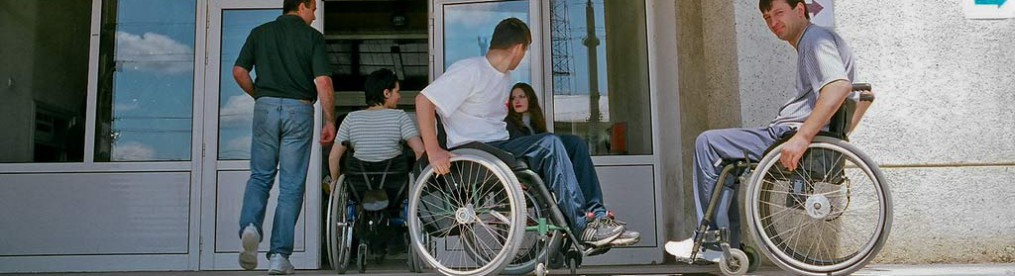
Our discussion of inclusive cities today recalled some memories of studying abroad in Seoul. By many standards, Seoul can be considered a smart city; it incorporates numerous apps for transportation, safety mechanisms in CCTV, and the use of innovative technology can be found in nearly every neighborhood in the city. However, aspects of inclusivity in the city were sporadically, almost as if they had been stuffed into a city-plan last minute. Continue reading
Month: September 2018
The SDGs, HLPF, and Sen’s Approach to Development
Developed from the Millennium Development Goals (MDGs) with the target year 2015, the UN Sustainable Development Goals (SDGs) have made tremendous strides in emphasizing inclusivity. As discussed in our first two class sessions, the MDGs had a one-size-fits-all approach to development that lacked consideration of cultural, political, and historical contexts as well as the lack of inclusivity in its goals, targets, and indicators. Ultimately, the MDGs did not specifically consider the almost one billion people in the world with disabilities in the conversation regarding development.
The SDGs, however, have expanded from 8 goals to 17 goals that include persons with disabilities. This expansion allows countries to customize their focus depending on their own needs and goals, which essentially allows more space for the expertise and engagement of non-profits and NGOs to enter the development conversation. With clearly defined goals, targets, and indicators that work to include persons with disabilities in development, the SDGs have been crafted with articulate language that can be easily read and understood by all persons.
This language is developed through the High-Level Political Forum with actors such as NGOs and interest groups of member states, national institutions, and the major groups. The UN High-Level Political Forum on Sustainable Development (HLPF), which was formed in Rio de Janeiro in 2012 is a highly inclusive and participatory forum of the UN that is responsible for overseeing the progress of the SDGs around the world. The HLPF meets annually for eight days under the Economic and Social Council and every four years under the UN General Assembly, which convenes with the heads of state.
Through these forums, the voices of the major groups are pushed to the fore front of the discussion. The major groups include women, children and youth, indigenous peoples, civil society, local authorities, workers and trade unions, business and industry, and the scientific and technological groups. Similar to Amartya Sen (1999) in his work Development as Freedom, the HLPF and the SDGs emphasize the importance of empowering the voices and agency of marginalized groups. The work of Sen (1999) has helped shift development approaches from a focus on GDP to a humanistic and inclusive approach that considers a person’s opportunity to live a long and healthy life, obtain knowledge, and have a decent standard of living. Without the individual at the center of development, it is difficult to truly understand whether development practices are aiding a country in an inclusive manner.
References:
Sen, A. (1999). Freedom as Development. New York, NY: Random House, Inc.
SDGs and HLPF
This week in class we discussed the Sustainable Development Goals (SDGs) and the High Level PoliticalForum (HLPF). In this post I will discuss the implications that the SDGs and HLPF have on international development and peoples with disability. I will also touch on which SDG fits best with my project.
The SDG’s are a list of development goals that the UN agreed upon in 2015. It is essentially the revamped version of its predecessor the Millennium Development Goals.
The UN defines the SDGs as “The blueprint to achieve a better and more sustainable future for all. They address the global challenges we face, including those related to poverty, inequality, climate, environmental degradation, prosperity, and peace and justice. The Goals interconnect and in order to leave no one behind, it is important that we achieve each Goal and target by 2030.” I think the key aspect of the SDGs is the idea of intersectionality. If there is not development for all, then that’s a problem. For example, the MDGs did not talk about peoples with disability once, whereas the SDGs does include them in the language. Language is crucial for this type of document because without setting clear goals with direct language, too many issues may be left up to interpretation. For example, it was thought that in the MDGs peoples with disability were included throughout all the goals. However not every country made sure to include peoples with disabilities in their legislation or implementation of the MDGs.
The HLPF, as defined by the UN, is “the main United Nations platform on sustainable development and it has a central role in the follow-up and review of the 2030 Agenda for Sustainable Development the Sustainable Development Goals (SDGs) at the global level.” The HLPF basically is a committee to monitor and assist with the implementation of the SDGs. The UN also mentions that part of the HLPF’s duties are to “enhance evidence-based decision-making at all levels and contribute to strengthening ongoing capacity-building for data collection and analysis in developing countries; and promote system-wide coherence and coordination of sustainable development policies.” This added component of collecting and using data is important as it insures that all the information is backed by scientific data. It is also important to note the HLPF’s requirement of promoting coherence and coordination. Often, the different actors of international development are fragmented. This move to bring information and actors together to ensure the sharing of all possible best-practices.
For my capstone project I will be focusing on SDG number 8; decent work and economic growth. I will be focusing in more on the microfinance aspect of decent work and economic growth. This means ensuring that ALL people have access to loans that will empower them to have decent employment and the chance to work. One of the major criticisms if the SDGs are that they are too broad, however if you work on a small aspect of development while working towards one of these larger goals than that is still effective.
Sources:
The United Nations. “Sustainable Development Goals.” (2018) Retrieved at https://www.un.org/sustainabledevelopment/sustainable-development-goals/
The United Nations. “Sustainable Development Knowledge Platform; High Level Political Forum on Sustainable Development.” (2018) Retrieved at https://sustainabledevelopment.un.org/hlpf
Development Theory and Actors
This blog post discusses the varying ways of defining development outlined by Sumner and Tribe, as well as Amartya Sen.
SDGs, HLPF, y más
The United Nation’s created the 17 Sustainable Development Goals (SDGs) in 2015 to build on the Millennium Development Goals (MDGs) which were not as successful as originally intended by the UN. The SDGs have specific targets and indicators that have made them much more impactful. They also have language about persons with disabilities that the MDGs did not, making them more inclusive and holistic. Continue reading
Sustainable Development Goals and the High-level Political Forum
This week, we talked about the sustainable development goals and the high-level political forum. In this post, I discuss what the SDGs are, who the actors are that implement them and shape them, and the HLPF. I end with discussing what specific SDGs relate to my capstone project on inclusive recreation. Continue reading
The SDGs and the High Level Political Forum
The creation of the UN Sustainable Development Goals (SDGs) marked a groundbreaking moment for the inclusivity of persons with disabilities in global development goals. Unlike the Millennium Development Goals(MDGs), where no language surrounding persons with disabilities was included, the SDGs were a crucial step in identifying the importance of inclusive sustainable development. Continue reading
SDGs, HLPF, and Inclusion of Persons with Disabilities
The transition from the Millennium Development Goals (MDGs) to the Sustainable Development Goals (SDGs) was an incredible leap towards effective development that includes persons with disabilities. The identification of actors and their roles in inclusive sustainable development along with the conceptual formalization of development studies provides refection and evaluation on the effectives of development as we understand it now.
SDGs and the High-Level Political Forum
Summary: The SDGS follow the MDG’s positives while improving on sustainability and inclusivity targets. The High-Level Political Forum is an important mechanism for adding and element of inclusivity to discussion of the SDGs. People with disabilities must be included in the discussion for the SDGs to succeed. Continue reading
SDGs and the HLPF
The Sustainable Development Goals (SDGs) mark significant progress for persons with disability. While the SDGs carry forward the clear goals, targets, and target indicators that were praised from the MDGS, the SDGs make a departure by including references to persons with disability. Continue reading
 Disability Inclusive Development
You must be logged in to post a comment.