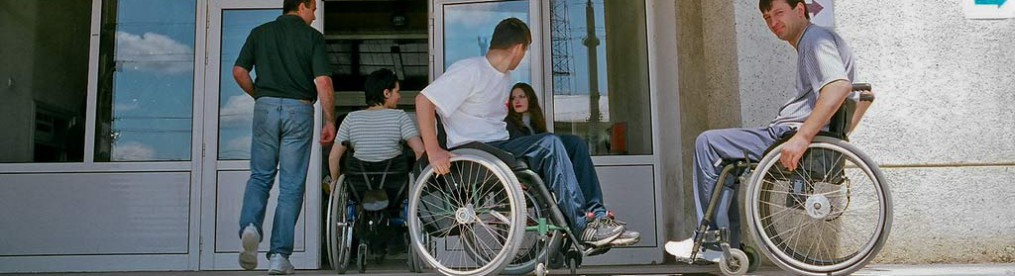
Inclusive Education

It is stated in the Universal Declaration of Human Rights that “everyone has the right to education.” Education also plays an integral role in social and economic development. It is therefore essential that access to education is available to all, and this is addressed in the Sustainable Development Goals which will run until 2030. Sustainable Development Goal 4 aims to “ensure inclusive and equitable quality education and promote lifelong opportunities for all.”

Article 24 of the Convention on the Rights of Persons with Disabilities addresses the need for inclusive education. State Parties to the Convention acknowledge that persons with disabilities have the right to education. Article 24 also states that State Parties must ensure “that children with disabilities are not excluded from free and compulsory primary education, or from secondary education, on the basis of disability” and that persons with disabilities are able to access quality and inclusive education with reasonable accommodations when necessary in order to be able to access in an equal manner with others in their community. These inclusive education systems must be geared towards the development of persons with disabilities to their fullest potential, and ensuring that persons with disability are able to freely participate in society.

As one of the grand challenges concerning disability and development, inclusive education requires collaboration and cooperation from a wide range of actors. As part of a joint effort to facilitate the implementation of the CRPD, UNESCO and the Global Initiative for Inclusive Information and Communication Technologies (G3ict) created a ‘Model Policy for Inclusive ICTs in Education for Persons with Disabilities.’ The main objective of this initiative was promote the effective use of information and communication technologies (ICTs) for learners with disabilities. This initiative is an excellent example of how important cooperation is in working towards the Sustainable Development Goals and addressing global grand challenges such as inclusive education.

The Model Policy’s main intention is to “assist Member States in the process of developing policy in order to achieve the wider goal of inclusive education across all educational sectors and settings.” This can be so valuable to a state such as Cote d’Ivoire, which I am looking at for my capstone project, which does not have a good history of including persons with disabilities. The Model Policy for Inclusive ICTs in Education for Persons with Disabilities promotes inclusive education further by making the distinction that it can be applied to all learners who may be excluded from education.


Opportunities and Limitations of Global Strategic Frameworks

Global Strategic Frameworks like the MDGs and SDGs are important tools in garnering international attention and support for inclusive sustainable development. Yet, it is important to recognize their challenges and limitations.

The Millennium Development Goals (2000-2015) aimed to eradicate poverty around the world and were successful in starting the conversation surrounding global sustainable development on international, national, and local levels. Despite their clear goals, targets, and indicators, the MDGs had many challenges. As discussed in our first two class sessions, the MDGs had a one-size-fits-all approach to development that lacked consideration of cultural, political, and historical contexts as well as the lack of inclusivity in its goals, targets, and indicators. Moreover, the MDGs did not specifically consider the almost one billion people in the world with disabilities in the conversation regarding development.In addition, they assumed that all countries would be able to achieve all goals 100% at the end of the timeline. Lastly, the goals lacked an inclusive approach by not including disability-inclusive goals.

At the conclusion of the MDGs, the United Nations General Assembly convened a High-level Meeting on Disability and Development with the theme titled “The way forward: a disability inclusive development agenda towards 2015 and beyond.” THis UNGA High-level meeting brought together international leaders to highlight core principles and values, which resulted in support for the Convention on the Rights of Persons with Disabilities (CRPD) as well as the MDGs, but emphasized the need for disability-inclusive development goals moving forward. The next development agenda had the opportunity to meet the needs of persons with disabilities, which ultimately resulted in the Sustainable Development Goals (2015-2030).  Similar to the CRPD, the SDGs are strongly rooted in a human rights framework that promotes the rights of persons with disabilities in development. The SDGs expanded the 8 broad goals of the MDGs from 8 to 17. They also introduced more participation from NGOs and other non-state actors, as well as allowed for each country to be flexible in which goals they focused on, which depends on their context and needs. Most critically, they brought inclusivity to the forefront of sustainable development.

Looking at the challenges to these global frameworks, many countries view the SDGs and similar frameworks as ways to evaluate and rank their countries, rather than being viewed as a working goal. Similarly, global strategic frameworks can appear to be too theoretical. In other words, those struggling with basic needs may view these goals as too abstract and not as realistic. Despite these challenges, global strategic frameworks are important in guiding the world towards inclusive sustainable development.

Inclusive Education

Receiving a quality education is vital to sustainable development. As Sen (1999) states, education is a gateway that improves quality of life while opening up economic, political, and social opportunities. However, persons with disabilities have historically been excluded from educational opportunities. Therefore, disability-inclusive education has been designed to remedy that imbalance by ensuring that all people are being provided the educational opportunities and skills they need to participate in social and economic development. Article 24 of the CRPD recognizes the right to education for persons with disabilities and requires states to ensure that persons with disabilities are not excluded from the education system. Moreover, Sustainable Development Goal 4 aims to ensure inclusive and equitable quality education for all. Looking specifically at its targets that focus on inclusivity, SDG 4 works toward ensuring equal access to all levels of education and vocational training for persons with disabilities, as well as building and upgrading facilities that are disability-inclusive to create better learning environments.

My capstone project focuses specifically on disability-inclusive education in Malaysia. In Malaysia, education is viewed as a key instrument in transforming the country into a knowledge-based economy that can compete with a globalized world, as well as promoting harmony and unity for its uniquely diverse society. In its national education policy, better known as the Education Blueprint 2013-2025, the Malaysian government aims to provide equal access to education and create more inclusive environments for persons with disabilities. However, the implementation of this policy is challenging due to negative public perceptions of disability in Malaysia. The Malaysian Information Network on Disabilities has asserted that among policy makers and the public there is a lack of awareness on the rights and needs of persons with disabilities. The general public still continues to believe that children with disabilities are often kept out of the public and are an embarrassment and burden to their families. Similarly, teachers hold common beliefs that students with disabilities would be best educated in separated classrooms. These challenges to inclusive education affect many countries around the world, but significantly impact the success of disability-inclusive education in Malaysia. Despite this, education can be utilized to transform cultural and social stigmas of disability within Malaysian society.

As discussed in this week’s seminar, inclusive technologies can help positively transform societies like Malaysia. Firstly, they can help individualize learning for students with disabilities. Moreover, they can connect educators with one another to develop teacher’s professional development and to share resources to positively improve disability-inclusive education. Ultimately, inclusive education is paramount to sustainable development practices, and best facilitated through the use of inclusive ICTs.

Intersectionalities in Inclusive Sustainable Development

When different identities overlap at a particular time, it is called an intersectionality. People exhibit intersectionalities between many different characteristics including, but not limited to, age, gender, sexuality, minority, disability, and SES. The convergence of these characteristics means all the stressors and challenges from each identity are brought together. Continue reading