Building the world’s smart sustainable cities together is one of 17 goals (SDG 11) of the UN’s 2030 Sustainable Development Goals. In 2018, the UN High-level Political Forum (HLPF) met to discuss some goals, SDG 11 (sustainable cities and communities) being one of them. With rapid urbanization and movement of people from rural to urban cities, the growth of cities is staggering. In today’s society, mass potentiality also bring challenges to maximize Information Technology (IT) and Internet of Things (IoT). I cannot emphasize enough the impact of “big data” and how “data is king”. Through the indicators and targets of SDG 11, we are able to come to solutions that truly enable cities to become smart and sustainable.
Month: December 2019
The Transformation of the Internet and Internet Governance
The introduction and globalization of computers and the Internet around the world has been a transforming movement that has shaped human existence and interaction. In the 1930’s, 40’s, and 50’s computers were still emerging as slow, awkward, and expensive machines. Eventually technology evolved and computers became more advanced, cheaper, and more accessible to people. Communities, governments, and corporations began to see great potential in the advancements of computer technology. In the late 1970’s, an equation was developed to access the rate of development of computers each year. According to the equation, computers were developing at a rate of 28% each year. Microcomputers emerged in the 1980’s, a significant technological advancement that would expand its possibilities. The decade led to a great deal of experimentation as people were unsure what kind of effect computers would have on the world. The world was interested in the technology’s scalability and extensiveness; if computers would foster the same advantages in different parts of the world. Productivity applications, those that can be used by people in developing and developed countries, ranked among the most successful ICTs. Rapid globalization played a large role in the spread and success of computers and the Internet. However, as the Internet boomed and expanded, communities began to seek a form of governance over the powerful technology.
Unfortunately today, in the midst of seeking governance of and on the Internet, it has transformed from an amazing new technology to a weapon that threatens the existence of civilization as we know it. The last two decades have seen several conferences and summits concerning the important role of the Internet in international cooperation and people’s daily lives. One of these summits, the World Summit on the Information Society (WSIS), established a financial task force and the working group on Internet governance. The working group worked together to establish this definition of Internet governance:
“Internet governance is the development and application by governments, the private sector and civil society in their respective roles of shared norms, rules, decision making procedures, and programs that shape the evolution and use of the internet.”
While this definition shows progress and cooperation, and the working group did define and identify the issues surrounding Internet governance, it did not identify the respective roles and responsibilities of stakeholders. This represents the key problem for the UN Internet Governance Forum (IGF), a multi-stakeholder forum announced by the General Assembly in 2006 and convened annually since. Government participation in the forum has also decreased substantially in recent years. Tech groups and civil society now represent the majority of participants. Therefore, The IGF must foster government attendance in order to encourage international cooperation on the issue of Internet Governance.
Inclusive Education
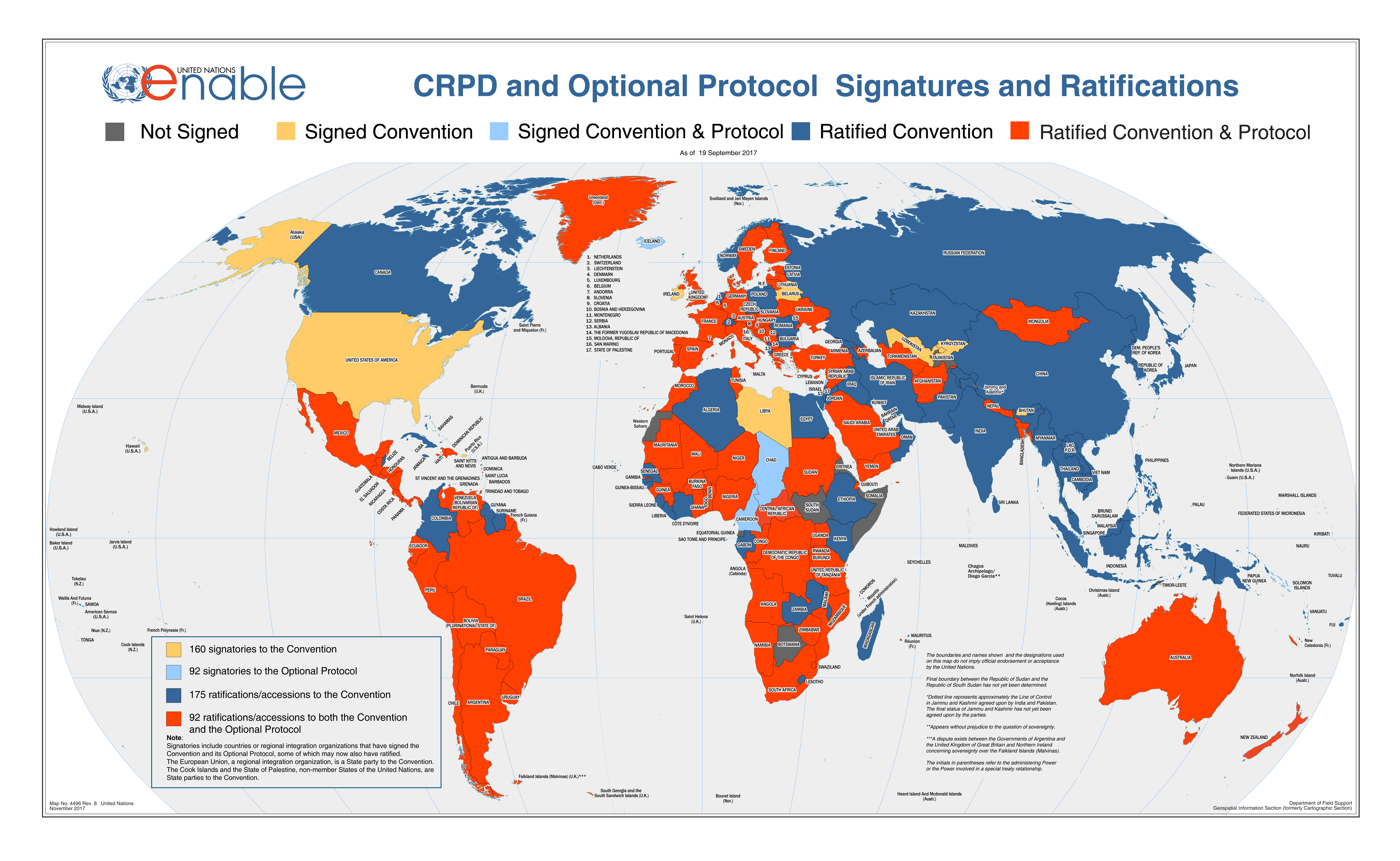
WCAG (Web Content Accessibility Guidelines) are essentially a checklist designed to provide access to electronic resources to persons with disabilities. These are steps we should take in order to make products, information, and services accessible to as many people as possible. Some measures are as simple as using Microsoft Word, enabling text size expansion, and implementing high contrast differences in colors on the document. The first set of standards (WCAG 2.0) was published in December 2008, with the second published 10 years later in December 2018 (WCAG 2.1). WCAG includes all requirements from WCAG 2.0 and additional resources and information. These guidelines are primarily intended for web content developers, web authoring tool developers, and web accessibility evaluation tool developers. However, students and teachers should also use these methods to make academia more accessible. In Article 24 of the CRPD countries must recognize the right of persons with disabilities to education. This must be done without discrimination and on the basis of euqal opportunity by ensuring an inclusive education system at all levels and lifelong learning. Despite 175 convention ratified countries and 92 convention and optional protocol ratified countries, most do not adequately meet the education standards outlined in the CRPD. Education is difficult to access in many countries for reasons due to gender and ethnic and racial discrimination, not to mention more difficiult for persons with disabilities.
There have been attempts around the world from exceptional initiatives and individuals to promote access to online resources for persons with disabilities. The Global Initiative for Inclusive ICTs (G3ICT) was launched in 2006 by the United Nations Global Alliance for ICT and Development in alignment with the CRPD. Its mission is to “promote the rights of persons with disabilities in the digital age.” Its main objectives through global outreach are to promote awareness of the ICT accessibility dispositions of the CRPD, support advocates and policy makers with capacity building programs, facilitate and share good practices and innovation, foster harmonization and standardization to lower costs and interoperability, and define and promote the accessibility profession. The initiative strives to accomplish these goals through many avenues such as training and certification opportunities, policy development, their annual m-enabling summit (fosters innovation and promotes accessible technologies), and institutional advocacy (often to governments). Additionally, individuals have contributed to the push towards accessible technology. Derrick Cogburn, an author and professor, has dedicated his career to global information and communication technology in regards to persons with disabilities. Cogburn worked to establish accessible cyberlearning in southeast Asia and taught a class for 12 years between different states and countries connected and presenting to each other online. These impressive initiatives and programs will connect the modern globalizing world.
Disaster Risk Reduction and Management in Cities
Around the world, people are quickly migrating to cities to take advantage of increased opportunity, employment and services. This global movement has made Disaster Risk Reduction and Disaster Risk Management incredibly important. In large densely populated areas, the number of people impacted is much greater than in rural areas which often makes evacuation complicated. Additionally, natural disaster alert mechanisms and evacuation plans must be as inclusive and accessible as possible in crowded urban centers. These issues are central to the Third UN World Conference on Disaster Risk Reduction held in Sendai, Japan in 2015.
In order to discuss global issues and progress concerning natural disasters in cities, the UN World Conference on Disaster Risk Reduction is held about every ten years. The principal outcome of the third conference was the Sendai Framework, which was adopted by UN member states at the conference in 2015. The framework is a 15-year, voluntary, non-binding agreement which recognizes that the state has the primary role to reduce disaster risk but other stakeholders, such as local governments and the private sector, should share responsibility. Over the course of 15 years, the framework aims to accomplish: “The substantial reduction of disaster risk and losses in lives, livelihoods and health and in the economic, physical, social, cultural and environmental assets of persons, businesses, communities and countries.”
While these outcomes are important, perhaps the most significant progress occurred before the Sendair conference, as the UN prepared to make it the most accessible and inclusive conference they’ve held in history. Sendai embraced the idea of inclusive disaster risk reduction by putting in place vehicles for persons with disabilities to come to the conference. Organizers considered transportation to the conference, accessible facilities and bathrooms, how people can speak and access platform, etc. The conference successfully accomplished all of this. Moreover, natural disaster risk reduction and management must be inclusive so that no one is left behind in an emergency. Evacuation plans should take into account inclusivity and first responders should be trained how to rescue persons with disabilities, which often includes the elderly because their needs are similar. The progress of these goals is discussed and analyzed every two years during follow-up conferences. Inclusivity comes in many forms, and in the case of natural disasters should also focus on communities that are disproportionately affected by climate change.
In the future, the UN World Conference on Disaster Risk Reduction should place a greater emphasis on climate change mitigation, adaptation, and resilience in cities. Climate change is a major driver of increased disaster events occurring around the world. Unfortunately due to human activity and changing temperatures, reducing and managing the risk of these disasters through sustainable development must be a part of the UN World Conference on Disaster Risk Reduction in the future in order to protect vulnerable populations and the earth.
World Urban Forum (WUF)
The World Urban Forum, established by the United Nations in 2001 and convened by UN-Habitat, takes place every two years to examine rapid urbanization and its impact on communities, economies, climate change, and policies. People around the world are increasingly moving from rural to urban communities to take advantage of job opportunities, services, infrastructure, and more. This movement has facilitated a variety of issues that need to be addressed through sustainable practices and technologies in order to allow future generations to grow and prosper in a way that doesn’t damage the earth. The outcomes of these forums must be upheld and implemented through policies, regulations, and social awareness.
The ninth session of the World Urban Forum (WUF9) was held in Kuala Lumpur, Malaysia in 2018. The theme of this forum was Cities 2030, placing an emphasis on implementing the New Urban Agenda (NUA) adopted at Habitat III as a means to achieve the Sustainable Development Goals (SDGs). According to the WUF9 declaration, the participants concluded that these goals should be supported via increasing the role of subnational and local governments, encouraging the sharing of creative solutions, building inclusive partnerships, adopting integrated territorial development, and developing monitoring and reporting mechanisms. More specifically, they focused on emerging challenges that require urgent action such as responding to environmental degradation and climate change concerns.
As populations continue to urbanize around the globe and cities are growing at faster rates, one of the key issues that cities will face is waste management. Living in a developed country that gives little regard to sustainable production and consumption practices, we must tackle this issue before it becomes a health crisis. According to the US Environmental Protection Agency, the United States generates more than 258 million tons of municipal solid waste each year. Sadly, a very small percentage of this gets recycled and the rest is hauled to a landfill. According to a 2018 report by the Solid Waste Environmental Excellence Protocol (SWEEP), the 2,000 active landfills in the United States are filling up. Not only do landfills prohibit the natural breakdown of some waste due to a lack of oxygen, but they also leak leachate, a combination of water and disposed of liquid waste, which presents a major threat to the quality of groundwater. As cities become bigger and more compact, landfills will begin to cause increasingly dangerous living conditions. In order to reduce our waste generation, we must invest in recycling and composting programs that will prevent a potential health crisis. At the tenth session of the World Urban Forum (WUF10) in 2020, these programs must be a part of the sustainable infrastructure and public works discussion to be implemented in cities around the world.
Smart Cities, Habitat III, and the New Urban Agenda
The third and most recent United Nations Conference on Housing and Sustainable Urban Development, held every 20 years, took place in 2016. The preparatory process took several years leading up to the conference, with three prepcoms to encourage and organize regional and national participation beforehand. Regional Reports were collected to build National Reports and provide a powerful tool to aid in the sustainable development The forum aimed to reinvigorate the global commitment to sustainable urbanization. Its primary objectives were “to secure renewed political commitment for sustainable urban development, assess accomplishments to date, address poverty, and identify and address new and emerging challenges.” The outcome document of the conference was the New Urban Agenda (NUA) which was endorsed by the UN General Assembly later that year. The document illustrates a shared vision for a sustainable future in which everyone has equal access to the benefits of cities. These cities will be reevaluated in terms of sustainable features and economic, environmental, and social benefits. Since the conference was held a year after the Sustainable Development Goals were established and adopted by all UN member states, it offered a unique opportunity to discuss the important challenges of sustainable city planning, development, and management. One significant aspect of sustainable development is improving waste management and infrastructure.
Landfills around the world are reaching their capacity. With a rapidly growing world population, people are producing more waste that is mismanaged and transported to overcrowded and harmful landfills. The adverse environmental and health impacts caused by poor waste management will continue to worsen as the threat of climate change looms. In order for us to combat the imminent global waste crisis that will place increased pressure on cities, we must develop sustainable solutions such as waste reduction, curbside compost programs, fostering innovation, and advancing technology. NUA commits to sustainable waste management in eight of its 175 commitments by supporting equal access to safe waste disposal, reducing and treating wastewater, food waste reduction, environmentally safe waste management, and more. The international community must continue to push and and follow through on promises to solve the waste management crisis that landfills have caused.
SDG Overview and the High Level Political Forum (HLPF)
The Sustainable Development Goals (SDGs) and HLPF are components of the United Nations’ policy on sustainable development. Each SDG has specific targets, and within each target several indicators in order to identify progress and achievement. A report is released annually that evaluates the progress of each goal in the last year. The HLPF replaced the Commission on Sustainable Development in 2012 through a mandate that emerged from the United Nations Conference on Sustainable Development (Rio+20). The body meets annually under the Economic and Social Council (ECOSOC) and quadrennially under the General Assembly (heads of state and government). Its main function is the follow-up and review of the SDGs which were established in 2015 to be achieved by 2030. In 2019 the HLPF met under the auspices of ECOSOC and the General Assembly. ECOSOC addressed SDGs 4, 8, 10, 13, 16, 17. The overarching goal was to promote and empower people and ensure inclusiveness and equality. The General Assembly was held under the theme “Accelerating the Implementation of the 2030 Agenda for Sustainable Agenda.” This was the first time the body had met since the adoption of the SDGs in 2015. It was a significant step in acknowledging the urgency of sustainable development.
Overall, the SDGs are more inclusive than their predecessor (MDGs). There are several more mentions of persons with disabilities in the SDGs. The goals at the center of the last annual conference incorporate persons with disabilities into several indicators or targets. For example, SDG 4 (Inclusive Education) focuses on equal access to all levels of education and vocational training for the vulnerable, including persons with disabilities, and upgraded education facilities that are disability sensitive. The HLPF also strongly encourages all members and representatives to participate in the annual forums. It stresses that the forum is the most inclusive and accessible body within the United Nations. However, the accessibility of the building in which the annual conferences are held must be significant as well.
The SDG Summit held under the General Assembly in 2019 produced the Political Declaration. The document outlines initiatives to accelerate sustainable development in the next decade. More than 100 accelerations emerged from the summit. The document reestablishes the ambitions goals of the 2030 Agenda, expresses concerns that progress is slow, launches targets for an accelerated decade of action, and pledges to strengthen the effective and participatory character of the HLPF. This summit was important because progress and international cooperation concerning the 2030 Agenda has been slow. Environmental threats such as climate change will not be overcome unless aggressive action is taken.
Global “Grand Challenge” of Inclusive Sustainable Development
Development is one of the most pressing challenges facing the world today. Historically, most human populations have progressed and developed at the expense of the environment and its health. Since the Industrial Revolution the world has exploited its resources for the sake of economic prosperity. We haven’t viewed the earth as a partner to respect and protect, but as an asset that we can abuse and capitalize on. In recent decades, there has been an increasingly urgent call to adjust our modes of development and apply sustainable solutions to our environmental problems. Governments, civil society organizations, and corporations are developing new strategies to minimize our impact and preserve the earth’s resources for future generations. This is a challenge involving every nation and population and will require a great deal of cooperation and collective action.
The United Nations, an intergovernmental organization and significant international player, has established ambitious goals for the world to meet in the coming decades. In 2000, The Millennium Summit of the United Nations established the Millennium Development Goals (MDGs) to be reached by 2015. The eight goals addressed issues such as extreme poverty and hunger, universal primary education, gender equality and female empowerment, child mortality, maternal health, disease, environmental sustainability, and a global partnership for development. Debts owed to the IMF, World Bank, and African Development Bank by heavily indebted poor countries were settled by F8 finance ministers to allow their economies to redirect resources towards the development goals. Unfortunately, most of the MDGs were missed (narrowly) by 2015 and significant progress still needs to be done. However, the MDGs made substantial progress and have been hailed as the most successful anti-poverty movement in history.
The Sustainable Development Goals (SDGs) replaced the MDGs in 2015 and provide a more inclusive and structured action plan for development in the future. All United Nations Member States adopted the goals and strive to achieve them by 2030. The SDGs expand upon the MDGs in order to create a framework beyond the foundations of past decades. 2015 was an important year for international cooperation with the adoption of several major agreements concerning disaster risk reduction, financing for development, and climate change.
Sustainable development will look different for each country depending on their history of development. It is important to remember that developed countries such as the United States were able to exploit their resources to whatever extent they deemed necessary to support their population and prosperity. Now these countries are able to adopt more sustainable methods due to increased technology and knowledge, as well as a stable economy to support them. Developing countries are in a different situation and it’s unfair to impose the same standards on them as developed nations. Their development was largely stalled due to colonization, and it is important to take this into account when establishing international goals.
What is Development?: Theoretical & Conceptual Approaches
Development is a key thematic area of focus within the study of international affairs. Although I do not come from the background of ‘Development’, these theoretical and conceptual approaches are very familiar to an international relations researcher, like myself. In fact, development theories reach deeper into the practicality of solving foundational issues which are commonly based on economic or social policies. According to Development Studies literature, such approaches in development consists of means, opportunities and substantive freedoms that bring human beings value.
To what extent is technology impacting Inclusive Education?
Disability-inclusive education is when persons with disability (PWD) and any people that require more steps or preparation for accessing any resource are fully emerged in the imitative for inclusive education. In other words, inclusive education helps children with disabilities to prepare for full participation in community life. Therefore, education should be provided regardless of any of the barriers and challenges that people with disabilities may have. Not just for PWD, but inclusive education should encompass any group and community, or individual hoping to receive education. Henceforth, inclusive education is not only for children but also for those who are hoping to access education but cannot because of a physical or social or any type of barrier. Therefore, technology may enable for a platform that gives access to the virtual learning. Persons with disabilities should have the equal opportunity from the stages before, during and after receiving education—for employment and other social activities. These initiatives all start from education and educational empowerment is so crucial to all of the other results that we hope to bring to our community.
Education, as part of the 17 Sustainable Development Goals from the United Nations framework, is important for the education goal from SDG Goal 4. The Sustainable Development Goal 4 ensures “inclusive and equitable quality education and promote lifelong learning opportunities for all”. According to the United Nations, many developing nations are still lacking the basic infrastructure and facilities that provide an effective means of learning. Therefore, because there is lack of access to education infrastructures, there are not enough ability for those developing nations to have the same level or better yet the same accessibilities to receive education. In this time of technological development, education plays a huge role in terms of how education can be accessed and how the quality of education is, who more is able to receive the education, and which better ways we are able to hold global summits and conferences. Not only does technology allow for distance-barriers for conferences, but also for those physically unable to access these sites.
Many supports the scope of education through ICTs and believe that ICT can improve the learner’s motivation and engagement for learning. With the transformation in the “cool” technological tools, there can be a paradigm shift to a “learner-centered” environment. This enables the teachers to enforce more engagement from students and from the professors with the tool available. Then, we start to question the quality of education that is done online. To what extent can ICT play a role in the quality of education and not just the inclusivity of this subject in hand? What do we do to ensure that the facilitation of education still has high quality and enhances the environment in which education is hosted online and through other ICT platforms?
Reference: https://sustainabledevelopment.un.org/sdg4
 Disability Inclusive Development
You must be logged in to post a comment.