Habitat III and the New Urban Agenda

One of the most significant driving forces of recent global development has been Urbanization. More than half the people on earth live in cities and the World Bank projects that this proportion could increase to seventy percent by the year 2050. Urbanization has provided a pathway out of poverty for decades. Cities are often centers of things like trade, government, and public services, all of which are critical to effectively developing a community. As of the beginning of this year, cities accounted for approximately eighty percent of worldwide GDP. To capitalize on this type of economic engine, the international community has included the need to create more inclusive cities in the Sustainable Development Goal 11 which seeks “inclusive, safe, resilient and sustainable” cities. The Goal recognizes that in 2016, approximately one third of people living in cities in the developing world live in what the United Nations call slums. The Habitat III Conference held in Ecuador in October of this year was intended to be a large step towards remedying this issue.

The Habitat III Conference was considered a resounding success by those who hosted it. Their most convincing evidence to this effect is the incredible number and variety of people who attended. Of the thirty thousand people in attendance, there were approximately ten thousand international participants from one hundred and sixty-seven countries. In the span of four days almost the Habitat III organization hosted over one thousand events hosting eight Plenary sessions, six High-level Roundtable sessions, four Assemblies, sixteen Stakeholder’s Roundtables, ten Policy Dialogues, twenty-two Special Sessions, three Urban Talks, an Urban Journalism Academy, and fifty-nine United Nations events. However, the organization cites not the quantity of their functions but the quality of the functions. Press releases from the organization and attendees show excellent progress forward in all three of what Habitat III calls the Transformative Commitments for Sustainable Urban Development. The transformative commitments for sustainable urban development have social, economic, and environmental dimensions which they consider integrated and indivisible. The social dimension focuses on issues like and tenure, the value of public space, and the sustainable leverage of natural and cultural heritage. The economic dimension involves housing policies as well as policies involving access to knowledge, skills, education, and the promotion of investments, innovations and entrepreneurship. The environmental policies address issues like climate change, unsustainable resource consumption, slum upgrading, energy efficiency and the social and ecological function of land.

Inclusive Cities and the Urban Poor

Just over a month ago, in October, the UN Conference on Housing and Sustainable Development was held in Quito, Ecuador. Often referred to simply as Habitat III, this event attracted some 30,000 people from 167 countries with the purpose of concluding the adoption of the New Urban Agenda. The New Urban Agenda is an “action-oriented document” that outlines the methods and practices the global community should follow in the quest to achieve sustainable urban development. The document pushes for cooperation between all relevant stakeholders and urban actors in both the private and public sectors.  This conference is the third of its type, following Habitat I in 1976 and Habitat II in 1996. With the urban population constituting over half of the total global population and continuing to grow at a steady rate, urban development is an increasingly important topic. While there are many aspects of this development, the one I find most interesting is the idea of “inclusive cities.”

Inclusive development seeks to ensure no groups are excluded in the development process. Commonly accepted marginalized groups include women, children, and persons with disabilities. In a report entitled “Inclusive Cities”, published by the Asian Development Bank, calls for the explicit inclusion of poor populations in urban development. In the introduction, authors Michael Lindfield and Florian Steinberg argue for the Asian community to focus on addressing not only urbanization but more importantly the “urbanization of poverty” (2). This term mainly has to do with the major consequence of urbanization: increasing slum populations.

After living and working in Nairobi for eight months, slum conditions and the matter of addressing these settlements without negatively affecting their populations has been an issue of great interest to me. One story that always perplexed me was the failed attempt by the Kenyan government to resettle residents of informal settlements to brand new apartment complexes. While it seemed, in theory, to be a great plan, it was actually a huge failure. Most people who were relocated ended up moving back to their original homes where they felt comfortable and knew there would be a sense of community, among several other additional reasons. The relocation plan failed to take the needs and wants of the slum communities into account, and instead, officials thought they knew what would be best. The New Urban Agenda plans to improve upon these cases of exclusionary decision-making processes by promoting approaches that involve various stakeholders who can contribute more rounded and inclusive practices. While processes like Habitat 3 and the New Urban Agenda are becoming increasingly open to participation, it is unclear just how much representation there is from the urban poor, which will likely pose problems similar to the case in Nairobi as nations move forward with urban development plans. To summarize this topic with a quote,

“If cities do not begin to deal more constructively with poverty, poverty may begin to deal more destructively with cities”

-1975, World Bank President, Robert McNamara

Habitat III and the New Urban Agenda

Habitat III is the UN Conference on Housing and Sustainable Urban Development. The conference focused on adopting the New Urban Agenda, which focuses on how the international community plans, manages, and lives in cities. The New Urban Agenda is a guide to building inclusive and sustainable cities. According to the United Nations, more than half of the world’s population is living in urban areas and by 2030, almost 60% of the world’s population will live in urban areas. The New Urban Agenda highlights the importance of the relationship between urbanization and development. A growth in population density can correlate to escalating adaption needs and substantial development deficits created by a shortage of human and financial resources. Instead of allowing urbanization to further exacerbate dilemmas, it is important to understand that urbanization presents an opportunity to incorporate inclusive and sustainable development practices in cities via policy, planning, and design. Given that the world’s concentration in urban areas is growing, it is critical that as cities grow, the practice of inclusive and sustainable development grows with it. This idea is culminated in both the New Urban Agenda and Sustainable Development Goal #11. Both international frameworks highlight the importance of inclusive cities.

This emphasis on inclusive cities is especially important for persons with disabilities. In “Enabling Justice: Spatializing Disability in the Built Environment”, Pineda asserts that dominant models of disability fail to address the disabling role of the environment. Pineda mentions that persons with disabilities are often viewed without consideration of the environment. He asserts that it is crucial to view a person as being disabled with respect to the environment. Pineda argues “people with disabilities have for too long been an invisible constituency for architects and planning practitioners who build the public and private spaces we inhabit.”

Inclusive cities aim to combat the unfreedoms that persons with disabilities face in an urban environment. The idea of inclusive cities is that they are available to everyone, including people of different economic backgrounds and persons with disabilities. The New Urban Agenda shares this commitment to the freedoms of persons with disabilities; this is evident in its’ fifteen references to persons with disabilities within the New Urban Agenda.

The New Urban Agenda and SDG 11 also share a commitment toward “smart cities.” Smart cities attract a young professional demographic and drive innovation. Jordan raises a critical point in addressing the goal toward achieving smart cities. While the NUA and SDG 11 share a commitment to both, smart cities and inclusive cities do not always coincide with one another. Achieving a balance between smart and inclusive cities will prove to be rather challenging.


Smart Cities, Habitat III and the New Urban Agenda

Smart Cities, Habitat III and the New Urban Agenda by Ines Renique

Urbanization has been growing at exponential speeds, and Habitat III was a recent conference that addressed just that. Cities are growing and changing at levels that often states cannot keep up with. And considering cities make up about half of the worlds population, maintaining quality infrastructure, services and order is fundamental. Moreover a major issue needed to be addressed in order to create smart cities, is that of slums as well. I was recently in Sao Paolo, Brazil, the largest metropolitan city in the world. And there it was shocking to see the stark differences in society. As for example, right next to the most expensive and luxurious shopping mall filled with handbags and shoes costing thousands of dollars, was one of the largest “favelas” in the city.

Situations like these are exactly what was addressed in Habitat III and in the development of smart cities.Habitat III was an inclusive conference that allowed for people from around the world to participate virtually, even though the conference was in Quito, Ecuador. The deliverables from Habitat III would then be the New Urban Agenda.

Furthermore, the representation of many groups is imperative, since all have the “Right to the City”, as cities need to be inclusive. That is why Habitat III sets the agenda for 20 years on inclusive sustainable development of housing/infrastructure. And when doing so, includes major groups in the decision making process, such as indigenous people, local authorities, trade unions, women, children, aging and the elderly, among others. Furthermore, the New Urban Agenda makes 15 references to people with disabilities. And new technologies, such as the app piloted by the IDPP, work to further the inclusion of people with disabilities in new, smart cities.

Habitat III, NUA, and Smart Cities

The United Nations Conference on Housing and Sustainable Urban Agenda (Habitat III) met in Quito, Ecuador in October of 2016. The two previous habitat conferences were held in 1976 and 1996 respectively. During Habitat III the New Urban Agenda (NUA) was passed. The New Urban Agenda seeks to bring about more inclusive, sustainable development to cities. While officially passed at the Habitat III conference, the majority of the writing and negotiations occurred at preparatory meetings that occurred in the lead up to the conference. Among the New Urban Agenda’s most championed ideas are those of “smart cities” and “inclusive cities” both of which strive to make cities and their amenities more accessible to all. The New Urban Agenda seeks to complete all of this in a twenty-year time frame. This means that the next Habitat conference should be held in 2036.

Smart cities represent a new way of talking about and perceiving inclusivity within cities. By using new technologies, the New Urban Agenda hopes to inspire and advocate for a more inclusive approach to urban planning and development in order to create “smart cities.” Smart cities utilize information and communication technologies (ICTs) that allow more people to utilize recourses within a given city. For example, smart bus systems allow users to check online when busses are arriving to reduce wait times outside and to allow for better trip planning.

I believe that smart cities and many of the perspectives championed by the New Urban Agenda are the future of urban development. As cities rapidly expand, the reality of mega cities and the social, political, and economic inequities that exist within them must be addressed. In today’s model of urbanization recourses are concentrated in wealthy areas while poorer areas often struggle for access to basic societal goods such as transportation and recreation/communal spaces. Beyond this, as the proportion of countries’ populations living in urban areas expands, it becomes more and more critical to address the most vulnerable groups among us. Many of concepts contained within the New Urban Agenda speak to these vulnerable groups. One group that was explored thoroughly in class was persons with disabilities. Smart city initiatives allow for great access to societal recourses and therefore more involvement in the community as a whole. However, even once smart city or inclusive initiatives are implemented within a city, it will be exceedingly important to maintain these systems and ensure their continued use.

Inclusive Cities, Habitat III, the New Urban Agenda

The United Nations had their conference on housing and sustainable urban development in Quito this October, which had the aim of discussing how to improve urban development in cities around the world.  The New Urban Agenda outlines the next steps with which to tackle the Grand Challenge of sustainable urban development.  This is an extremely important issue, especially when we consider the number of people that are moving from rural to urban areas every year.  Urban areas are exploding in size, and it is crucial that we properly manage them.  IF poorly managed, these urban centers could have detrimental effects on society and on the environment.  Managing this growth is so important, and in fact, by the year 2050, the number of people living in urban areas will double.

Urban development affects every aspect of a person’s daily life, from education to health care, economy, food security, and sanitation, just to name a few.  The ideas laid out in this Urban Agenda have a lot to do with my own capstone project, which was about sustainable urban transport in São Paulo, Brazil.  Public transportation is one of the main challenges that hose focusing on improving urban sustainability focus on.  That’s mainly because public transportation is in many ways the backbone of an urban center, and is what allows a city to develop and thrive.  Half the battle of development is providing access to the different centers of urban activity, like schools, the workplace, hospitals, and more.  Without access to these places, or with poor urban transport infrastructure where commutes to these places can take hours, one cannot live a sustainable and healthy lifestyle, and more importantly, it makes it more difficult for everyone to contribute their skills and talents to the development of the city.

There are many different ways to improve urban transport, whether that be through actual construction of more public transportation networks, or through restructuring new urban development around pre-existing transit stations to increase accessibility (especially for the urban poor, who are the most often excluded from urban activity.)

Persons With Disabilities as a “Major Group”

In my blog post on the SDGs and HLPF, I mentioned that they claimed to be the most inclusive and interactive UN conference and explained why this was not in fact the truth as it heavily excluded persons with disabilities through the use of the major groups framework. As discouraging as that truth is, hope, opportunity and true inclusion arose from Habitat III and the development of the New Urban Agenda.

A “smart city” is defined, as a city that is sustainable and recognizes everyone’s equal right to it, meaning that a city should allow for equal access to all to enjoy the full benefits of the city such as through accessibility. While most UN documents would stop here, defining this statement alone as inclusion, the NUA takes it further, explicitly stating that with 15% of each country’s population living with a disability, a city should be fully accessible in order to be smart and sustainable. In a huge success for persons with disabilities, the NUA includes fifteen references to persons with disabilities including an entire standalone paragraph on their inclusion in cities.

In addition, the most important step the NUA takes for persons with disabilities is in introducing them as a “major group”, allowing for full participation in the monitoring and implantation of the NUA. “Major group” is in quotes because persons with disabilities were not named as a tenth group but still, introduced under the title “other stakeholders” allowing for their direct involvement along groups like the aging and elderly, another group making up a large population of the world and in need of representation. From this exciting and important inclusion, the Persons with Disabilities Partner Constituency Group (PWD-PCG) and the Disability Inclusive Development (DID) Collaboratory were formed as a platform for a network of stakeholders to organize for representation under the NUA.

With this exciting right to participation and a dramatic increase in access to the discussion through the extension of a metaphorical seat at the table comes the responsibility to organize and participate. While this can be overwhelming and difficult to do, the DID Collaboratory provides a crucial platform for doing so and even with the challenges, this increase in access, participation, and representation is what the disability community has long advocated for.

Above all else, the main takeaway from the NUA is the power of individual stakeholders coming together to represent true inclusion. With this inclusion, we are one step closer to achieving truly inclusive and as a result, sustainable development.


Habitat III and the New Urban Agenda

Habitat III is the United Nations Conference on Housing and Sustainable Urban Development. The conference took place in Quito in October and as the name suggests, it is the third meeting on this subject. The conference meets every twenty years to discuss how to improve sustainable urban development on a global level. The main outcome of Habitat III was the adoption of the New Urban Agenda (NUA). The NUA was developed in an effort to refocus efforts on urban sustainability. The population of people living in cities is expected to double by the year 2050 and this will have dramatic impacts on the economy, political society, the climate, and much more. The NUA is designed to provide new ways for nations to design and manage cities to better address these impacts and reduce their negative effects. Urban development is essential to reducing poverty and addressing issues of health, education, food/water security. For a variety of reasons, urbanization impacts the world in major ways both positively and negatively. If neglected cities can become centers of crime, disease, and poverty. But if governments play an active role in engaging with their cities and creating institutions that redirect the resources of the city then they can be major sources of new ideas in science and technology, culture, and economic havens.


While studying abroad in Copenhagen this past semester I had the opportunity to learn about sustainable cities and visited a variety of European cities to learn more about their functioning and about the idea of a smart city. Smart cities are designed to meet people’s needs through technological innovation. They create self-sustaining systems that make urban life easier and more affordable for the average citizen. A primary example of this is transportation.  A well designed transportation system allows people to get to work/school/etc on time without clogging up the city and creating unnecessary waste. An appealing transportation system brings more people into the city, which means more money for the city as a whole. Designing transportation to be responsive to people’s needs can create an entirely new culture in a city.


We learned about housing designed to maximize comfort and enjoyment while still providing housing for as many people as possible at an affordable rate. Most cities develop in limited spaces and as result natural areas are destroyed to make room for further housing or industry. But green spaces can be highly beneficial for urban life and the community. Parks and other green spaces create areas for people to socialize and meet and can foster new ideas while benefiting the environment. But doing all of these wonderful things to improve quality of life in a city creates another major problem: gentrification can push people out. As quality of living rises, so does the cost of living. Lower income families are forced to leave these spaces and rather than fixing problems of income, education, and health the problems are just pushed somewhere else. Addressing these issues means fixing the underlying causes, not just the surface ones. Therefore, the NUA must address the economic and political issues that lead to poverty while simultaneously improving quality of life in cities.

Smart Cities, Habitat III and New Urban Agenda

What is an inclusive city and does it relate to international development? Used by many organizations from the the World Bank and United Nations to the Asian Development Bank (ADB), the idea of the “inclusive city” is obviously an important concept in international development. The World Bank writes that the inclusive city provides “opportunities and better living conditions for all” and involves spatial, social, and economic factors. In addition, sustainable development goal (SDG) 11 is to “make cities and human settlements inclusive, safe, resilient, and sustainable.” In short, the inclusive city is here to stay in policy and development practice.

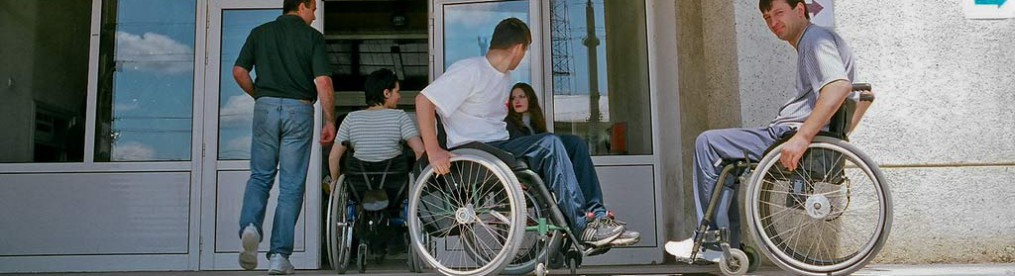
A city can be un-inclusive on many levels. One way is by being spatially un-inclusive for people with disabilities (PWDs) – as described in Enabling Justice: Spatializing Disability in the Built Environment by Victor Santiago Pineda. Pineda’s main argument is that cities are often non inclusive to PWDs through the ways they conceptualize and distribute space (Pineda, p. 111). For example, stairs with no accessible alternatives to climbing an elevated surface exclude individuals that are physically handicapped from accessing that space. In the same way, cities that do not have audible crosswalks, prevent visually impaired citizens from crossing traffic safely.

In addition, cities can also be socially and economically un-inclusive to individuals living in slums. According to the Asian Development Bank in the report titled “Inclusive Cities”, the region had an “economic miracle” following World War 2 that resulted in a massive influx in investment and economic development. This “miracle” caused citizens to flood urban areas. Urban developments and city planners could not handle such a quick population boom and urban slums exploded. According to the ADB, the average proportion of urban dwellers living in slums ranges from 33.2% to 50% (p. 5).

Several of my classmates in their blog posts and during class discussion brought up the idea of a smart city that drives and attracts innovation. Smart cities draw young people and intellectual adults to a community that fosters intellectual development and can be at the forefront of creating inclusive cities. However, as the ADB highlighted (and several of my classmates), while smart cities and inclusive cities can – and often – do coincide, sometimes they do not. A city can be extremely inclusive and participatory for all people but not be a central hub for innovation and progress. On the other hand, a city can be the center of intellectual progress but physically be inaccessible to those with disabilities.

To address this discrepancy between inclusive and smart cities, Habitat III (the United Nations Conference on Housing and Sustainable Development) created a plan of action called the New Urban Agenda (NUA). The NUA, introduces the concept of “Right to the City” meaning that each person must have equal access to all amenities – physical and intellectual – that a city has to offer. The Habitat III conference held in Quito, Ecuador on October 20, 2016 officially adopted the NUA marking a landslide victory for stakeholder groups that were previously excluded from safe and successful urban dwelling.  

New Urban Agenda, SDG 11, and Smart Inclusive Cities

Emily draws attention to an interesting dichotomy in both our class discussion and the overall discussion over SDG 11: the difference in smart cities and inclusive cities. As we discussed in class, smart cities attract young people and intellectual adults into a space that provides resources for innovation and enables them to develop ideas and exist in a sustainable environment. Inclusive cities, as discussed in the Asian Development Bank’s article, have the resources which allow all members of society to participate – not only those who are intellectual. While smart cities and inclusive cities need not be mutually exclusive terms, one focuses more on innovation and progress, and the other focuses more on equal ability to participate.

Both the New Urban Agenda and SDG 11 include language that advocates smart and inclusive cities. Equal access to safe, affordable housing, transportation, and public spaces as well as cultural expression an economic growth are all topics prioritized by each of these documents. What is more, both of these documents emphasize the role of incorporating major groups and other stakeholders who have previously been left out of the development discourse. Specifically, persons with disabilities (PWD) are directly mentioned. SDG 11 target 11.2 advocates for equal access to transportation for PWD, and 11.7 addresses equal access to green and public spaces. The New Urban Agenda recognizes PWD twelve times throughout the entire document. Both of these documents together set up an international framework for developing sustainable, smart, and inclusive cities.

In Victor Pineda’s article Enabling Justice: Spatializing Disability in the Built Environment, he argues that people should reframe how they define disability when approaching development. According to Pineda, the legal definition of disability fails to consider the physical space in which people carry out our lives (113). By omitting the “philosophical preeminence of space” (113), the definition of disability does not accurately capture what it means for a person to be disabled. Having a disability alters and in many cases prevents PWD from accessing certain resources in their environment which others may find commonplace. Staircases and crosswalks are commonplace in an urban environment, yet these resources which are designed to enable people to share space, are not accessible for PWD. The international framework set up by SDG 11 and the NUA are set up to address the obstacles facing large portions of the population who are prevented from participating in urban life.