Inclusive Cities, Habitat III, New Urban Agenda

In this class we had a long discussion on what entices people to move to and continue living in cities. It’s important to acknowledge these factors when considering how to design and/or rebuild smart cities. Based on what others said in this discussion, I think smart cities have a lot to do with Sen’s idea of development in terms of freedoms and opportunities available to individuals. People want choices and opportunities no matter where they are and the more choices they have available to them, the happier I believe people will be. People want places for recreation and leisure, but they also desire security and a sense of community. When city planners and councils determine the population they wish to attract to cities, they need to make sure the area provides such opportunities. When a city lacks what its inhabitants want and need, it will quickly deteriorate as opposed to develop. Moreover, it’s important to enact “right to the city” policies and practices so that all individuals, and not just certain groups, have equal right and access to the cities’ amenities. Often this involves significant strategic planning and immersion in order to make sure all are included and no one is marginalized.

In accordance with the New Urban Agenda, developing smart cities is a political, social, economic, and environmental task. All these aspects need to be addressed in sustainable urban development. With Habit III taking placing in Quito, Ecuador this October, now is the time more than ever to reconsider and discuss how our world’s future cities will be and what policies need to be immediately implemented. Governments are the main actors and drivers of smart cities, but there are also opportunities for non-governmental organizations and partners to engage and participate in discussion of these issues. For instance, the General Assembly of Partners (GAP) was formally launched at the Seconding Preparatory Committee for Habitat III in April 2015, and allows for all stakeholders to participate and to better collaborate in the conference in order to promote and establish sustainable urbanization.


Habitat III and the New Urban Agenda

An important point that came out of the discussion on smart cities, Habitat III and the New Urban Agenda was the concept of the “Right to the City”. The Right to the City is a concept that  works to ensure that each inhabitant of the city space should have equal access to what the city has to offer, and prevent the leaving of people behind.

In the Habitat III New Urban Agenda Draft Outcome Document there is one explicit mention of the right to the city that comes in the first paragraph under the subheading of “Our Shared Vision”. The paragraph tells of a “vision of cities for all, referring to the equal use and enjoyment of cities and human settlements, seeking to promote inclusivity and ensure that all inhabitants, without discrimination of any kind, are able to inhabit and produce just, safe, healthy, accessible, affordable, resilient, and sustainable cities, to foster prosperity and quality of life for all.” The paragraph concludes by noting the efforts of some national and local governments to enshrine the aforementioned vision, referred to as right to the city, in legislations, political declarations and charters.
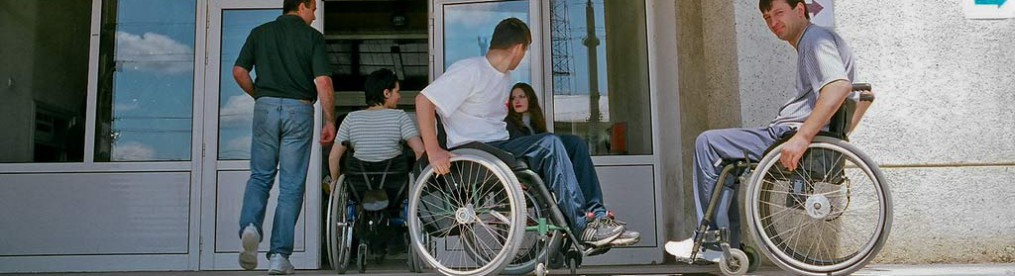
During the October 15th meeting of Habitat III General Assembly of Partners in 2015, Aromar Revi, co-chair of SDSN Thematic  Group 9 offered interesting remarks on the the right to the city in relation to the SDGs. He mentioned the importance of  cities and the intersectionality  in the SDGs, highlighting Goal 11. He emphasized that fact that sustainable urbanization in all  its complexity offers multiple opportunities for partnerships.  In looking at SDG 11, Making cities and human settlements inclusive, safe, resilient and sustainable, there are two targets that speak for the right to the city of persons with disabilities. Target 11.2 aims to  provide access to safe, affordable, accessible and sustainable transport systems for all, notably by expanding public transport, with special attention to the needs of those in vulnerable situations, women, children, persons with disabilities by the year 2030. Similarly, target 11.7 aims to provide universal access to safe, inclusive and accessible, green and public spaces, in particular for women and children, older persons and persons with disabilities by 2030. The language in these specific targets in SDG 11 represent a tremendous achievement for persons with disabilities, as does the addition of  persons with disabilities GAP Partner Constituent Group, highlighting the progress this stakeholder group has made moving forward with Habitat III and the New Urban Agenda.

Smart Cities, Habitat III and New Urban Agenda

What is a Smart City? This part of the class discussion gave us the opportunity to realize what makes a city “smart” in regards to how they treat their community and what they do to be as inclusive as possible. A smart city should be one that is able to support its entire community and be able to supply all of the necessities that every member should have. I was never aware about the previous Habitats that were created. It is interesting to know how Habitat III is doing as much as it can to stimulate its commitment towards the sustainable development of different types of housings. The goals that Habitat III have established give those involved in it the opportunity to play an important role in the implementation of the different goals and targets. Even though the conference will be expansive, this gives the multi-stakeholders, including local-government authorities, the opportunity to strengthen their roles in furthering the new urban agenda.

Our interaction with the environment and our surroundings help us better understand and conceptualize the “spectrum of capabilities and functions” that can help us recognize the “enabling or disabling powers of physical space” (Pineda). Pineda’s article, Enabling Justice: Spatializing Disability in the Built Environment, sheds light on how people with disabilities are not part of the “inclusive city” lifestyle. Sustainable urban development should include every single person and all of their needs. If the cities give people with disabilities the opportunities they need to be able to thrive independently, that makes them one step closer in total inclusiveness. Everyone needs the necessary space to thrive in.

A number of cities have taken steps to eliminate and eradicate any areas that can hinder the abilities for the place to develop. The Asian Development Bank article gave a great example of how taking part of the elimination process of unnecessary areas can actually cause more “disruption than anything else” (ADB). Forcing people to relocate from their homes can make them feel hopeless, especially if they are in a foreign environment. This creates problems for the number of people that wish to improve their lifestyles. To be a smart city, it should take the initiative of including every single one of their inhabitants without negatively affecting their lives and lifestyle. This urban development vision, if worked on properly, can positively impact a number of different communities that will give every person the chance they deserve to thrive.

Embracing the urbanization at all levels of human settlements can bridge the gap between the inclusiveness of developed and developing countries. Granted, not all developed countries have smart/inclusive cities to enhance inclusiveness, but they are much closer than developing countries. That is why it is very important that developed countries set the standards of inclusive cities for developing countries. To achieve sustainable development, we all must pay attention to the quality of outcomes that are dependent on the set of rules and regulations that will allow them to be implemented. It is crucial that local systems are effective in managing and keeping up with the maintenance of all the different aspects that together create an inclusive city and a new outlook on housing and urban development.

Smart Cities, Habitat III and the New Urban Agenda

As we discussed in class, smart cities are cities that have the resources to support elements that attract intellectual adults and young people. A smart city will have plenty of components that attract a knowledgeable population, like innovative technology, academic events that provide access to more knowledge, museums and social events. However, I am more interested in the second half of the discussion, inclusive cities. I think that both Habitat III, including the New Urban Agenda (NUA), the Pineda article and the Asian Development Banks Inclusive Cities article speak to the importance of attracting and supporting everyone that urbanizes, not just the knowledgeable population.

All of the readings mentioned above focus on sustainable urban development and what that means for disadvantaged populations. Habitat III, which is working to achieve SDG Goal 11, is advocating for equal access, use and enjoyment of cities for everyone in this generation and future generations (2). The plan is working to readdress the way that cities “plan finance, develop, govern and manage cities” (3). The NUA is trying to change the way that cities are conceptualized so that inclusive sustainable urban development can be achieved. For example, the NUA has a call to action to help fight discrimination of many of the Major Groups, but they also included PWD (4). The agenda is striving to provide safe, accessible cities to all citizens, not just the young professionals and higher socioeconomic status (SES) residents.

One very important consideration when working towards inclusive sustainable development in cities is spatial considerations for PWD. Pineda’s article, Enabling Justice: Spatializing Disability in the Built Environment emphasizes the need for framing disabilities in respect to the environment that surrounds them (111). In order for cities to be truly inclusive, they must have spatial justice for PWD. In other words, “space is only just if it is to the advantage of the least well off stakeholder” (115). It is imperative that sustainable urban development includes PWD and the space they need to thrive, like audible cross walks, kneeling buses and curb cuts (120). PWD can live full, independent lives if their environment (in this case the city) allows it.

The Asian Development Bank article also provides an example of empowering disadvantaged communities. Through their multi-sector approach to slum rehabilitation in India, the Bank worked to provide services to citizens where they currently lived. For example, the Bank funded many projects that provided community initiated services like access to roads, rain drainage systems and low cost sanitation (29-30). Although slums in India and low income urban areas in cities like Washington DC are in some ways different, they are also quite similar. My biggest concern for developing inclusive cities is to preserve and empower the community that already exists in the city. Gentrification is a huge concern for me as we embark on a goal to involve everyone in cities. The India case study provided a powerful message to me that you can empower a community where they are, instead of relocating them to further the goals of a “smart city.” Each citizen counts in an urban area and making plans that involve the voices of the marginalized is an important step to making smart cities and inclusive cities work cohesively.

Habitat III


Not only is our world population growing at an exponential rate, but patterns also show that the population is concentrating along coasts and in cities. A report by the UN Department of Economic and Social Affairs estimates that by 2050, 66% of the world population will be living in urban areas.

As seen throughout history, the process of urbanization is usually associated with positive social and economic transformations. Cities are the heart of economic activity, its inhabitants have greater access to social services, citizens are much more culturally and politically involved and health and literacy tend to be much better. However, these positive outcomes require effective city management with proper policy implementation and the necessary infrastructure to support them. Without some sort of organized control, rapid unplanned urban growth can be dangerous for sustainable development. Issues stemming from uncontrolled and almost hectic growth include things such as pollution, rapid environmental degradation and unsustainable production and consumption patterns. Yet, with proper oversight, organized urban growth is the key to sustainable inclusive development.

In November, Habitat III, the UN Conference on Housing and Sustainable Urban Development in Quito will be held for world leaders to come together and agree upon a plan to move forward with urban development in a way that is sustainable and ensures that all parts of society have equal access to all parts of the city (Class Lectue). Habitat III is committed to “strengthening the coordination role of national, sub-national and local government’s” in order to fulfill their vision for urban settlements (Habitat III). Such settlements are meant to be participatory, fulfill social functions, achieve gender equality, promote age responsive planning, adopt and implement disaster risk reduction, eradicate poverty and protect, conserve, restore and promote their ecosystems (Habitat III). While all these goals are incredible, what is left to be seen is how successful the international community will be at producing the desired and intended results. In the past, most issues with global frameworks have always been encountered at the oversight and implementation stage primarily but it appears that increasingly various actors are finding better ways to be productive and work together toward the common goals. So personally, I am more confident that this time around the results of the conference will be much more concrete and effective.

While trying to achieve the established goals, it is important to observe the side effects that some seemingly successful projects might have. For example, when it comes to creating more inclusive cities and reducing poverty, some of the eradication efforts to eliminate the presence of slums in major cities cause more disruption than anything else (ADB). The two common eradication methods are complete demolition and resettlement or upgrading existing slums. Resettlement most often creates more problems for the individuals being uprooted despite the fact that their physical living environment might improve, simply because individuals are taken away from their familiar surroundings and their jobs. By moving them, many people are relocated without jobs and they feel more helpless because they are now living in a completely unfamiliar environment. Upgrading can be more successful, but also depending on the level of improvement of the individual slums, the cost of living in these communities increases to the point that its original inhabitants can no longer afford to the live there and are indirectly forced out of their homes. Therefore, it is crucial that projects be implemented with these negative externalities in mind and that local communities contribute to the betterment of their surroundings so as to avoid a narrow, one-sided approach.

The goals that Habitat III lays out are exciting and it will be interesting to follow how the world responds to them and works towards achieving them.