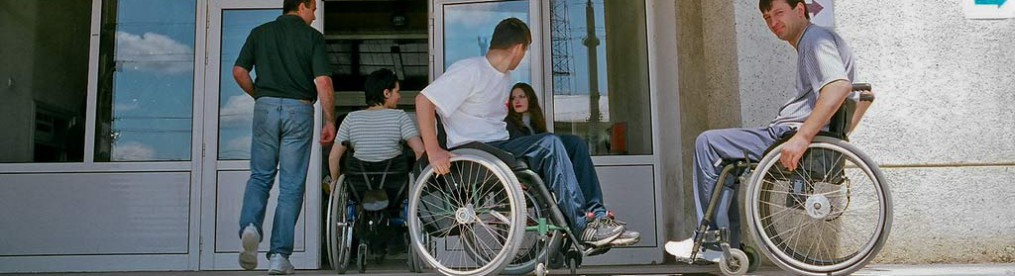
Two of the most pressing questions of today are, how do you plan for natural disasters and how do you build back better after one occurs? The vast majority of disasters are linked to high-impact weather events caused by climate change. The core areas of disaster risk reduction (DRR) work includes climate change adaptation, building disaster resilient cities, schools, and hospitals, and strengthening investment for DRR internationally. Continue reading
Inclusive Disaster Risk Reduction
Disaster Risk Reduction and Inclusive Practices
The Sendai Framework is one of the most inclusive UN conferences. Adopted at the 3rd global UN Conference for Disaster Risk Reduction in Sendai, Japan, the Sendai Framework outlines four priorities, seven targets, and thirteen guiding principles to adopt a people-centered approach and to recognize disability inclusive in Disaster Risk Reduction (UNISDR). The Sendai Framework ultimately shifted the focus from disaster management to disaster risk reduction with the primary focus on reducing the risk of both natural and man-made disasters while planning to rebuild cities in a sustainable, inclusive and resilient way. Following the Sendai Framework, the Dhaka Declaration on Disability and Disaster Risk Reduction took place in Dhaka, Bangladesh in 2015. Two important points discussed here are the recognition that persons with disabilities are most vulnerable during disasters and how poverty and disability can intersect. Its primary focuses were on ensuring a people-centered approach, engaging meaningfully with persons with disabilities at all levels, strengthening governance and partnerships, integrating gender, age and disability data, and promoting empowerment and protection. What stands out about the Dhaka Declaration is that it reemphasizes the issues raised from the conference, but also provides specific actions that can be taken by the countries involved. This provides clear goals for the future to guide governments and organizations towards inclusive disaster risk reduction that includes persons with disabilities in the decision-making processes.
The Global Platform for Disaster Risk Reduction of 2017, which took place in Cancun, Mexico, redefined accessibility in the modern age (UNISDR). To ensure that all persons with disability had access and were included in the decision-making processes of the conference, the GP2017 provided International Sign Language translators for support during sessions, offered remote participations at hubs in Bangladesh, Fiji, Belgium, and the United States, and introduced the use of robots to connect these remote hubs to the conference. Although live webcasting does not always give access to discuss topics and ideas further with other attendees, the robots gave more access to those not able to participate in person to virtually engage with the conference.
I am blown away by the use of technology in this way, because of its role in promoting accessibility and inclusivity. Yet, I recognize its limitations because all may not have access to this technology and technology might not always be reliable. With my capstone project on inclusive education in Malaysia, I am intrigued by the idea of using this technology in teacher training programs to promote an exchange of ideas and learning.
Maitland Report
The Maitland Report references the effort to establish telecommunications in all areas. The ability to use telecommunication has become a vital part of today’s economy and necessary to be a part of the global context. The report is quoted as:
“virtually the whole mankind should be brought within easy reach of a telephone and, in due course, the other services telecommunications can provide. That should be the overriding objective. Achieving this will require a range of actions by industrialized and developing countries alike.”
This is because telecommunications have been neglected as an important part of integrating people in underdeveloped areas to the rest of the world. The combination of raising productivity, increasing efficiency, and enhancing the quality of life in these areas can be attained by an increase in access to telecommunications. Whether it is consistent access to a landline, cell phone tower installation for use with personal cell phones, or internet cafes for email use, these communications have proven vital in today’s world. Without these technologies, communities remain isolated despite other efforts to integrate them into the larger economy.
Another important note is that these telecommunications benefit everyday life in the developing areas in which they are implemented. For instance, health services will increase with the ability to call for emergency medical care or allow access to more advanced sciences. Another example is the increase in education available with the increase in telecommunication options. With access to stable internet, students are able to access the world of information usually regarded as a basic education tool in the developed world. Further, adults have access to information that could benefit any entrepreneurial venture they take.
The contributions they make towards the agricultural and infrastructure sectors of the global economy also benefits already developed areas. By allowing the fairer distribution of goods from these areas, it expands the global market and increases competition. This may sound like a threat to developed areas and their economies but it would allow for better products and increase opportunities for specialization.
Disaster Risk Reduction and Inclusive Development
The UN classifies Disaster Risk Reduction (DRR) as the desire “to reduce the damage caused by natural hazards like earthquakes, floods, droughts and cyclones, through an ethic of prevention.” The UN Office for Disaster Risk Reduction (UNISDR) also takes the stance that there are no such things as natural disasters but only natural hazards. The UNISDR believes that there should be an importance placed on restoring and maintaining the environment. This is one aspect of the reduction element of DRR. If State parties were making better choices in how land and resources are managed, then it would be possible to reduce the disasters, or to at least minimize the damage that could happen. However, this does not mean that State parties are supposed to look for ways to stop natural disasters, much of the environmental impact that causes natural disasters to be more destructive than they once were have already happened. What State parties can do, on the other hand, is implement more advanced warning systems and improve the overall preparedness for dealing with natural disasters.
Disaster Risk Management follows a similar idea. Poor people are more frequently affected by natural disasters, and it is up to State parties to make sure that poor persons are able to survive during and after the natural disaster. DRM can include planning into urban areas, especially as more and more people are expected to move into urban areas by 2050. As natural disasters such as droughts push more people into cities, not only where there be a food shortage related disaster, there will also be a housing disaster. The international approach to disasters is a “culture of prevention.” The UN, along with governments at the national, state, and local level, civil society, and general collaboration between state actors, are all major players in DRR.
The UNISDR outlines a plan of vision, goals, objectives, and implementation when it comes to preventing disasters. There is an emphasis on research and including risk reduction into development plans that are already under way. The Sendai Framework—which was adopted in 2015—looks to reduce the loss of lives, livelihoods and health in disasters. The Sendai Framework also has nation states take over the role of leader when it comes to reducing disaster risk. Given that each nation state experiences different environmental factors, I believe that is important for states to take the leading role when it comes to disasters. By having individual states lead the way, more individualized plans—or regional plans for countries that experience similar climates—could be created for the greater benefit of the people living in those countries.
Creating an Inclusive Framework in the Field of Disaster Risk Reduction
When one thinks about Disaster Risk Reduction, very rarely does a layman include minority groups in their analysis. You may think about recent natural disasters and the lives and livelihoods lost. This field of study refers to the prevention of loss as much as possible during these natural hazards like earthquakes, floods, or hurricanes. The major document guiding these prevention principles is the Sendai Framework.
Following the Hyogo Framework for Action, the Sendai Framework, adopted in 2015 at the Third UN World Conference on Disaster Risk Reduction in Japan, has four priorities when advocating for prevention and safety:
(i) Understanding disaster risk
(ii) Strengthening disaster risk governance to manage disaster risk
(iii) Investing in disaster reduction for resilience and
(iv) Enhancing disaster preparedness for effective response, and to “Build Back Better” in recovery, rehabilitation and reconstruction.
By investing in these, the international community has the ability to create a safer world for all. It includes seven specific strategies for accomplishing these goals and ensures continuing innovation in the field.
It also places emphasis on the vulnerable populations by creating a “persons centered approach”. For instance, persons with disabilities are mentioned six times throughout the document, older persons are mentioned twice, women are mentioned seven times, and children are mentioned three. This inclusion is reaffirmed by the Dhaka Declaration, which places particular emphasis on the validity of persons with disabilities and their role in minimizing disaster losses. This is particularly done by linking the Sendai Framework back to the SDGs, CRPD, and other frameworks for poverty reduction and elevation of the voices of marginalized groups like persons with disabilities.The Dhaka Declaration also uses a multi stakeholder approach, including “members from Governments, UNISDR, regional and international non-government organizations working on disability and disaster risk management, professionals and academicians, groups and organizations of persons with disabilities, bi-lateral and multi-lateral development agencies and other development sector representatives” as signatories to the declaration to bring all these different groups to the table. Other examples of inclusiveness in the Disaster Risk Reduction field is through the 2017 Global Platform for Disaster Risk Reduction (which advocates for solutions like International Sign Language Interpretation, remote participation, web conferencing with closed captioning, and more) and the Global Facility for Disaster Reduction and Recovery (GFDRR). By working with different groups and emphasizing the existence and participation of persons with disabilities, the field of Disaster Risk Reduction is not only able to be more effective, it continues to work on affording natural human rights to a marginalized work. Examples like these will encourage growth in the conversation about inclusiveness and become the guiding principles in the industry to follow through the inclusion of goal setting and concrete strategies to accomplish them. In the future, thinking about the prevention of loss following natural hazards, vulnerable populations like persons with disabilities will be so normalized that thinking about them comes automatically.
Disaster Risk Reduction and the Sendai Framework
In the wake of climate change and increased pollutions, natural disasters such as hurricanes, earthquakes and more, are becoming more common across the globe. The United Nations Office for Disaster and Risk Reduction state that these events are more about disaster hazards, and as a result are working towards reducing the damage caused by such events. These disasters can have a serious impact on not only environmental but also infrastructure and societies as a whole. Depending on the severity of the disaster, it can have major impacts on how individuals live their lives. For instance, Puerto Rico is still struggling to regain power. Furthermore, this disaster left families with little to nothing as their homes and belongings were completely destroyed. Disaster risk reduction works to reduce the risk of disaster by examining its causes. These include:
-exposure to hazards
-minimizing vulnerability
-land management
-improving preparedness
-increased detection of warnings for disasters.
Risk reduction for disasters is about not only reducing risk after disasters have already happened but also mitigating disasters by improving preparedness for populations.
The Sendai Framework is a 15-year agreement that discusses the role of multi-stakeholders in disaster risk reduction. Work for this framework began in 2012 and proceeded with negotiations in 2014-2015. It focuses on practical and evidence-based guidance. There are 7 global targets that include: reduce disaster mortality, individuals affected, economic loss, infrastructure, increase international cooperation and availability and access to resources to disaster risk information. Furthermore, there are 4 priorities of action:
- Understanding disaster risk
- Strengthening disaster risk governance to manage disaster risk
- Investing in disaster risk reduction
- Enhancing disaster preparedness for effective response and to “Build Back Better” in recovery, rehabilitation, and reconstruction.
The Sendai Framework for Disaster Risk Reduction calls for guidance on implementation support and works to continuously engage multilateral stakeholders, strengthen accountability, and overall reduce disaster risk. The framework wants to capitalize on the opportunity of mutual reinforcement between states and international agreements. It works to increase reporting by state actors, continued collaboration. Goal setting and target indicators, and cooperation across the multiple actors involved in the framework.
Sendai Framework
The Sendai Framework for Disaster Risk Reduction was adopted on March 18, 2015 in Sendai, Japan at the Third United Nations World Conference on Disaster Risk Reduction. This framework allowed all participating countries 5 opportunities relating to disaster risk reduction according to the Framework’s Preamble:
- To adopt a concise, focused, forward-looking and action-oriented post 2015 framework for disaster risk reduction
- To complete the assessment and review of the implementation of the Hyogo Framework for Action 2005-2015: Building the Resilience of Nations and Communities to Disasters
- To consider the experience gained through the regional and national strategies/institutions and plans for disaster risk reduction and their recommendations, as well as relevant regional agreements for the implementation of the Hyogo Framework for Action
- To identify modalities of cooperation based on commitments to implement a post 2015 framework for disaster risk reduction
- To determine modalities for the periodic review of the implementation of post 2015 framework for disaster risk reduction
This World Conference also gave the participating countries an opportunity to restate their dedication of disaster risk reduction efforts and initiatives.
This World Conference addressed common accessibility issues in a manner of ways regarding the Sendai Framework. These included International Sign Language Interpretation, Remote Participation, Webconferencing, Remote Hubs, Remote Participation via Telepresence Robot, Accessible documentation options, and the option to request accessible transport. These address General Assembly resolutions regarding accessibility for those who require sign language or are in areas that prove difficult to travel. While these steps are important, they do not reach nearly every community. Unfortunately, these communities and populations that may not have access to information that comes from the Sendai Framework are those communities and populations who are most likely to see heavy effects of disasters. For instance, there is only some access to the information at hand for those who live in small villages. The Remote Hubs were only located in four major cities, making them inconducive to include those in rural areas.
 Disability Inclusive Development