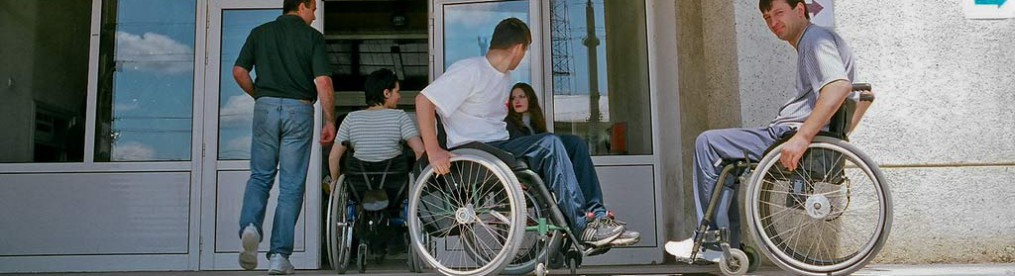
Intesectionalities in Development

Intersectionality exists everywhere. Within development theory, intersectionality is especially prominent. The meaning of the main word, intersect, can be defined as two or more things passing through each other. The theory of intersectionality is a framework that is centered on social identities. It is a framework that can be applied to a variety of topics relating to development, including gender, disability, poverty, religion, social status, job status, and others. Intersectionality affects everyone because everyone is an individual. Everyone is affected by a set of circumstances that is unique to only that individual person. A person might be deaf and female or unemployed and old. These are important things to consider when talking about development because everyone is in a unique situation and must be treated as such in order to effectively understand how policies and procedures will affect them. A person who is deaf will have different obstacles to overcome than a person who is blind, but a person who is elderly and poor has another set of obstacles. These are things that must be considered when creating policies for inclusive sustainable development.

When I took my course to get certified to teach English as a Second Language, I was taught to teach to the average student in the class – not the best, but also not the worst. It was reinforced that we should provide support, whether that is more challenging homework for the best students or more 1 on 1 time for the students not doing as well, as much as possible. When teaching as a class, it is important to teach to everyone, but each individual must be taken into account to ensure success.

In regards to sustainable development, some of the most common intersectionalities that exist are: gender and disability; gender and development; youth and development; and race, ethnicity, disability, and development. These individual topics are some of the most controversial topics. Gender is hotly debated on every level of the socioeconomic scheme while disability is being worked into policies (because we have long disregarded 15% of the population). Race and ethnicity have been a tense topic for hundreds of years, with racism still prominent today. But these intersectionalities are found in every day life. In sustainable development, we have to take these intersecionalities into consideration when drafting policies in order to be truly inclusive and not leave anyone out. This needs to be done on every level from local governments to the United Nations, with relevant stakeholder groups taking part in the discussion and getting their voices heard.

The Major Groups Framework Contribution to Intersectionality

Without committing to intersectionality, advocacy cannot act at its fullest potential. This term refers to how systems of oppression compound under identities of race, gender, class, ability, etc. This originates in feminist thought by Kimberle Crenshaw, a black legal scholar, in 1989 with the idea that the patriarchal system works alongside other societal constructs, but can and should be used when shaping larger policy frameworks in general.

One way this is accomplished is through the creation of the 9 Major Groups Framework in order to have greater inclusion to the formal UN process at the Earth Summit in UNGA Resolutions 66/288 and 47/191. These groups include Women, Children and Youth, Farmers, Indigenous people, NGOs, Trade Unions, Local Authorities, Science and Technology, and Business and Industry. These groups have benefits by being included at the table. For example, the official representative of these groups can register for conferences, intervene in official meetings, make recommendations, they can submit papers, comments, etc on topics discussed, they receive allotted time to speak, etc. This is a major advancement; however, there are also limitations to this framework by excluding stakeholders such as persons with disabilities and older persons. Although higher inclusion makes it more difficult to support the general groups, the HLPF’s overseeing of SDG implementation allows for the inclusion of the 16 identities under the MGoS framework through the UNGA Resolution 67/290.

Despite typically thought of as progress, the intersectionality of identities can be used to dampen specific voices like persons with disabilities under the idea that their voices can be heard in the other major groups. By using a multi stakeholder framework, the breadth of perspectives and identities heard can only improve the impact of policies, even if it takes longer to go through at first. This is another case where unintended consequences must be taken into consideration when creating and contributing to policy work. Scholarship and dialogue about intersectionality has flourished in recent years, allowing for greater counteraction to those systems of dominance and oppression.

Why is Multi-stakeholder Cooperation Essential for Sustainable Development?

In the field of development, there is a multitude of actors that promote the SDGs and work towards improving the world on many different levels. These levels can go from grassroots movements, to local government action, to International cooperation. Each level of development has its own methodology, its own approach to resolving the Grand Challenges that we face, and each development actor presents different tools and knowledge for resolving the issues.

At the grassroots level where NGOs and other developmental organizations that are locally based perform hands on development work, they operate directly with the target population and do most of the developmental field work necessary to help local communities grow. These organizations collect over time the knowledge of what works and what doesn’t work on a local scale, and it allows them to understand the needs of the population, making the development work as efficient as possible. However, grassroots organizations often lack the funding and resources to expand the scale of operations to affect more people, and because of this, the impact of their development work remains local.

Governments also play an essential role in development work as they manage the resources of the country and therefore have more power to fund development projects. The government also has a large extent of knowledge on the needs of the population. However, what the government has in resources and knowledge, it lacks in efficiency. Governmental development is often criticized for its bureaucratic red tape that makes it very difficult to efficiently manage and run development projects, and this lack of efficiency results in development operations that become much more expensive and yield lesser results.

Finally, international developmental organizations such as the World Bank, the IDB, the United Nations, the HLPF, and many others offer a macro approach to development through international cooperation. The advantages to this approach are that it allows to create a conversation surrounding specific developmental issues and brings them to light, making governments realize the importance of development work in the grand scheme of the SDGs. It is also a good place for different governments to propose ways to implement development with the purpose of meeting a particular criteria and through treaties, binds countries to meet the goals. Unfortunately, there is not a strong enforcement mechanism that forces countries to implement the development work they signed off to.

At each level of development there are partial solutions to meeting the SDGs but still encounter specific difficulties at each layer. The difficulties that the different levels of development encounter however can be solved using the tools and knowledge that other actors operating at different scales have to offer. No single actor possesses the solution to development, but by putting actors together, the optimal combination of knowledge and resources would be met, allowing for the maximum amount of progress to be made. This is fundamental to understanding the importance of multi-stakeholder operations in development and why it is essential to have platforms where the different actors operating at different levels of development can share ideas and knowledge to all resolve Grand Challenges.

How Does the NUA Include Rural Development as an Essential Part of Its Implementation?

When the New Urban Agenda: Habitat III conference was held in October, 2016, the main focus of the conference was to promote the idea of sustainable cities and start developing ideas on how to implement strategies of urban development. Although this document’s main purpose focuses on the urban landscape, the first draft of the NUA III official document contains fifteen mentions of rural development as a part of the plan for urban development:

Article 43: integration of rural development in the framework of developing cities and human settlements

Article 44: integration through ” transport and mobility, technology and communication networks and infrastructure”

Article 62: working with both urban and rural areas, “strengthening the sustainable management of resources ”

Article 77: ensuring coherence of local governmental policies regarding land development keeping rural areas in mind

Although it may not be evident how including rural development helps meet the targets of Habitat III, it is essential to consider what dynamics exist between the two and how improving one can indeed improve the conditions for the other.

One of the biggest challenges that we are currently facing is the overpopulation of our cities and how to accommodate for increasing numbers. This increase in population is mostly due to the migration of poor populations living in rural areas that look towards the city for better work opportunities. If we are to resolve overpopulation of cities, we need to look to what can be done in the rural landscape to provide sufficient opportunities and benefits to rural populations to keep them from migrating to the cities. This is the main goal of articles 43 and 44, where a stronger integration of rural-urban development through technology, communications, and infrastructure can bring a level of development to the rural setting, providing more economic opportunities in those areas and mitigating rural-urban migration.

Another important aspect is the effect that urban development has on the rural landscape. As cities grow, the need for resources such as land, water, food, electricity, etc… increases and most of the time, the use of those resources impacts rural communities. A lot of the waste generated by cities ends up polluting rural communities, which affects the crop outputs and therefore the livelihoods of the populations living in areas most affected. Article 62 emphasizes a strong partnership between the two in order to advance the goal of sustainable cities that would benefit rural areas as well. The urban sector bring to the table new technologies that can help improve the efficiency of the resources it uses, such as creating the infrastructure for green energy (solar panels, hydroelectric, wind energy) and reduce the amount of pollutants that cities emit, and the rural sector provides the conditions under which these resources work best, and provides insight on the effects that the pollution has. Sustainability is therefore an issue that needs to be addressed with the rural sector in mind if it will work at the highest degree of success.

It is impossible to achieve the goal of “sustainable cities” without considering the effects that it has on rural communities and without taking into account the tightly wound relationships that exist between the two. This is why rural development plays an important part in the development of Habitat III and helps us reach most of the Sustainable Development Goals in the 2030 agenda.

Intersectionality in Sustainable Development

Intersectionality is an important factor to consider when looking at inclusive sustainable development. Intersectionality is a concept for the multiple identities that people ascribe to and each of those identities combines within a person to create a unique experience and perspective on the world. It is these intersections that can create varying opinions within a major group. Female youth have a different identity and experience from male youth. One identity does not necessarily define your whole person, but rather the combination of many identities creates a complex identity that needs to be respected in each of the communities that that individual ascribes to.

Like we discussed in class, people with disabilities have many intersectionalities. By asking them to lump disabilities in with other major groups is to ignore their unique needs in each category of the major group’s framework. A female with disabilities in a rural, farming community has very different needs than a male, union worker with disabilities. All of these identities interplay with each other to create the experiences of individuals and the needs of a community.

When approaching inclusive sustainable development, all perspectives and experiences should be included. This is a major challenge for development. Including the voices from the major groups, who are often the most marginalized in society, will mean restructuring the goals, programs and outcomes of projects. But it is crucial that the intersectionalities of the community be considered. What are the gendered needs of this community? What are the needs of children, indigenous people, workers etc.? All of these factors need to be explored in a nuanced and cross sectional way. Also, development planners need to look at the needs of people not included in the major group’s framework, like persons with disabilities. Inclusive sustainable development means including everyone in every way. It is a tall order to fill and has yet to be achieved anywhere in the world. But by recognizing the intersectionalities of the people you are serving and their resulting needs, development can hopefully become a more nuanced and responsive field.

Intersectionality in Sustainable Development

Intersectionality in sustainable development essentially looks at how “different sets of identities impact access to rights and opportunities” (Intersectionality: A Tool for Gender and Economic Justice 1). For example, a woman of color may face different challenges as opposed to the challenges faced by a white male with a hearing impairment. When looking at the stakeholder groups outlined by the SDGs (Women, Children and Youth, Indigenous Peoples, Non-Governmental Organizations, Local Authorities, Workers, and Trade Unions

Business and Industry, Scientific and Technological Community, Farmers), it would not be uncommon for there to be intersectionalities between the overlapping issues faced by these groups. For example, members of the scientific and technological community who are also women may face similar issues such as in receiving funds for project developments. Thus it is important for the international community to understand that in addressing the inequalities that are faced by certain stakeholder groups, new policies or development projects may also end up benefiting other stakeholder groups whose development problems may intersect. Furthermore, there are other stakeholder groups that are not mentioned above, such as persons with disabilities, whom would also likely experience challenges similar to those faced by the groups outlined by the SDGs. In addressing the challenges of the various stakeholder groups, development goals will be more holistic in their scope and extent of beneficiaries that are targeted.

With education being one of the primary goals targeted by the SDGs, improvement in the quality and access of education for all persons would be beneficial, for example, for persons with disabilities whose education programs may have previously neglected addressing the unique challenges faced by the individual, as well as may also benefit the progressive goal of female empowerment in making education more accessible to females, thus enabling them with more economic and social mobilization capabilities, in turn promoting the greater productivity that many communities are in need of in order to nurture a more inclusive and environment with generally higher quality of living standards.

The realization of intersectionality in sustainable development goals will allow for the global community to plan for projects in a way that is inclusive in addressing all challenges met between various stakeholder groups. Additionally, it is important for policy makers to empower previously neglected stakeholder groups, such as pwds, with a more powerful voice in expressing grievances and the changes they wish to see  in development goals and development plans, in order to address them and increase all member’s of society’s capabilities for success.

Intersectionality Until it Hurts

Any development scholar, policy maker, parent, or elementary school student requires an understanding of intersectionality to develop an accurate understanding of almost any domestic or international problem. The interactions of different identities for a single person or a population shapes every behavior of that entity to some degree, and without an understanding of these identities it is impossible for an outsider to fully understand the entities motives or goals. While I cannot exaggerate the importance of keeping intersectionality at the front of your mind regardless of who you are, when intersectionality becomes an impediment to progress, it must be seen as an impediment.

Let me clarify what sounds like a harsh perspective with an example. The site that I propose in my website will only being available so a relatively limited number of people. First, use of the site will require access to electricity and internet. Anyone who cannot afford internet access or transport to a place with access, they cannot receive the project’s benefit. Additionally, limits to my personal knowledge will keep the site only in English, and only in written text. This will prevent any non-English speaker, anyone who is illiterate, and any blind person from accessing the site without help from another person.

These limitations are substantial. It can be argued that my project does not help those suffering from learning and seeing disabilities, or those people who lack literacy. I would not contest any of those criticisms, but I will advocate for the project for years, regardless. The goal of universalizing internet access and electricity is a central focus of the UN and other international organizations. There are plenty of people who can translate a text and there are organizations working to make websites accessible to those who are illiterate of living with impaired sight. They can be brought in to the project at a later date, but immediate implementation of the project can help some people today. To ask one method to solve even one issue for every person limits any actor from enacting a new idea sometimes regardless of its strength. It is imperative that an actor create this website and the accompanying profiles quickly. Any member of any of the aforementioned stake-holding groups has a clear incentive to create the site. It is important to understand that whomever creates the site will have control the accreditation system and the site’s access costs. Each group will benefit from the site to some degree regardless of who creates it, but the creator of the site will be able to use their control to make it disproportionately beneficial to their interests. Intersectionality should be incorporated into every project as soon as possible, but total intersectionality should not stop good policy from helping people in need. Intersectionality

Intersectionalities in Sustainable Development

Throughout the topic of sustainable development there exists many intersectionalities. However, before one can fully understand where these intersectionalities exist within the area of inclusive development, it is first important to understand what an intersectionality is. In a broad sense, an intersectionality, is a meeting point or a crossing point of two objects or concepts. However, this definition is exceedingly broad and does not directly speak to the issue at hand. Therefore, for the purpose of this reflection an intersectionality can be defined as the place at which two aspects of sustainable development cross or intersect. With these definitions established, one can next define what intersectionalities exist within the topic of sustainable development.

There are many intersectionalities that exist within the topic of sustainable development. Three of the most prominent ones explored by this class are: [1] gender and disability, [2] gender and development, and [3] youth and development. However, many other intersectionalities exist within the subject of sustainable development exists as well. These include: education and disability and education and poverty. Understanding the relationship between these variables, and many more like them, is absolutely critical to understanding how truly sustainable development can occur. For example, if one understands how addressing gender disparities can influence overall development or how gender inequities exist with sub-groups such as persons with disabilities, more efficient strategies can be developed. When these relationships are ignored; however, achieving sustainable development can be exceedingly difficult if not impossible. Intersectionailites can also exist within different international agreements that address the issue of sustainable development. For example, internsectionalities exist exist between the SDGs and the CRPD in terms of inclusive education. Therefore, addressing distinct intersectionalities that exist within the topic of sustainable development is of the utmost importance.

Yet, as is discussed by Gabby in her blog post, adequate attention is not always given to these intersectionalitites. Even more troubling is that the intersectionalities that exist within sustainable development are not always understood. Instead of perceiving or addressing sustainable development as the complex web of overlapping issues that it is, some address sustainable development as a series of isolated issues that have no or minimal influence on each other. These patterns of thinking leads to ineffective strategies that do not adequately address many of the root issues associated with sustainable development. Only when the intersectionalities associated with sustainable development are fully addressed can true sustainable, inclusive development be achieved.

Crossroads in Development

Intersectionality in international development is a largely feminist theory, originating in response to the lack of gender sensitivity and overall presence of gender-based inequalities in traditional development approaches. While its roots are in feminism, intersectionality can be and has been extended to cover a larger scope of development topics, including gender, disability, poverty, and age, among others. Basically, intersectionality in development is the idea that there are inevitably crossovers in who and what development agendas seek to address. No person or topic lives in a vacuum, and instead, our population is made up of unique individuals, each with their own complex identity. For example, one female can be hearing impaired and live in poverty, while another female might be visually impaired and homosexual; so while they may have similar gender concerns and even disability concerns, they could also have different disability, economic, and social concerns.

Recently, I have been interning at a development consulting firm on a project based in Ghana that seeks to address private-sector midwives in six of the ten regions in Ghana. While the project is mainly focused on providing these midwives with the business skills needed to run a successful clinic, we also partner with a national midwives association and work to build the capacity of this organization. As an intern with some experience and knowledge in the area of disability, one of my roles has been to support the incorporation of disability into the project. That being said, the concept of intersectionalities in development has been a recurring theme in my research; the intersection being between disability, poverty, and gender, with an added component of maternal concerns. While “general” gender inequalities have been addressed with greater effort and sensitivity in recent years, there remains little to be done for women with disabilities, especially in the area of sexual and reproductive health. I found that there are stigmas around the world that include the perception that PWDs can not have sex, should not have sex, and/or should not be parents. These stigmas contribute to the exclusion of PWDs from learning about sexual health and have led to many unplanned pregnancies, unsafe deliveries, and the spread of STIs, among other issues. This week, one of my supervisors was able to meet with a couple of the leading disabled persons organizations (DPOs) in Ghana to discuss potential training opportunities for midwives so as to provide better services for women with disabilities, among other discussion points. This type of discussion is promising for the future and shows that there is always room for improvement in various disciplines by recognizing and attempting to address intersectionalities in development.

When designing development frameworks, it is important to recognize these intersectionalities so as not to further marginalize populations by ignoring certain groups and/or by unknowingly using language that is too specific and leads to further exclusion. The best way to address these concerns is through discussion between relevant stakeholders, as can subtly be seen with the implementation of the UN Major Groups Framework and invitations to other relevant stakeholders.


Intersectionality

Intersectionality refers to the concept that social identities are overlapping, connected, and fall within systems of power, oppression, and discrimination. In other words, a person can be many things at once and each identity always has an “other” that it is pitted against and possibly discriminated against. In relation to inclusive sustainable development, intersectionality is key.Historically, vulnerable populations – like women, children, and persons with disabilities (PWDs) – have been excluded and absent from global development policy making it extremely difficult to elevate the groups that need it the most. My capstone on refugee menstrual health aims to highlight an intersectionality between global development and women’s health.

Recent policy and global frameworks – like the Major Groups Framework and the SDGs – have made great strides in the fight to make development much more inclusive of different intersectionalities. For example, the major groups included nine groups that were previously excluded from the decision-making process (women, children and youth, indigenous peoples, non-governmental organizations, local authorities, workers and trade unions, businesses and industry, scientific and technology community, and farmers). In addition, the SDGs are much more inclusive, describing a wide array of identity types in their indicators and sub-goals. The major groups framework allows many groups to have a say in the development decisions that directly affect their communities on the local level.

Despite the progress made to make development more intersections, there is still a major blind spot. For example, even though they make up about 15% of the world’s populations PWDs are still excluded as a major group and often struggle to literally get a seat at the table. As we’ve discussed this semester, PWDs face a very specific set of barriers in nearly every aspect of development from physical accessibility to cognitive accessibility. If these issues aren’t addressed and eradicated, development will never be fully inclusive. Any person can have a disability regardless of race, religion, ethnicity, national origin, gender, sexual orientation, etc. it is one of the only identities that can transcend and cut across nearly every identity. If you’re alive, you could have a disability. Because PWDs are often excluded and made invisible, policy often lacks providing necessary and adequate support. Therefore, if the development community can make every single policy keeping in mind that PWDs will be affected, we are one step closer to creating a much more inclusive, sustainable world.