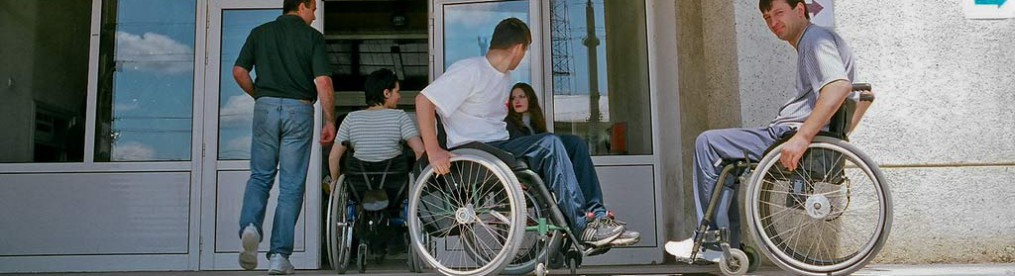
Summary: The SDGS follow the MDG’s positives while improving on sustainability and inclusivity targets. The High-Level Political Forum is an important mechanism for adding and element of inclusivity to discussion of the SDGs. People with disabilities must be included in the discussion for the SDGs to succeed. Continue reading
SDGs and HLPF
SDGs and the HLPF
The Sustainable Development Goals (SDGs) mark significant progress for persons with disability. While the SDGs carry forward the clear goals, targets, and target indicators that were praised from the MDGS, the SDGs make a departure by including references to persons with disability. Continue reading
SDG Overview and the High-Level Political Forum
The 2030 Agenda consists of 17 interrelated goals, targets, and indicators to ensure sustainable and inclusive development. The 2030 Sustainable Goals (SDGs) recognize the multidimensionality of poverty and builds upon the 2015 Millennium Development Goals (MDGs) to fully realize the human rights of all peoples. The goals also highlight the need to implement and monitor programs regarding climate change. In comparison to the MDGs, the SDGs are intended for universal application in both developing and developed countries. All countries are considered to be developing countries and to achieve the goals set forth, and all stakeholders must work together in implementation and monitoring processes. Eradicating poverty and zero hunger are the first two goals of the 2030 UN Sustainable Development Agenda. The 2030 UN Sustainable Development Goals aim is to mobilize global efforts and partnerships. The overarching goal is to end all forms of poverty whilst ensuring no one is left behind in development initiatives.
The United Nations High-level Political Forum on Sustainable Development (HLPF) was established at the Rio+20 Conference of Sustainable Development. The HLPF is responsible for the review and follow-up of the 2030 Agenda. Each year, the HLPF decides on goals to focus on. In 2019, the HLPF will focus on empowering people and ensuring inclusiveness and equality. This encapsulates Goal 4, 8, 10, 13, 16, and 17. All 17 goals have convergences and opportunities to build off each other. Empowering people and ensuring inclusiveness and equality requires the voices of marginalized communities to be amplified. Active participation is further needed. The United Nations recognizes this need and formalized nine sectors of society whose participation is essential for UN related activities. The Major Groups represent women, children and youth, indigenous peoples, civil society, local authorities, workers and trade unions, business and industry, and the scientific and technological community.
SDG & HLPF
The Sustainable Development Goals are 17 international development goals set by the United Nations. The SDGs are meant to fill the place of the expired Millennium Development Goals. The SDGs are an improvement upon the MDGs because they are more specific and within each goal are detailed targets and indicators that allow countries to better determine and track their progress. The SDG that relates closely to the field of my interest is SDG 7 which is renewable energy access.
The High Level Political Forum is a platform within the United Nations that aims to respond to the Sustainable Development Goals which are set to be achieved by 2030. The Forum convenes every year and meets over a period of 8 days. The HLPF’s main position is to support and oversee the implementation of the SDGs. There are 9 major groups within the Forum that represent the main constituency groups. These groups are women, NGOs, indigenous peoples, children, local authorities, unions, IT community, farmers, and businesses. These are the major stakeholders in development initiatives and are therefore given a platform for which to voice their concerns, opinions, and best practices to make the implementation of the SDGs a success.
Sustainable Development Goals
The United Nations was formed in 1945, officially coming into existence on October 24. As it stands today, its goals are to save people from war, to affirm human rights to all people, to uphold justice and respect, and to promote social progress as it relates to freedom. This is ultimately to create tolerance to find peace, unite in international peace and security, ensure the limitation of use of armed forces, and to enhance economic and social aspects of all lives.
Through the United Nations today, we have just passed the timeline for the Millennium Development Goals and come into the timeframe of the Sustainable Development Goals. The SDGs span a wide array of goals, economic and social, to benefit humanity as a whole. The 17 goals are:
- End poverty in all its forms everywhere
- End hunger, achieve food security and improved nutrition and promote sustainable agriculture
- Ensure healthy lives and promote well-being for all at all ages
- Ensure inclusive and equitable quality education and promote lifelong learning opportunities for all
- Achieve gender equality and empower all women and girls
- Ensure availability and sustainable management of water and sanitation for all
- Ensure access to affordable, reliable, sustainable and modern energy for all
- Promote sustained, inclusive and sustainable economic growth, full and productive employment and decent work for all
- Build resilient infrastructure, promote inclusive and sustainable industrialization and foster innovation
- Reduce inequality within and among countries
- Make cities and human settlements inclusive, safe, resilient, and sustainable
- Ensure sustainable consumption and production patterns
- Take urgent action to combat climate change and its impacts
- Conserve and sustainably use the oceans, seas and marine resources for sustainable development
- Protect, restore and promote sustainable use of terrestrial ecosystems, sustainably manage forests, combat desertification, and halt and reverse land degradation and halt biodiversity loss
- Promote peaceful and inclusive societies for sustainable development, provide access to justice for all and build effective, accountable and inclusive institutions at all levels
- Strengthen the means of implementation and revitalize the global partnership for sustainable development
One important thing to notice about the SDGs is that many of these topics can encompass the same issues. For instance, Clean Energy and Climate Action will have many similarities yet are different goals. This allows for two benefits that did not happen under the MDGs. First, metrics and indicators for each are more clear and precise to allow for better project implementation. Second, by allowing goals to have similar targets, there is a greater chance that something will be done when they can be approached from multiple perspectives at the same time.
SDGs and HLPF
There is a lot of debates about the successes of the MDG’s. Supporters argue that the earlier development agenda did create an international movement against poverty, it played a role in lifting more than one billion people from extreme poverty, reducing the number of people suffering chronic hunger, preventable death and illness, and enabling more girls and boys to attend school than ever before. However, critics argue that the specific targets have been both regionally and thematically unbalanced.
The 2030 Agenda for Sustainable Development is an inter-governmental commitment and ‘a plan of action for people, planet and prosperity.’ It is a universal call for action to end poverty, protect the planet and ensure that all people enjoy peace and prosperity. It consists of 17 Sustainable Development Goals (SDG’s ), which focus on three dimensions of sustainable development: economic, social and environmental.
Unlike the MDG’s, The SDG’s are a result of what is arguably the most inclusive process in the history of the UN. First of all, they are universal- they apply to all nations in the world, sectors, publics and everyone in the community, thus removing various distinctions. They are inclusive in nature and are meant to include all marginalized groups. such as older generations, people living in conflict, various minorities, as will as, persons with disabilities. For example, in the MDG’s, persons with disabilities were not included and consequently excluded from many development initiatives and funding streams. However, now they are addressed specially in the SDG’s target goals.
However, while the SDG’s seem promising and encouraging there are definite challenges: first of all, there is the challenge of successfully implementing the SDG’s as nations governments can choose to focus on one goal over the other (the implementation of goals is fully up to the government and will depend on the resources and government goals). Then, there are obvious challenges with data and monitoring, as access to data can be limited by the government and in result will impact the recommendation policies.
The HLPF is the main UN platform on sustainable development and its main role is to follow-up and review the 2030 Agenda for Sustainable Development and the SDG’s at the global level. It meets every year for eight days under the ECOSOC committee. It facilitates the sharing of experiences: failures, successes and lessons. It is the ‘most inclusive and participatory’ forum at the United Nations. One of the main features of the HLPF are the voluntary national reviews, which provide a platform for partnerships including major groups and other relevant stakeholders.
The SDGs and Development Progress
The sustainable development goals are a set of 17 goals that serve as a guide for the world for solving development-based challenges. Each individual goal has its on set of targets and indicators that are clearly measured. The SDGs focus on a wide range of topics, such as, eradicating poverty, gender equality, decent work and economic growth, sustainable cities, and clean energy. The other goals focus on improving the environment and providing quality education and working to provide other basic development needs. These goals came out of the Millennium Development Goals, which were a more generic 8 set of goals. The SDGs are more encompassing and have targets and indicators written within them and allows for states to have a clearer timeline of when they should be finding success in achieving the SDGs.
The SGDs were created by the UN and fall under the supervision of the HLPF or the High Level Political Forum on sustainable development, and it is up to the HLPF to oversee the implementation of the SDGs. Within the HLPF there are the Major Groups, which is a set of nine different groups who represent different constituency groups. The nine Major Groups are Women, Children and Youth, Indigenous Peoples, Non-Governmental Organizations, Local Authorities, Workers and Trade Unions, Business and Industry, Scientific and Technological Community and Farmers. In addition to these nine groups the UN lists “other stakeholders” who are able to attend and participate in the meetings and make recommendations, as so long as they are ECOSOC accredited. The structure of the Major Groups has its upsides and downsides, especially when it comes to the “other stakeholders,” who are more limited to what they are able to accomplish within the HLPF. These nine major groups—of which persons with disabilities are neither one of the major groups nor an additional stakeholder—enjoy more power within the HLPF, as they are able to advocate for this own constituencies. Additionally, the fact that there are only nine major groups makes coming to conclusions slightly easier than if there were to be more major groups that come from the additional important stakeholders.
Overall the SDGs have been worthwhile in advancing the rights of people all over the world. The SDGs are important measurements that provide the world’s governments with a pathway to completing development goals. The SDGs all promote a more inclusive world and it is up to NGOs, governments, and other stakeholders to come together to make sure that world becomes a reality.
Given the ambitious and far ranging nature of the Sustainable Development Goals, institutions such as the High-Level Political Forum and the Major Groups system are essential. United Nations member states alone cannot not possibly hope to meet the Sustainable Development Goals without substantial engagement with non-state actors, and the High-Level Political Forum and the Major Groups system exists to facilitate that engagement. By having regular meetings of government officials in the form of the High-Level Political Forum states can engage with each other, and with stakeholders from around the world. The innovation of having the Major Groups system to facilitate engagement by civil society in an organized and coherent way will be critical to achieving the “sustainable” portion of the Sustainable Development Goals.
One piece missing from the Major Groups system is specific engagement with persons with disabilities. Although it could be said that disability would cut across the existing nine stakeholder groups: Women, Children and Youth, Indigenous Peoples, Non-Governmental Organizations, Local Authorities, Workers and Trade Unions, Business and Industry, Scientific and Technological Community, and Farmers, the addition of a stakeholder group specifically for persons with disabilities would greatly enhance the “sustainable” aspect of the Sustainable Development Goals because disabled persons compose such are large portion of the world population. The diversity of disabilities limiting individuals’ opportunities for participation in economic and civic life would also make having a Major Group focused on disability beneficial for achieving sustainable development.
The SDGs and a Human Rights Framework
In 2015 the United Nations came up with the Sustainable Development Goals or SDGs as a successor to the Millennium Development Goals. The SDGs are to be completed by 2030 and are far more extensive than the MDGs. There are 17 SDGs that include, health, gender equality, protecting the earth, and of course developing sustainably. The SDGs are very ambitious but not impossible and there is the High Level Political Forum or HLPF to help guide their implementation. Each goal has several targets and indicators which helps keep States and the United Nations on track to achieve the SDGs. While many activists and development theorists believe the SDGs are an improvement to the MDGs because they are more expansive and detailed, many feel like the SDGs missed the mark in a variety of ways. For example, while the SDG’s emphasize that the goals must be accessible to all, they do not provide specific targets or indicators to reach out to those populations. This lack of outreach makes the language that states “for all” in the SDGs seem like an empty promise.
Other activists are not satisfied with the SDGs because they believed that they missed an opportunity to focus on rights based approaches. With the ever looming threat of climate change and the potential for environmental conflict, many activists believe that it is necessary to state that things such as clean water are a right. Establishing clean water and clean air as a human right would align with the human rights framework that the UN is currently applying to treaties such as CEDAW and the CRPD. Applying a human rights framework to environmental issues gives the UN a framework with which to address these issue. There is already a special rapporteur who addresses human rights and the environment, but his suggestions were not applied to the SDGs. Activists argue that the UN should apply the human rights framework to the environment in all UN initiatives.
While the SDGs are far more extensive than the MDGs, they still have a lot of room for improvement. For the next set of goals, the UN should have targets and indicators specifically for marginalized populations. The UN should also apply frameworks that they are already applying in other sectors to the goals as well and put increased focus on protecting the environment, especially in light of the potential conflicts that could arise.
Increasing Efficiency of the High-Level Political Forum
The High-Level Political Forum (HLPF) that will take place in 2018 will review Goals 6, 7, 11, 12 and 15 of the Sustainable Development Goals. While Goal 11 of the SDGs is about inclusive and sustainable city, the theme of the Ninth World Urban Forum (WUF9) in 2018 will be “Cities 2030, Cities for All: Implementing the New Urban Agenda.” WUF9 is not only taking place in the same year as the HLPF 2018 on the same theme, it will also examine how implementation of the New Urban Agenda (NUA) can contribute to realization of the Sustainable Development Goals. This is why the HLPF is an important platform to assess and evaluate the SDGs: It examines a different set of goals each year and encourages other global strategic frameworks to connect with the goals. In order to address “Grand Challenges” that are faced by the global community, effective coordination of resources, efforts and information is vital.
The HLPF can become a more effective platform for sustainable inclusive development if it can take the initiatives to include other global strategic frameworks as part of the discussion. It is true that the SDGs may be seen as an overarching document that leads the direction for global policy-making. So the other international documents about specific aspects of development, such as the NUA, would follow the lead of the SDGs. It is not surprising that WUF9, which will be held to evaluate implementation of the NUA, tries to meet spirits of the SDGs. NUA and SDGs can complement each other and help move each other forward. But the initiatives of recognizing the overlap need to be mutual. Since HLPF 2018 will take place in July after WUF9, HLPF can incorporate discussion on NUA and SDGs into its examination over Goal 11.
While the NUA pertains to a specific goal of the SDGs, other international documents might have less focused and specific connections with the SDGs. Outcomes of World Summit on the Information Society are connected to SDGs in many ways, although they are hard to be narrowed down to one goal like the link between Goal 11 and NUA. The International Telecommunication Union has created the WSIS-SDG Matrix to present importance of ICT in inclusive sustainable development. This is a tool that can be utilized by the HLPF to evaluate progress in implementation of SDGs and to provide suggestions for next steps.
Both WUF9 and WSIS present opportunities of effective coordination of resources and knowledge across frameworks. Whether it’s a framework that can be applied to one goal or one that can be applied across all 17 goals, HLPF can become a more efficient process if it also takes the initiatives to include work of other global strategic frameworks and actors.
 Disability Inclusive Development
You must be logged in to post a comment.