The Importance of the SDG framework in informing the work of civil society

The United Nations Sustainable Development Goals are a crucial framework adopted to address some of the worlds most pressing development dilemmas. The SDGs, which expanded upon the priorities highlighted in the Millennium Development Goals, identify 17 specific goals that would result in a more sustainable world if achieved by 2030. For example, the ambitious set of goals include No Poverty, Zero Hunger, Quality Education, Gender Equality, Climate Action, to name a few, as key areas for achieving a more sustainable and equitable global society. While the SDG framework is certainly crucial in its establishment of both goals and indicators, the SDG framework has also been extremely influential in shaping the way governments, civil society, and individuals understand the field of development generally.

In my own internship experience, I have seen firsthand the capacity that the Sustainable Development Goal Framework has in not only serving as an action plan for development, but also in focusing the efforts of actors across sectors and focus areas. At EcoAgriculture Partners. where I currently serve as communications intern, we work to reduce hunger, increase agricultural production, improve rural people’s lives and conserve biodiversity using an innovative whole landscape approach. At EcoAgriculture Partners, I had the opportunity to attend a roundtable discussion hosted by the organization in collaboration with the Food and Agriculture Organization of the United Nations (FAO). Entitled Advancing Integrated Landscape Strategies for the SDGs, the roundtable discussion brought together professionals working across sectors of conservation, sustainable agriculture, and development to discuss the opportunities for furthering integrated landscape approaches through the United Nations Sustainable Development Goal framework. The roundtable discussion highlighted the ways in which the SDG framework can serve a variety of functions. For some attending the discussion, the SDG framework proved useful in providing a monitoring framework for their own initiatives. Others saw the SDGs as valuable for contextualizing their initiatives within the realm of policy advocacy. In addition to this, panelists at the discussion underscored the way in which the SDG framework can be useful in expanding cooperation to un-silo efforts within individual organizations while also serving as a common language for encouraging private sector partnerships.

Grand Challenges and Why They Matter

Progress can only be defined by the way that major obstacles are overcome. Without hardship, there cannot be progress. Since history itself, humanity has faced many grand challenges that have shaped the world into what it is today, and the grand challenges that we currently face will determine what the future looks like. But what are grand challenges and why are they so important? To start, grand challenges are issues that directly affect humanity as a whole and require multi-stakeholder partnerships and cross disciplinary work to achieve results and find a solution within a given time frame. This term was first coined during the cold war, when the Kennedy administration ambitiously set out to land man on the moon for the first time. In 1961, Kennedy announced to the country: “before this decade is out, [we will be] landing a man on the Moon and returning him safely to the Earth.” At this point in history, this was a grand challenge because no one thought it could be done and that it was out of the realm of what humanity was capable of. Yet it was achieved in 1969 with international help and with scientists from many disciplines, and the belief that it could be done.

If we look at some of the main issues of today, it seems impossible that we will ever end poverty, or ever become more sustainable, or be able to eliminate inequality. When the UN OWG met in Rio of 2012, 30 state members gathered together to address these grand challenges and frame them into the 17 Sustainable Development Goals. Not only did they gather to identify the problems, but they gathered to set a critical deadline for when these goals should be achieved by 2030. Since the sustainable development goals were implemented, significant progress has been made. Between 1999 and 2013, poverty has been reduced from 1.7 billion to 767 million, which is very significant. Progress has also been made in hunger with the amount of undernourished people going from about 930 million in the early 2000’s to 793 million in 2014. In the field of medicine, “The risk of dying between the ages of 30 and 70 from one of four main non‑communicable diseases (NCDs)—cardiovascular disease, cancer, diabetes or chronic respiratory disease—fell from 23 per cent to 19 per cent between 2000 and 2015” (UN, Sustainable Development Goals Report 2017). However, with the deadline of 2030, the progress is not happening fast enough to achieve everything that the UN set out to do.

Although it may seem impossible to meet all of the goals set out by the SDGs before the year 2030, by setting an agenda and a deadline, it pushed countries around the world to take initiative and move in the right direction. Regardless of whether the goals are actually met by the given year, there will be significant progress made in making the world a better place for all.

SDGs and the HLPF

The Sustainable Development Goals (SDGs) are an important part of our lives right now on a global scale. Since the expiration of the Millennial Development Goals in 2015, the SDGs are one of the most important things within the UN. While there has been a lot of change and additions to these goals, setting the bar ever and ever higher, the UN and the vast majority of the world has committed to obtaining them, as they are important to our future and the generations of people to come. This new set of goals is supposed to be obtained by 2030.

There are 17 SDGs we are aiming to achieve – covering a wide array of issues from poverty to clean water to the way that organizations/governments/people cooperate with each other. Because there are 17 goals, each with a specific focus, the roadmap until 2030 is relatively straightforward and defined. By separating the goals to be less overlapping, the UN allows a more clear definition and understanding of each one.

A major player in seeing how well the goals are being achieved, as well as a way to hold countries accountable, is the High Level Political Forum (HLPF). The HLPF was designed as a way to follow-up and review the successes and failures in obtaining the SDGs. The HLPF is made up of the auspices of the Economic and Social Council (ECOSOC). The HLPF meets every year for eight days and has a set agenda to discuss. For example, this past year (2017), the HLPF met and discussed SDGs 1, 2, 3, 5, 9, and 14 and the theme was “eradicating poverty and promoting prosperity in a changing world.”

We have come a long way since 1992, when the UN held the Conference on Environment and Development, the first major step to fighting climate change together. From then until now, there is no doubt that we have done more to begin our steps in the right direction, but we are still far from becoming carbon-neutral and eventually stopping and/or reversing climate change. While the SDGs mention climate change, they are focused on much more than that – they are centered around being sustainable in all meanings of the word. Ending poverty and world hunger, making life better for every person and living thing, and providing clean water and energy to the people of the world are just examples of the high bar that has been set through the SDGs.

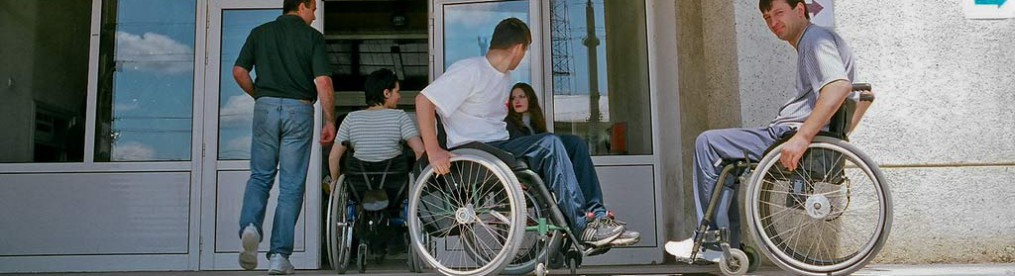
I believe we have made great progress, especially in regards to disabled persons. For a long time in history, 15% of our population was excluded on both a national and a global scale. The SDGs specifically mention to be inclusive of everyone and has a great “no person left behind” mentality that we have lacked for so long. While we are not anywhere near the end yet, we have been able to recognize and move forward with the understanding that we must be considerate and include everyone in order to be truly sustainable for the future. Going forward, there will be struggles, especially with need to meet the needs of everyone and for everyone to be able to come to the table and be heard, but that is a challenge we can face head on and conquer. In 13 years, the world will be a much better place than now, but I still suspect it will have a lot of room to grow.

Development, SDGs and the HLPF

According to Amartya Sen, development is the expansion of citizen capabilities through increasing access and opportunities. There are various stakeholders and aspects needed in order to continue development within societies. Sen discusses the importance of discussion, criticisms, and debates as a method of democracy that encourages constant reform. Furthermore, Acemoglu and Robinson state that the reasons for country’s lack of development lie in their inability to create incentives for institutions to save. As a result, the United Nations has developed methods of ensuring the increased opportunities and capabilities are given to various citizens. One of the most well-known methods is the 2030 Sustainable Development Goals


The 2030 Sustainable Development goals are meant to be adopted by countries in order to end poverty, sustainability efforts on the planet, and to aid marginalized groups. Each goal is outlined with methods of measuring the success of each country and specific targets. In order to hold accountability and make sure countries are working towards targets, the High-Level Political Forum on Sustainable Development (HLPF) was created. It further provided guidance on how countries can include multiple stakeholders such as governments, the private sector, civil society and other affected parties. The HLPF has an annual timeline up to 2030, and includes the various SDGs each year is currently focussing on.


One main issue I have with the HLPF guideline is that is extremely vague. Each SDG can be applicable to all countries. However, countries are at various points, and inequalities cannot be ignored. For instance, although a country in the global north and south have made efforts to increase green energy, countries in the global south may feel that poverty alleviation may be more important. As a result, they may not have the same timeline as the global north, who has already significantly decreased poverty. It would be interesting to see if the HLPF were able to further break down their timeline across the regions, taking their needs and abilities into account and then establishing a timeline that would best suit that region’s interest.


Furthermore, it is important to understand the intersectionalities within the SDGs. For instance, reducing inequalities intersects with reducing gender equality, quality education, and peace justice and stronger institutions. No poverty and zero hunger also largely intersect. While it is clear that the United Nations has separated these developmental goals because they are different in scope, it is important the the HLPF and other UN bodies work together to establish how the intersectionality of these development goals can be utilized in order to propel countries in achieving annual and millennial goals.  Overall SDGs and the HLPF confront Grand Challenges head on and have developed a collaborative approach to working towards creating a stronger, interdependent world. 

Why is Multi-stakeholder Cooperation Essential for Sustainable Development?

In the field of development, there is a multitude of actors that promote the SDGs and work towards improving the world on many different levels. These levels can go from grassroots movements, to local government action, to International cooperation. Each level of development has its own methodology, its own approach to resolving the Grand Challenges that we face, and each development actor presents different tools and knowledge for resolving the issues.

At the grassroots level where NGOs and other developmental organizations that are locally based perform hands on development work, they operate directly with the target population and do most of the developmental field work necessary to help local communities grow. These organizations collect over time the knowledge of what works and what doesn’t work on a local scale, and it allows them to understand the needs of the population, making the development work as efficient as possible. However, grassroots organizations often lack the funding and resources to expand the scale of operations to affect more people, and because of this, the impact of their development work remains local.

Governments also play an essential role in development work as they manage the resources of the country and therefore have more power to fund development projects. The government also has a large extent of knowledge on the needs of the population. However, what the government has in resources and knowledge, it lacks in efficiency. Governmental development is often criticized for its bureaucratic red tape that makes it very difficult to efficiently manage and run development projects, and this lack of efficiency results in development operations that become much more expensive and yield lesser results.

Finally, international developmental organizations such as the World Bank, the IDB, the United Nations, the HLPF, and many others offer a macro approach to development through international cooperation. The advantages to this approach are that it allows to create a conversation surrounding specific developmental issues and brings them to light, making governments realize the importance of development work in the grand scheme of the SDGs. It is also a good place for different governments to propose ways to implement development with the purpose of meeting a particular criteria and through treaties, binds countries to meet the goals. Unfortunately, there is not a strong enforcement mechanism that forces countries to implement the development work they signed off to.

At each level of development there are partial solutions to meeting the SDGs but still encounter specific difficulties at each layer. The difficulties that the different levels of development encounter however can be solved using the tools and knowledge that other actors operating at different scales have to offer. No single actor possesses the solution to development, but by putting actors together, the optimal combination of knowledge and resources would be met, allowing for the maximum amount of progress to be made. This is fundamental to understanding the importance of multi-stakeholder operations in development and why it is essential to have platforms where the different actors operating at different levels of development can share ideas and knowledge to all resolve Grand Challenges.

Monitoring the SDGs

The Sustainable Development Goals (SDGs) were established in 2015 as a way to unify the international community and guide UN member states objectives. As such, it’s a multi-stakeholder objective including states (with countries from both the global north and global south) and non-states (including the private sector, IGOs, and civil society). The UN charter’s preamble states that the UN pledges “to reaffirm faith in fundamental human rights, in the dignity and worth of the human person… to promote social progress and better standards of life in larger freedom”. This was reaffirmed in the UN Declaration of Human Rights. Through the creation of 17 Global Goals with 169 targets, the UN persists in following these ideals. These include everything from quality education to gender equity to economic growth.

One prominent SDG is Goal 4, or “Ensure inclusive and equitable quality education and promote lifelong learning opportunities for all”, with ten targets and eleven indicators. Some targets are easier to measure than others, such as “4.2.2: Participation rate in organized learning (one year before the official primary entry age), by sex”. Others are more vague and harder to measure like “4.7.1: the extent to which (i) global citizenship education and (ii) education for sustainable development, including gender equality and human rights, are mainstreamed at all levels…”. These indicators are supposed to increase monitoring and accountability capacities from the preceding MDGs, but this ability depends more on the clarity of the targets and indicators themselves rather than the mere presence of them. The 2017 SDG 4 progress report addresses areas where the world is still lacking, specifically attacking efforts “in sub-Saharan Africa and Southern Asia and for vulnerable populations, including persons with disabilities, indigenous people, refugee children and poor children in rural areas”.

The HLPF, or the high level performance forums, is yet another way to monitor progress. This body of heads of states implementing the SDGs meets annually under ECOSOC and every four years under the UNGA- it is known as the most inclusive and participatory forum at the UN as the MGOS (major groups and other stakeholders) are able to hold side events, attend and intervene in all official meetings of the forum; have access to all official information and documents, make recommendations, and more. These major groups are women, children, farmers, indigenous people, local authorities, businesses, civil society, and workers and trade unions- this framework is broadened by the more recent addition of other stakeholders, like persons with disabilities. However, this inclusivity is still limited to those with ECOSOC accreditation. Rimmerman, the author of Social Inclusion of Persons with Disabilities, argues especially that persons with disabilities still are limited in participation both in UN function and in society worldwide. The HLPF and other monitoring measures must remember to take into account the lived experiences of individuals rather than keep working on such a macro scale.

SDG Overview and the High-Level Political Forum

As outlined by the UN Sustainable Development website, the 2030 Agenda for Sustainable Development is “a plan of action for people, planet and prosperity.” Moreover, it emphasizes the importance of how “all countries and all stakeholders, acting in collaborative partnership, will implement this plan.” The goals and targets of the Sustainable Development Goals (SDGs) focus in particular on:

  1. People
  2. Planet
  3. Peace
  4. Partnership

One of the most important areas in the success of the Sustainable Development Goals (SDGs) is regarding the means of implementation. The Sustainable Development Knowledge Platform focuses on “solidarity with the poorest and with people in vulnerable situations.” In terms of engagement, the platform explains how “it will facilitate an intensive global engagement in support of implementation of all the Goals and targets, bringing together Governments, the private sector, civil society, the United Nations system and other actors and mobilizing all available resources.”

My project addresses and seeks to target the following Sustainable Development Goals (SDGs):

  • SDG 6 Ensure availability and sustainable management of water and sanitation for all
    • b Support and strengthen the participation of local communities in improving water and sanitation management
  • SDG 11: Make cities and human settlements inclusive, safe, resilient and sustainable
    • 1 By 2030, ensure access for all to adequate, safe and affordable housing and basic services and upgrade slums
    • 7 By 2030, provide universal access to safe, inclusive and accessible, green and public spaces, in particular for women and children, older persons and persons with disabilities

As described in the platform, engagement between all levels is key for these Sustainable Development Goals and targets to be met. In the case of Kibera, it is important to assess whether engagement is currently at the appropriate level. In looking at the engagement between Kenyan government and civil society, there is definitely room for improvement. In one important article in my relevant literature, Understanding the Grassroots Dynamics of Slums in Nairobi: The Dilemma of Kibera Informal Settlements, we are given insight into the government negligence in its engaging with Kenyan informal settlements, which are part of Kenyan civil society. In fact, engagement becomes almost impossible since the government had for the longest time deemed settlements as illegal. As a result, the government would provoke conflict through the conducting of actions such as forced evictions. There is a strong framework in addressing key Sustainable Development Goals (SDGs), but practical implementation faces some several challenges because of systemic flaws in engagement posing a risk to the means of implementation.

SDG Overview and the High-Level Political Forum (HLPF)

Week three was an interesting lesson in the sense that I developed a deeper understanding of the multifaceted goals that drive the SDGs. Originally in the year 2000, the United Nations Millennium Summit adopted eight Millennium Development Goals  (MDGs) that were intended to be accomplished by 2015 through the international coalition of governments and organizations. Some of these goals included, for example, “ to eradicate extreme poverty and hunger” and to “combat HIV/AIDs, malaria, and other diseases” (un.org). Though the MDGs did target very severe and widespread issues in developing countries, the 17 Sustainable Development Goals (or SDGs) (which are essentially a continuation of the MDGs after 2015) appear to be better suited towards combatting a wider variety of development issues towards a more expansive audience world-wide. For example, because there are 17 goals rather than just 8, the 17 SDGs (with 169 targets)  seem to have a greater emphasis on the inclusivity of sustainable development activities in the realm of international development, since the global community seeks to promote the productivity of all citizens –and their institutions– in order to promote more sustainable and impactful development in all human development sectors. Unlike the MDGs, the SDGs  included 7 explicit mentions to persons with disabilities, 5 mentions to persons in vulnerable situations, ans well as 2 mentions of the importance of non-discrimination (Kumar, Vivekadhish 1). I think this was a massive improvement in the way the global community views international development since on the international front, there appears to be a better understanding on the social ideals that must be met in order to promote more holistic and inclusive development solutions.

The High-Level Political Forum on Sustainable Development Goals, according to their website is the “ United Nation’s central platform for follow-up and review of the 2030 agenda for sustainable development and sustainable development goals”. In 2017, the HLPF will be convening under the Economic and Social Council under the theme of “eradicating poverty and promoting prosperity in a changing world”. It appears that the HLPF is working towards improving the efficiency of the SDGs as there will be a review of SDGs 1,2,3,5,9, 14 and 17.

SDGs and HPLF: Acronyms for Progress?

The Sustainable Development Goals, often referred to as the SDGs, are a set of universal goals designed to meet the urgent environmental, political, and economic challenges of our world today. To quote UN Secretary General, Ban Ki-Moon, “The… Sustainable Development Goals (SDGs) are our shared vision of humanity and a social contract between the world’s leaders and the people. They are a to-do list for people and planet, and a blueprint for success.” Composed of 17 goals and 169 targets, the SDGs were designed to wipe out poverty, fight inequality and tackle climate change over the next 15 years. They seek to fill the gaps left by the Millennium Development Goals (MDGs) and address the conditions that have remained, worsened, or arisen since the MDGs were put forth. To clarify, sustainable development is a development buzzword that can be interpreted by many people in many different ways. The best definition by my standards is that as put forth in the 1987 Bruntland Report that says,

“Sustainable development is development that meets the needs of the present without compromising the ability of future generations to meet their own needs. It contains within it two key concepts:

  • the concept of needs, in particular the essential needs of the world’s poor, to which overriding priority should be given; and
  • the idea of limitations imposed by the state of technology and social organization on the environment’s ability to meet present and future needs.”

The High-Level Political Forum (HLPF) is the UN’s attempt at ensuring the inclusion is so wishes, but continually fails, to support. As described by the UN, the HLPF is the “central platform for the follow-up and review of the 2030 Agenda for Sustainable Development and the [SDGs]…”   While this marks a great step towards more participatory decision-making in UN agendas, the HLPF still has several flaws that need to be address if the UN really wants the SDGs and their other work to truly be inclusive. The main challenges, to be brief, have mostly to do with the prevailing bureaucratic nature of UN conferences that benefit those with resources and experience in this arena.

The Sustainable Development Goals will continue to serve as a guiding framework in global development for the next 14 years and the HLPF will continue to meet regularly to assess and discuss the ongoing successes and failures of the SDGs. While it is easy to criticize and point out the flaws of these processes, it is important to still recognize the potential positive change that these transformations in agendas and policy-making could contribute.


MDG’s, SDG’s, the HLPF and Persons with Disabilities

The Sustainable Development Goals, an improvement on the Millennium Development Goals, are a set of seventeen goals that address the grand challenges our world society. These goals include poverty eradication, inclusive cities, zero hunger, affordable and clean energy, clean water and sanitation, good health and well-being, quality education, etc. Because monitoring and implementation proved to be such a pertinent issue with the Millennium Development Goals, additional measures were taken for the implementation of the Sustainable Development Goals. In the 2030 Agenda for Sustainable Development, each of seventeen goals has a target and indicator attached to it. The targets and indicators are meant to serve as a follow-up and review mechanism for the implementation of the 2030 Agenda. The targets and indicators of each goal allow stakeholders to better understand steps needed to achieve these goals and allows for increased accountability of stakeholders. While the Sustainable Development Goals are an improvement on the Millennium Development Goals, the SDG’s still face large challenges.

The High-Level Political Forum (HLPF) was created to act as a governing body over the States. The HLPF acts as a body that oversees States and ensures that States are participating fully and taking steps toward achieving the SDG’s. It is important to note that the HLPF prides itself on being inclusive, however, there are many barriers in place that make the HLPF rather exclusive. In order to participate at the HLPF, you must be a representative of a member state or accredited by ECOSOC to participate. If you are not a representative of a member state, participation at the HLPF is limited to the participation of the nine major groups. These major groups include women, children, farmers, indigenous people, local authorities, businesses, civil society, and workers and trade unions. This is increasingly challenging because key stakeholders are left out of the conversation. For example, persons with disabilities do not constitute a major group and therefore do not have direct access to the HLPF. Groups that are not included in the major groups framework are unable to make recommendations, submit documents, attend meetings, access official information and documents, and organize round tables related to the implementation of the SDG’s. This is problematic because key voices and expertise are left behind.

Specifically, in regards to persons with disabilities, while the SDG’s did improve by including 11 explicit references to persons with disabilities, the highly politicized mechanisms in place for implementation of the SDG’s falls short of ensuring that these explicit references will actually be implemented. The HLPF should follow suit of the Third UN World Conference of Disaster Risk Reduction (WCDRR) that took place in Sendai, Japan. This conference was the first conference that was not only accessible to both participants and speakers with disabilities, but also allowed for a tenth major group to participate – persons with disabilities. It is essential that the HLPF incorporate persons with disabilities because they are the experts in this field – they are the only ones who can truly speak to the challenges they face and the importance of incorporating these challenges into the movement toward inclusive sustainable development.