Stakeholders in the SDGs and HLPF

The Sustainable Development Goals define themselves on the official United Nations website as an official agenda intended to serve as a “plan of action for people, planet and prosperity”. The seventeen Sustainable Development Goals and 169 targets, which the UN has announced, demonstrate the scale and ambition of this new universal Agenda. It also seeks to improve the reach and quality of peace through many kinds of enhanced freedoms. The makers of the Goals note in that eliminating poverty is the “greatest global challenge and an indispensable requirement for sustainable development”. Similarly lofty goals in the Goals are the elimination of violence and bringing perfect access to justice for every person in every country. The Goals seek to build on the Millennium Development Goals and to bring into existence what the MDGs worked for. The Goals advertise themselves are integrated and inseparable in that they balance the three dimensions of sustainable development: the economic, social and environmental.

The Goals count every country as a stakeholder and also frequently refer to “all stakeholders” as an umbrella group. The stakeholders are those entities that will collaborate to implement the SDGs. This implies that even if everyone’s input is not equally heard, everyone will have a voice in the satisfaction of these goals. The meeting of the high-level political forum (HLPF) on sustainable development in 2017 convened under the authority of the Economic and Social Council from Monday, 10 July, to Wednesday, 19 July 2017 as the first attempt to integrate the countless voices that the SDGs purport to need. Many of the other posts on this blog go into considerable depth on the details of the HLPF, so this post will explore a pessimistic, tangentially related idea. The HLPF has scheduled meetings from this year to the year 2030. 2030 is the deadline that the SDGs have given themselves. The HLPF’s official website says that its most frequently employed review mechanism will be to encourage member states to “conduct regular and inclusive reviews of progress at the national and sub-national levels, which are country-led and country-driven” (paragraph 79)”. The site says that these national reviews are expected to serve as a basis for the regular reviews conducted by the (HLPF). As written by the 2030 Agenda, “regular reviews by the HLPF are to be voluntary, state-led, undertaken by both developed and developing countries, and involve multiple stakeholders”. This initially sounds positive, but the intentionally expansive definition of “stakeholders” could allow the accounts and opinions of local-level bureaucrat’s to be the false global perception of a development issue in a remote region.

When Intersectionality Isn’t Enough

The SDGs, a framework for sustainable development built out of the 2030 Agenda hope to achieve no poverty, zero hunger, good health and well=being, quality education, gender equality, clean water and sanitation, affordable and clean energy, decent work and economic growth, industry innovation and infrastructure, reduced inequalities, sustainable cities and communities, responsible and consumption, climate action, improved life below water and on land, peace, justice and strong institutions, and partnerships for the goals for all people by 2030.

The goals and their targets are optimistic and necessary for an improved, more sustainable world. If we collectively reach the outlined targets and with them, the goals, our planet and the life on it will certainly be happier and healthier. The High Level Political Forum designed to oversee the goals illustrates where some people and groups are excluded from the goals. The High-Level Political Forum claims to be the “most inclusive and participatory forum in the UN” in that it addresses a vast array of issues pertaining to all people and will meet every four years. However, this is not quite true.

The HLPF works under the major groups framework, allowing the nine major groups (women, children, farmers, indigenous peoples, local authorities, businesses, civil society, workers, and trade unions) to establish and maintain connection mechanisms to work together to ensure broad and balanced participation across regions and groups. At first glance, this appears to put the “inclusive” in inclusive sustainable development. Upon closer analysis, it becomes clear that this framework isn’t truly inclusive at all. With only nine major groups allowed in the highly politicized process of who gets to be involved and which organizations and individuals within the major groups get to be represented, people are left out of discussion on issues that directly impact them and an opportunity to advocate for themselves.

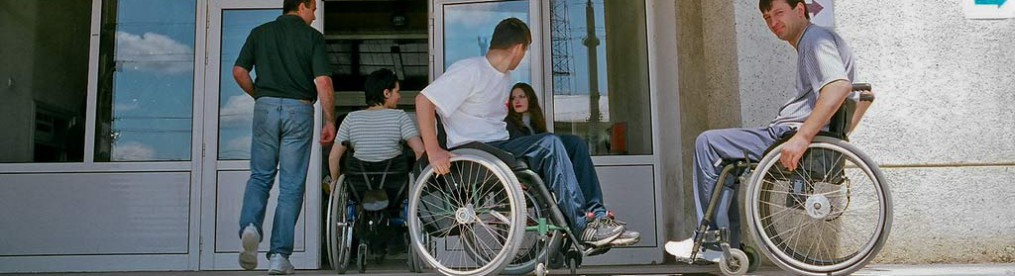
While they are able to participate under the clause of “other stakeholders,” one of the most important groups excluded from the major groups framework is persons with disabilities. The World Bank estimates that 15% of every country’s population is living with a disability. For such a large population with unique challenges and abilities, representation in the SDGs and HLPF (where it is currently notably lacking) is crucial and the common argument that representation as a major group is not necessary because of intersectionality across groups is not strong enough.

The HLPF platform allows for limited representation of the wide array of issues each major group faces. As a result, major groups tend to focus on issues that impact the totality of the group with little room for other needs. For example, a woman with a disability would have a difficult time finding representation of her needs as a person with disability among the “women” major group who may be focusing on issues related to sexism. Additionally, the same argument could be made (and as easily negated) for the other groups. For example, the women group may include farmers, making the group unnecessary. Certainly, intersectionality plays a key role among each group but it isn’t enough to rule out an entire major group.

We have since seen an exciting increase in participation allowed for persons with disabilities as a stakeholder group with the introduction of the NUA but the main takeaway is still that development is not truly inclusive or sustainable if it does not include an active role for persons with disabilities and the large portion of the population they make up.

SDGs and HLPF

The Sustainable Development Goals (SDGs) are a set of development goals set forth by the United Nations (UN) that seek to address some of the greatest developmental challenges facing the international community today. The SDGs, were developed to replace the Millennium Development Goals (MDGs) which expired in 2015 and sought to reflect a more inclusive, and sustainable approach to development. The SDGs are structured as a set of 17 overarching goals with a number of sub-goals for each. Among the goals expressed within the SDGs are hopes for great access to education, healthcare, sanitation, and technology. They also seek to address climate change which has the potential to most effect some of the poorest countries in the world. All of these goals are in theory to be reached by the expiration of the SDGs in 2030.

The High Level Political Forum (HFLPs) was created in order to create ongoing and continued discussion of the SDGs in order to reach the targets by the 2030 deadline. During each meeting of the HLPF, members discuss select goals contained within the SDGs. The HLPFs are overseen by the United Nations Economic and Social Committee (ECOSOC). The next HLPF meetings are scheduled for July of 2017 in New York City.

The SDGs represent an ongoing response to changing perspective on development and what constitutes effective development. As discussed during the previous discussion on developmental theory, how the international community perceives development and methods of development is rapidly changing. The SDGs represent one step that the international community has taken to reflect these changing perspectives.

However, there have been critiques towards the SDGs and its approach to development. First and foremost is the SDG’s perceived failure to address the needs of different minority groups directly including persons with disabilities. The SDGs also have received criticism for being too broad and too ambitious for the time frame given. However, perhaps the greatest challenge presented to the SDGs is the complex and multifaceted “Grand Challenges” that were discussed during the first week of class. Many of the most prominent Grand Challenges facing the international community are represented within the SDGs and a targeted for resolution by the SDGs.

The SDGS while far from perfect do represent an important trend by the international community to encourage inclusive and sustainable development. Reaching even a portion of the targets expressed within the SDGs will mean a more equitable and sustainable international community.

The SDGs/HLPF

The SDGs/HLPF by Ines Renique

The sustainable development agenda was set with the UN Millennium Development Goals, and has now been updated by the UN Sustainable Development Goals. The 2030 agenda simply puts it as the importance of: People, Planet, Prosperity, Partnerships and Peace. Undoubtedly, these goals seem rather broad and high reaching. However, each goal has a subsection that better and more concretely details the broad terminology.

The High-Level Political Forum is called to session to discuss specific SDGs, and when the forum convenes next year the subject of the meeting will be “eradicating poverty and promoting prosperity in a changing world”. In this case, the focus goals are: Goal 1 (end poverty), Goal 2 (zero hunger), Goal 3 (good health and well-being), Goal 5 (gender equality), Goal 9 (industry, innovation and infrastructure) and Goal 14 (life below water).

Furthermore, the United Nations says that the HLPF is the “most inclusive and participatory forum at the United Nations”. I think that the HLPF will be a effective reminder to major stakeholders and key players, that the SDG’s need to be continuously worked on. Moreover, the broadness of the theme for the forum allows for greater dialogue on other sustainable development issues between the state representatives. The HLPF will meet annually for eight days under ECOSOC (The United Nations Economic and Social Council) and at a high level every four years under UNGA.

It is also important to note that the SDGs have been far more inclusive than the MDGs were. More groups are represented in the goals, and everyone can identify reflected in their own communities at least some aspect of the 17 goals discuss.

What also needs to be discussed, is the monitoring of how states are working towards the SDGs. While IGOs and NGOs are fundamental in the monitoring of successes and failures, it is also imperative that states themselves partake in this monitoring. There needs to be commitment from states and organizations but these entities also need to be held accountable.

Sustainable Development Goals

The Sustainable Development Goals (SDG’s), known officially as “Transforming Our World: The 2030 Agenda for Sustainable Development,” are a series of seventeen goals developed by the United Nations. The extreme disparity between developed nations and underdeveloped nations is growing as the world becomes more globalized. Naturally underdeveloped nations want the same opportunities to industrialize and develop as the richer countries had. But the prosperous countries industrialized and developed by doing significant damage to the environment and perpetuating systems of injustice. The SDG’s are designed to help developing nations do so in a manner where they do not compromise the environment or human rights and to ensure that already developed nations can continue to develop but in a more sustainable manner.

The goals outline a concrete plan for the participating countries and provide targets for them to aim for and meet by the year 2030. The goals arose out of the previous plan the Millennium Development Goals (MDG’s) which terminated in 2015. The MDG’s were largely unsuccessful and member states failed to meet these goals. The SDG’s provided a more in depth plan and provided specific targets for states to meet and indicators by which to measure their progress. The SDG’s take a  multidisciplinary approach to sustainable development. Instead of focusing solely on environmental and health issues as in previous years, the SDG’s broadened their reach. Sustainable development means focusing on economic, political, and social issues as well.

The High-level Political Forum on Sustainable Development (HLPF) is a forum conducted by the United Nations General Assembly every four years. The HLPF took this role in 2013, after they were created at Rio+20. The upcoming HLPF in 2017 will focus on the theme of “eradicating poverty and promoting prosperity.” It will incorporate the SDG’s and use them to strengthen their work as well as aid them in implementing new procedures. One of these procedures is national voluntary reviews (NVR) where member states release their progress on inclusive development as public knowledge. This is designed to increase transparency and help states learn from one another’s successes and failures.

Sustainable development is a process that requires multiple disciplines and actors to come together and create stronger and more effective policy. Without collaboration and cooperation nothing will get done. The SDG’s and HLPF are processes that link multiple actors on a global scale and ensure that these actors have the same resources to make change.

HLPF not there yet

Understanding the stigmas and disenfranchisement that disabled people have been faced with over centuries of civilization adds context to the current movements to advocate for their rights and equal treatment. Rimmerman helps bring some of the struggles of disabled people to light by demonstrating how religious beliefs have characterized this population, specifically Christianity through the Bible and Islam through the Qur’an. According to Rimmerman, “we cannot understand disability without knowing the way that humanity treated people with physical and mental impairments throughout history” (9). This author highlights a paradox mentioned in the Bible which is relevant to how society approaches people with disabilities in modern day. Persons with disabilities were seen as blemished and unworthy of God, yet it is recognized that society has an obligation to remove obstacles for them (10). Isolation of people with disabilities was seen as a paradox to be managed rather than a problem to be solved. Although this aspect of religious culture is not widely emphasized in mainstream society today, the disenfranchisement of people with disability has still been treated as a misfortune to manage rather than a problem that has a solution.

After centuries of facing cultural stigmatization- and even systematic removal through euthanasia (18-19) – we are finally reaching an era where people with disabilities have advocacy for equal rights and inclusion. Civil rights protection for persons with disabilities wasn’t a major issue until the 20th century in America (20); and even then, important movements such as the MDGs lacked specific language advocating for persons with disabilities. We are just now starting to see advocacy for disability inclusive development. Amartya Sen’s revolutionary theory in Development as Freedom is one key element of the change in perspective that allowed people with disabilities to gain recognition. Measuring development in terms of capabilities and access to choices is the cornerstone of Sen’s theory. In addition, he talks about people’s actions being productively complimentary – in other words, the unintended consequence of acting to benefit oneself benefits everyone (255-56). This idea is not unique to Sen. He even cited Adam Smith in his writing. Notwithstanding, the effects of unintended consequences can be interpreted positively or negatively, especially in context of advocacy for disenfranchised groups. The way I see it, the unintended consequence idea is the best advocate for getting the public interested in disability inclusive development because it appeals to human selfish nature, but in a way that suggests it is productive for an individual to empower another individual to participate.

Empowering participation is becoming more relevant to development discourse of late. One of the key movements to thank for this is the Major Groups and Other Stakeholders framework (MGoS). The first United Nations Conference on Environment and Development in 1992 recognized that all sectors of society need to be engaged in development discussions in order to develop sustainable solutions to grand challenges. Since then, the nine major groups were officiated. However, people with disabilities still do not have recognition as a major group within this framework. The High Level Political Forum (HLPF) designed as a mechanism to oversee the implementation of the SDGs is inaccessible to delegates who are not a member of one of the organized major groups. This conference, which is boasted as the most inclusive political forum at the UN, does not invite participation for advocates for people with disabilities. This goes to show that while there have been monumental successes in terms of disability inclusive development awareness, there is still a long way to go before the SDGs in regards to disability are met.

SDG & HLPF

               With the expiration of the Millennium Development Goals this past December, the UN established new goals to further address the major development issues in our world. The 2030 Sustainable Development Goals went into effect January 1, 2016 with a new, more inclusive fifteen-year plan. The MDGs were mostly focused on eradicating poverty, but the SDGs have expanded upon them by also intending to protect the planet and fight inequalities. There are 17 global goals in the SDG agenda, each with specific targets and indicators for implementation within the next fifteen years. Although the SDGs are not legally binding, their widespread support and ratification makes them more legitimate and provides further grounds for advocacy and accountability.  However, because the goals are so ambitious and complex, producing and monitoring their implementation remains incredibly challenging. Consequently, the HLPF (High-Level Political Forum) was created as the central platform for follow-up and review of the SDGs and the 2030 Agenda. The HLPF is the High-Level Political Forum that meets annually for eight days under ECOSOC and at a higher level every four years under the UN General Assembly. Each convening has a different theme of focus related to specific goals and targets to analyze their progress. The HLPF states that it is “the most inclusive and participatory forum at the UN,” although in reality it is not because it is highly political in that you need to be a member or accredited by ECOSOC to participate and attend the forum. Therefore, only representatives of the major groups and chosen stakeholders can participate and have the right and capabilities to attend all official meetings, have access to all official information and documents, intervene in official meetings, submit documents and present written and oral contributions, and make recommendations. However, this does encourage the major groups and other stakeholders, such as persons with disabilities, “to autonomously establish and maintain effective coordination mechanisms for participation in the HLPF at the global, regional, and national levels in a way that ensures effective, broad and balanced, participation by region and by type of organization” (Class notes). Although it’s the state reports that are the official reports, shadow reports are also written by NGOs who don’t have to be as comprehensive and can instead use their resources to focus on one or some aspects of the articles. Fortunately, both state and shadow reports are taken into consideration when determining the success and accountability of SDGs, but there seems to be a lack in enforcement capabilities and solutions when the SDGs targets and indicators aren’t adequately achieved.

SDGs, HLPF, and Half of Humanity

The Sustainable Development Goals (SDGs) are the new development goals set forth by the United Nations to be achieved by the year 2030. Like grand challenges discussed in Week 1, the seventeen different SDGs aim to tackle massive, society pervasive issues that affect all people. For example, goal 1 is to end poverty in all its forms everywhere and while goal 5 is to achieve gender equality and empower all women and girls. The goals also include issues that range from creating sustainable cities and communities to obtaining clean water and sanitation for all people. As I said, they’re grand challenges.

In a way, the SDGs are a response to the Millennium Development Goals (MDGs) that were set during the Millennium Summit of the UN in 2000 and expired in 2015. Despite attempting to cover a wide range of development issues, critics argued that the MDGs were at the same time too broad and not inclusive enough of groups like persons with disabilities (PWDs). The SDGs, in contrast, became much more specific setting seventeen goals instead of just eight. In addition, the SDGs were much more inclusive of minority groups. For examples, PWDs are mentioned fifteen times giving PWDs a seat at the table they were previously denied.  

To oversee the implementation of the SDGs and ensure they are reached by 2030, the UN created the High Level Political Forum (HLPF). The HLPF meets annually every year under the Economic and Social Council (ECOSOC) and every four years under the General Assembly of the United Nations (UNGA). Despite being coined as one of the most inclusive forms of the UN, overseeing the UN under the auspices of the HLPF has some very clear advantages and disadvantages. A clear advantage is that the HLPF can use its power and influence to gather the world’s most influential movers and shakers. However, groups that need to be involved – like PWDs and other minorities – have to overcome financial, political, and physical barriers to get a seat at the table and contribute to the implementation of the SDGs.

Just as with the MDGs, the SDGs have not gone without criticism. However, organizations – like Half of Humanity (HoH) – are doing vital work to help chip away at the SDGs. More specifically, Half of Humanity is supporting SDG 5 which is to “achieve gender equality and empower all women and girls” and SDG 6 which is to “ensure availability and sustainable management of water and sanitation for all.” HoH works towards these goals by providing Syrian refugees with culturally appropriate feminine hygiene products. By providing essential hygiene supplies, HoH is helping combat health risks and social stigma refugee women face every single month. Through focused efforts on a few SDGs at a time by organizations like Half of Humanity, the global community is one step closer to reaching its goals by 2030.

The HLPF and the SDGs

When looking at  the  High level political forum as a body for monitoring and implementation for the Sustainable Development Goals, a notable aspect that should be highlighted is its inclusion of the Major Groups Framework (MGOS). The Major Groups Framework served to formalize the participation of the nine major groups and other stakeholders in the realization of the Sustainable Development Goals. The inclusion of MGOS not only created a more inclusive and participatory forum, but also encourages the other stakeholders, such as persons with  disabilities, to autonomously establish and maintain effective coordination mechanisms for participation in the HLPF at the global, regional and national  levels, ensuring effective, broad and balanced participation by region and by type of organization.

By formalizing multi-stakeholder partnerships, and giving the major groups a formalized space to make contributions and recommendations, the MGOS framework has laid important groundwork for achieving Sustainable Development Goat #17, to strengthen the means of implementation and revitalize the Global Partnership for Sustainable Development. Many of the multi-stakeholder partnership indicators for goal 17 align with the roles and responsibilities of representatives of the major groups.
Indicator 17.16 focuses on  mobilizing and sharing knowledge, expertise, technology and financial resources, to support the achievement of the Sustainable Development Goals in all countries, in particular developing countries. The MGOS framework works to fulfill this indicator as all representatives and stakeholders attend all official forum meetings where they  have access to all official information and documents, can intervene in official meetings, submit documents and present written and oral contributions, and make recommendations all of which facilitate the aforementioned knowledge sharing and exchange of expertise.  Indicator  17.16.1 addresses the number of countries reporting progress in multi-stakeholder development effectiveness monitoring frameworks that support the achievement of the sustainable development goals, thus incentivizing  individual state support for the MGOS framework at the domestic level.  Lastly,  indicator 17.17 encourages and promotes effective public, public private and civil society partnerships, building on the experience and resourcing strategies of partnerships. This indicator is mirrors the multi-stakeholder partnerships at work in the MGOs framework as their are major groups such as local authorities representing public sector, business and industry representing the private sector  and non-governmental organizations representing civil society. UN DESA acknowledges the importances of the MGOS within the HLPF as major groups and other stakeholders have played a significant role in the process to formulate the universal and transformative 2030 Agenda for Sustainable Development and the 17 SDGs that are at its core.

SDG’s and the HLPF

The Sustainable Development Goals (SDG’s) and the High Level Political Form (HLFP) are two structures that are currently working to include persons with disabilities (PWD) into the development framework. However, the reason that PWD have historically been excluded from receiving equal access, participation and human rights stems from a long history of prejudice and stigmatization. Rimmerman details religious and genetic reasons for historically excluding PWD in his book Social Inclusion of Persons with Disabilities. He outlines the rationalization of disabilities through the Bible and Qur’an. The Bible sees PWD as sinners in need of a cure (12). The Qur’an sees PWD not as sinners, but as people with burdens that should be excused from certain tasks because of their disabilities (13). In modern day, we see that both of these interpretations have led to the exclusion and isolation of PWD. Even the Qur’an’s explanation of compassion and exception has led to beliefs that PWD are incapable of leading independent lives.

Rimmerman also outlines the horrific impact that the euthenics movement had on PWD. During the 19th century, the eugenics movement began and with it the further stigmatization of PWD. The movement encouraged only healthy, able-bodied people to reproduce (16). This idea led to forced sterilization of adults and euthanasia of “defective babies” (18-19). It was not until the late 20th century that PWD were afforded any civil rights in America (20) or treated as capable, independent people. Unfortunately, as the founder of the Myanmar Independent Living Initiative (MILI) Mr. Nay Lin Soe pointed out, today there are still huge human rights violations and engrained religious stigmas about PWD in countries like Myanmar.

From this brief history of the treatment of PWD historically and currently, it is evident that global initiatives and policies that incorporate PWD into the development framework must work to address these stigmatizations and prejudices. It is important to include the voices of PWD in development strategies because as Amartya Sen reasons, the people within a community must decide the rate and form of their globalization (240-242). It is imperative that PWD are included in the development conversation because they are the only ones who can speak to their needs and challenges for becoming full participants in this globalized world. As the international community has progressed from the UDHR and the MDG’s, which have not specific mention of PWD, to the CRPD and the SGD’s, which explicitly mention PWD, we can see that PWD are beginning to gain recognition and importance in the development framework. As we continue with forums like the HLPF, it is crucial that we include PWD in the discussion to ensure that the goal of developing a world that includes everyone is achievable.