WUF and Diplomatic Events

This week in class we continued our discussion on inclusive and smart cities, with a focus on the World Urban Forum (WUF) and how it relates to inclusive development. The WUF is a global conference on urban issues established in 2001 by UN-Habitat specifically to address rapid urbanization and its far reached impacts. The Forum made a specific effort to be inclusive, gathering participation from diverse groups of people with diverse backgrounds, in order to increase awareness about sustainable urbanization, coordinate between groups, and create ideas to change the world of urbanization. The WUF meets every 2 years, most recently held in February 2018 in Kuala Lampur, Malaysia and boasted 23,000 participants, making it the second largest gathering in history.


One question that I had regarding many diplomatic events with high attendance, is whether having a large turn out for an event creates a more or less productive atmosphere? I believe this is something that must be very challenging in many UN meetings and Forums, the balance between being small enough to have compelling and influential discussions, but large enough to create an engaged and powerful dialogue. However, despite the specifics, the thought of having hundreds of people in one space, discussing one issue is powerful. Having 23,000 participants for WUF9 illustrated the popularity and the amount of support that the WUF gained over the decades.


Having popularity was very important to the mission as it showed how many governments, interests and stakeholders were interested in the message WUF was working to spread about sustainable urban development and urban issues. The were able to raise awareness of sustainable urbanization among stakeholders and constituencies and plan goals for future meetings. The message that everyone should have equal access to cities resonated across groups and solidified the Kuala-Lumpur Declaration on Cities 2030, ensuring cities and quality of life for all. Additionally, one of the main outcomes of the WUF9 was focused on creating a multidisciplinary conversation with both SDGs and the NUA, which we discussed in class last week. The NUA, being the primary outcome of Habitat III in 2016, was analyzed and discussed at WUF9. The participants viewed NUA as a tool for achieving both Agenda 2030 and the SDGs.


The WUF is very impactful to my research as the WUF’s main goal is to raise awareness. In conducting my early research, I have had a difficult time finding specific, tangible examples of how awareness raising can lead to tangible change. However, the WUF and NUA depicts an example of how

Inclusive Smart Cities

The Asian Development Bank defined making a city more “inclusive” as: “ensuring the poor and vulnerable have access to the services they need to better their quality of life.” With the onset of rapid urbanization and growing inequality, cities and governments have taken notice and decided to make infrastructural changes that will help improve quality of life for all. The ADB lists its key elements of creating this inclusive city: urban environmental infrastructure development, climate change adaptation and mitigation, and poverty reduction measures. While these are all broad, their goals reflect those of cities around the world. Continue reading

World Urban Forum (WUF9)

The World Urban Forum is a global conference that is dedicated to addressing urban issues. This was a forum that was founded by the United Nations under the UN Habitat and is set to host its 10th session in 2020 in Abu Dhabi. The objectives of the World Urban Forum (WUF) as noted by the UN are to:


  • Raise awareness of sustainable urbanization among stakeholders and constituencies, including the general public.
  • Improve the collective knowledge of sustainable urban development through inclusive open debates, sharing of lessons learned and the exchange of best practices and good policies.
  • Increase coordination and cooperation between different stakeholders and constituencies for the advancement and implementation of sustainable urbanization.[1]


One of the major contributions that WUF9 has made is the creation of the Kuala-Lumpur Declaration on Cities 2030. The Kuala-Lumpur Declaration is a comprehensive document that contains thorough recommendations on how to ensure that moving forward, “Cities are for all ensuring that all inhabitants, of present and future generations, without discrimination of any kind, are able to inhabit and produce just, safe, healthy, accessible, affordable, resilient and sustainable cities and human settlements to foster prosperity and quality of life for all.[2] Many different actors created the Kuala Lumpur document, ranging from national governments, to private sector, to local communities. This was done purposefully because only through collaboration will the building of inclusive cities be possible.


One entity that stuck out to me in the WUF was the inclusion of local governments. Many of the United Nation’s forums are filled with high-ranking officials and while that often is a great way to effect change at a high level, inclusive cities need a more refined approach. The session at the WUF9 that included mayors of cities was an important way for local officials to share ideas and challenges with each other. Implementing sustainable inclusive cities is an area in which local governments can really thrive. Mayors and local city counsels live and work in the same cities that they are trying to improve. The inclusion of a multitude of actors is part of what makes the WUF and the Kuala Lumpur Declaration different and more effective.


[1] UN Habitat for a Better Urban Future. “World Urban Forum.” 2012. Retrieved at https://unhabitat.org/wuf/.

[2] UN Habitat for a Better Urban Future. “Kuala Lumpur Declaration on Cities 2030.” WUF9. February 2018. Retrieved at http://wuf9.org/kuala-lumpur-declaration/

Sustainable Cities as Solutions: The New Urban Agenda

Sustainable cities are the present and future powerhouses of inclusive development. A city cannot be considered sustainable without being inclusive and providing “equal rights and access to the benefits and opportunities that cities can offer” (New Urban Agenda iv). If a city does not include all of its population in its development, it is both ignoring fundamental human rights and missing out on the special talents that each person has to offer. In addition,When cities focus on sustainable urbanization, the population’s quality of life and employment opportunities increase (New Urban Agenda iv). The United Nation’s New Urban Agenda presents a set of standards for urban development. The agenda’s pillars include topics such as urban design, legislation policy, and local implementation strategies (New Urban Agenda iv).

The New Urban Agenda states that inclusive cities promote “a sense of belonging and ownership among all their inhabitants,” and “leave no one behind” (New Urban Agenda articles 13-14). Inclusive cities promote racial, gender, and economic equality (New Urban Agenda article 13). Inclusive cities reduce vulnerability to environmental disasters, minimize their environmental impact, and promote sustainable consumption and production patterns (New Urban Agenda article 13). The agenda provides necessary vision for an inclusively sustainable future, and one in which each country can strive towards within the framework of their current systems.

An important part of the New Urban Agenda is the “call to action.” The call to action states that “While the specific circumstances of cities of all sizes, towns and villages vary, we affirm that the New Urban Agenda is universal in scope,” recognizing that each area has its own unique strengths and challenges (New Urban agenda article 16). The agenda’s “implementation plan” provides a more specific call to action, with specific examples of steps that actors at the local level, national level, and private sector can take. Cities have the power to connect issues of sustainability, inclusivity, equality, and development. It is vital that people at each level of society recognize the powerful potential of sustainable cities, and take the necessary actions towards them. The New Urban Agenda’s creation is a valuable step forward towards the achievement of sustainable cities, with an organized vision and action plan for both present and future generations.

Habitat III and the NUA

This week, I was particularly struck by what the representative from Special Olympics presented in her presentation the class.  To start, I never realized how narrow the Special Olympics mandate is, narrow in the sense that they only work with individuals with cognitive and intellectual disabilities.  This notion peaked my interest, as my work in inclusive education is purely defined by access for learners with disabilities.  However, I now realize a major flaw in my approach to inclusive education research.  Often, the concept of “disability” is assumed to refer to persons with physical disabilities rather than intellectual.  This notion most certainly has informed my approach to inclusive education policy, a real detriment to my work.  While many of the policies and programs I advocate for in my research do encompass the needs of persons with intellectual disabilities, having that population represented specifically can go a long way in ensuring they too have access to meaningful educations and more broadly city infrastructure, employment, etc.  Continue reading

Smart Cities, Habitat III, and the New Urban Agenda

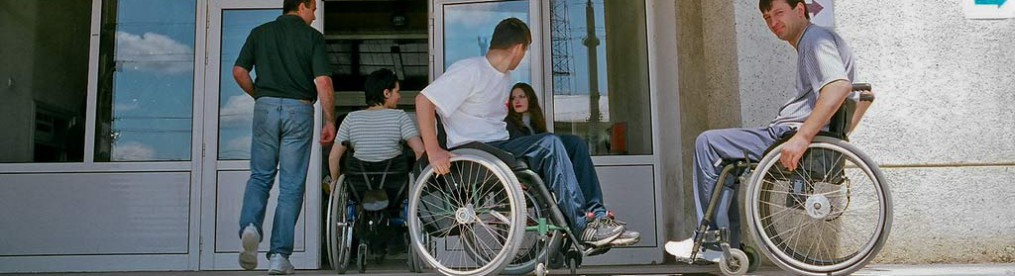
The main topic that was discussed this week was smart inclusive cities.  International frameworks, such as Habitat III and the New Urban Agenda have created a guideline to make urban centers more inclusive and accessible to people with disabilities. These framework work with Sustainable Development Goal (SDG) 11 of sustainable cities and communities, which focuses on reducing inequalities in urban environments by supporting the development of inclusive and sustainable communities. Inclusive urban environments are metropolises where there are no barriers to empower individuals, no matter a person’s race, gender, wealth-status, etc.

This subject reminded me of the Sen’s theory of development because these cities allow for more freedom. They make it possible for individual choices to be universal. This goes with education, housing, transportation, etc. Absolute individual choice means complete accessibility, no barriers or obstacles. This is fundamental to be inclusive to persons of disabilities.

Cities or urban centers hold most of the world’s general population. They are the political, economic, and cultural engines of their respected countries. Urban Centers are where most innovations and changes happen. These international frameworks are needed for cities because they allow for the subject to be aware in society. If cities contain policies and tools that help and include persons with disabilities in their societies than this will hopefully spread to other regions. In addition, it is much easier to make an issue heard in a city than going to representatives of a country’s national government. City governments are influential and more connected to individuals than a national government is. Cities can be used as a platform to bring rights of people with disabilities to the national government.

In my research, I will be discussing inclusivity when it comes to internet access, smartphones, and people with disabilities. Articles that I have read show more internet concentrations in urban centers of developing countries, leaving rural areas without internet and disconnected to innovation. Even when there is internet in an urban center, apps and programs may not able to run because of internet service and hardware. For example, an Android Go device may not be able to run extensive Android apps that high-end Android phones can run. The most expensive service and hardware can support these extensive programs, but they are only accessible to the rich class. Apple and Microsoft are regarded as leaders in providing accessibility to persons with disabilities, but their hardware is expensive or not available in the market.  Cheap Smartphones are now being used as a tool to help connect people to the internet, but Google may have trouble in making accessibility features and apps in cheaper models. 

Inclusive Cities, Habitat III and New Urban Agenda

Summary: A major part of inclusive sustainable international development is ensuring that cities are created / adapted in a way that advances the space forward for all. This means making pubic spaces available for every person and working towards equity in cities. Since a large majority of people around the world lives in cities and continues to migrate towards them, the focus on cities is important because they are large contributors to the global world.

Inclusive cities are an important concept to analyze when speaking about any type of development. The World Bank details the lens that inclusive cities must be looked through. The World Bank states, “It is essential to understand that the concept of inclusive cities involves a complex web of multiple spatial, social and economic factors:

  • Spatial inclusion: urban inclusion requires providing affordable necessities such as housing, water and sanitation. Lack of access to essential infrastructure and services is a daily struggle for many disadvantaged households;
  • Social inclusion: an inclusive city needs to guarantee equal rights and participation of all, including the most marginalized. Recently, the lack of opportunities for the urban poor, and greater demand for voice from the socially excluded have exacerbated incidents of social upheaval in cities;
  • Economic inclusion: creating jobs and giving urban residents the opportunity to enjoy the benefits of economic growth is a critical component of overall urban inclusion” [1]

This topic is especially important when it comes to ensuring people with disabilities are included in this conversation and implementation. As discussed in class, having smart cities in an inclusive city really helps with the inclusion of people with disabilities. Smart cities, through the use of technology, can improve public transportation for people with a multitude of disabilities. This can be smart apps that can verbally announce the exact steps that you must take in order to get to the bus. Smart cities also help inclusive cities because it connects the people with the local government or businesses. This means that the local government and businesses can get real feedback from all kinds of people experiencing problem in the city.

The New Urban Agenda came about because the UN saw the need to focus on cities. In fact the UN reports that, “While cities today occupy only 2% of the total land, they contribute 70% to an economy’s GDP, are responsible for over 60% of the global energy consumption, emit 70% of the green house gases, and contribute 70% of the global waste.”[2] Cities need special consideration considering the large impact they have all over the world. The New Urban Agenda seeks to, “Integrate equity to the development agenda. Equity becomes an issue of social justice, ensures access to the public sphere, extends opportunities and increases the commons.” Overall focusing on Inclusive cities was a concept I had not been aware of in development but now I can see how it is so vital to focus on ensuring that cities are a place for all types of people to live.

[1] The World Bank. “Inclusive Cities.” 2018. Retrieved at https://www.worldbank.org/en/topic/inclusive-cities#2.

[2] The United Nations. “The New Urban Agenda: Habitat III.” 2018. Retrieved at http://habitat3.org/the-new-urban-agenda/.