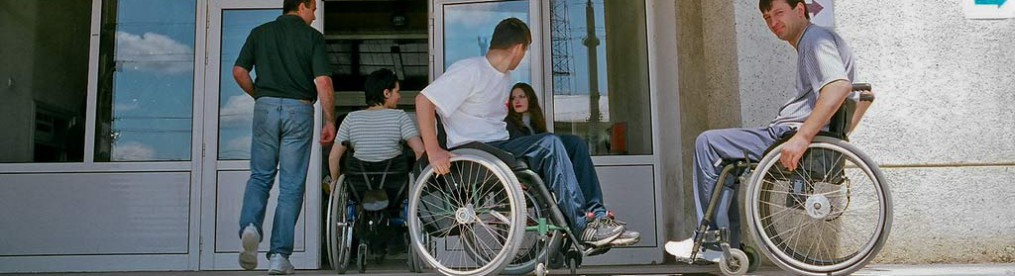
Urbanization and The New Urban Agenda

The world’s global urban population is expected to double by 2050. It is also projected that 90% of this concentration will take place in Asia and Africa. These continents have the opportunity to greatly benefit both economically and socially by adhering to the goals and being inclusive throughout the five pillars of implementation laid out by The New Urban Agenda. This major population shift being highly concentrated in some developing areas allows these cities to be built right the first time. They are not confined by the exclusive infrastructure in large old cities like New York and Paris. It will be economically efficient to build inclusive infrastructure instead of having to rebuild or revamp already existing old infrastructure. The point that I liked the most from The New Urban Agenda is the humanization of cities and human settlements. It is important to think about the wide range of humans with variant needs who will be occupying the space.

The “Enabling Justice: Spatializing Disability in the Built Environment” reading by Pineda made me think about the impact of a built environment truly has on people. He does a great job at dispelling the idea that, “disability as a property held by the individual.” This places the responsibility to “correct” on the individual themselves and not on the environment that creates this disability. After reading this article I thought about my day to day life and how the environment around me could be disabling. It reinforces the importance of The New Urban Agenda. This past summer I had the opportunity to go to Sao Paulo, Brazil. I remember thinking then how the city was so much more inclusive than many of the American and European cities I have visited. After doing some research I found that Sao Paulo has implemented laws and policy in order to aid in the implementation of The New Urban Agenda. They also made sure to involve many different actors in the discussion of the city’s needs with the government. When everyone is represented modern cities can be a place of inclusion and not a place that creates extreme division.

Inclusive Cities and the New Urban Agenda

Our discussion of inclusive cities this week left me with a few questions regarding the equity of smart cities. While I agree that smart cities are an essential component of inclusive sustainable development, I am wrestling with how to make this a completely global conversation rather than a Westernized solution to the problem of inclusivity.  Continue reading

Measuring Society’s Success: Inclusion and the SDGs

In an ideal world, a society’s success would be measured by its level of inclusion. Social Inclusion of Persons with Disabilities defines inclusion as coming down to “somewhere to live, something to do, someone to love” (Rimmerman 35). The more citizens in a nation that are included in this definition, the higher a nation’s level of success. Instead of measuring a country’s success through its overall economic growth or strength in the international political arena, we should be asking ourselves, do this country’s policies promote equality and inclusion for its people? Do all communities feel they are included in society?

The United Nations Sustainable Development Goals were created in 2015 to tackle the issue of climate change, reduce inequality and promote inclusion. With 17 tangible goals centered around sustainable social and economic development, the SDGs are “the blueprint to achieve a more sustainable future for all.” Each SDG has concrete goals, targets and indicators that provide a clear vision for what each element of a sustainably developed society would look like. The SDGs are also medium-term goals, with the target accomplishment date set at 2030. It is so important to have a coherent plan that each country can strive towards and apply to their own situations, so that everyone can do their part to create a more inclusively sustainable global society.

Amartya Sen’s Development as Freedom theorizes that the alleviation of poverty and societal development will lead people to freedom. He writes that poverty limits the choices a person can make, and limited choices cyclically results in a lack of freedom. Sen’s indicators for freedom include: life expectancy, education, infant mortality, and gender equality. For example, if a person does not have the money to make choices that will benefit their health, a lower life expectancy results in a lack of freedom because a person cannot make choices if they are not alive. Empowering people to make choices allows them to have the best possible life. By making an emphasis on inclusion in society, a society can strive to provide all of its citizens with the freedom to make choices for themselves.

The SDGs are an important mechanism for inclusion and freedom, and the UN High-Level Political Forum makes sure that the program continues to stay on track. The HLPF meets annually under the Economic and Social Council for eight days, with a special three day segment every four years with the Heads of State and Government. The forum provides “a dynamic platform for regular dialogue” and “political leadership, guidance and recommendations for sustainable development. The HLPF is indispensable resource towards the successful implementation of the SDGs around the world.

States, NGOs, businesses, and individual actors are all important and necessary contributors to an inclusive and sustainably developed future for all. Everyone must play their part by using the platforms available to them to take action, raise awareness, and promote inclusiveness and equality in their communities. A truly inclusive society has the mindset that everyone deserves to be a part of the community and everyone has something valuable to offer. Societies with inclusive mindsets are the most successful ones, and we must do everything we can to promote inclusivity in every corner of the globe.

Resources:

Social Inclusion of Persons with Disabilities, Ari Rimmerman

Development as Freedom, Amartya Sen

https://www.un.org/sustainabledevelopment/sustainable-development-goals/

https://sustainabledevelopment.un.org/hlpf

Inclusive Sustainable Cities

This week the reading and in class discussions revolved around the concept of inclusive and sustainable cities. The New Urban Agenda sets a framework for the creation and ongoing development of cities and human settlements. There are three main points that the NUA makes, the one that is more pertinent to our class discussion was urban equity and the eradication of poverty. Point 36 specifically calls for equal access to all public spaces for people with disabilities. This point echo’s the theme of what has been talked about in class all semester. Without equal access to these spaces that people without disabilities have access to persons with disabilities are missing out on a multitude of opportunities. Not being able to use public transit may mean that your access to the entire city is limited and more expensive. If you’re not able to access a park then you’re missing out on valuable social time and relationships that are necessary to a healthy human existence.

This week the in-class discussion highlighted the different innovative features that inclusive and sustainable cities could have. One of my favorite discussions was about the use of sensors within a city and how they can contribute to making living in a city more sustainable. Sensors are a relatively cheap was to create data that can be used to configure a variety of sustainable living practices within a community. From public transit to vegetable compost, understanding the rate or frequency at which these practices are happening can contribute to making them more efficient and furthermore, more sustainable.

The in-class discussion about the use of apps and crowd source data to informs persons with disabilities how accessible a venue is was also very interesting. The example of using an app to navigate your way into a park with a wheelchair or into a facility that may not immediately show where an elevator is was extremely useful. The use of an app that uses crowd sourced data to understand how friendly a restaurant is towards persons with disabilities was also interesting. This discussion made me realize how unaware I was of how my favorite coffee shop or movie theater could be completely inaccessible to people with certain disabilities. However, this discussion also inspired me to think more about inclusivity when going about my day to day life and to make more of an effort to be an advocate for inclusive sustainable development.

SDGs and HLPF

This week in class we discussed the Sustainable Development Goals (SDGs) and the High Level PoliticalForum (HLPF). In this post I will discuss the implications that the SDGs and HLPF have on international development and peoples with disability. I will also touch on which SDG fits best with my project.


The SDG’s are a list of development goals that the UN agreed upon in 2015. It is essentially the revamped version of its predecessor the Millennium Development Goals.

The UN defines the SDGs as “The blueprint to achieve a better and more sustainable future for all. They address the global challenges we face, including those related to poverty, inequality, climate, environmental degradation, prosperity, and peace and justice. The Goals interconnect and in order to leave no one behind, it is important that we achieve each Goal and target by 2030.” I think the key aspect of the SDGs is the idea of intersectionality. If there is not development for all, then that’s a problem. For example, the MDGs did not talk about peoples with disability once, whereas the SDGs does include them in the language. Language is crucial for this type of document because without setting clear goals with direct language, too many issues may be left up to interpretation. For example, it was thought that in the MDGs peoples with disability were included throughout all the goals. However not every country made sure to include peoples with disabilities in their legislation or implementation of the MDGs.

The HLPF, as defined by the UN, is “the main United Nations platform on sustainable development and it has a central role in the follow-up and review of the 2030 Agenda for Sustainable Development the Sustainable Development Goals (SDGs) at the global level.” The HLPF basically is a committee to monitor and assist with the implementation of the SDGs. The UN also mentions that part of the HLPF’s duties are to “enhance evidence-based decision-making at all levels and contribute to strengthening ongoing capacity-building for data collection and analysis in developing countries; and promote system-wide coherence and coordination of sustainable development policies.” This added component of collecting and using data is important as it insures that all the information is backed by scientific data. It is also important to note the HLPF’s requirement of promoting coherence and coordination. Often, the different actors of international development are fragmented. This move to bring information and actors together to ensure the sharing of all possible best-practices.

For my capstone project I will be focusing on SDG number 8; decent work and economic growth. I will be focusing in more on the microfinance aspect of decent work and economic growth. This means ensuring that ALL people have access to loans that will empower them to have decent employment and the chance to work. One of the major criticisms if the SDGs are that they are too broad, however if you work on a small aspect of development while working towards one of these larger goals than that is still effective.

Sources:

The United Nations. “Sustainable Development Goals.” (2018) Retrieved at https://www.un.org/sustainabledevelopment/sustainable-development-goals/

The United Nations. “Sustainable Development Knowledge Platform; High Level Political Forum on Sustainable Development.” (2018) Retrieved at https://sustainabledevelopment.un.org/hlpf

SDGs, HLPF, y más

The United Nation’s created the 17 Sustainable Development Goals (SDGs)  in 2015 to build on the Millennium Development Goals (MDGs) which were not as successful as originally intended by the UN. The SDGs have specific targets and indicators that have made them much more impactful. They also have language about persons with disabilities that the MDGs did not, making them more inclusive and holistic.  Continue reading

Development Theory and Actors

Last week we discussed and read about development, its’ complicated definition and the different frameworks that we use to analyze it and implement development theory. How one defines international development is a contested topic by theorists and has evolved over time. International development once meant that “developed” countries such as the United States and Western European states would give aid to “underdeveloped” countries in Latin America and Africa. This definition focused completely on GDP and how those “underdeveloped” countries did not look like the so-called “developed” nations. Readings from Amartya Sen and Sumer and Tribe helped to paint the evolution of development theory and how we should be looking to “develop” moving forward.

Continue reading

Development Theory and Actors

Development Theory and Actors:

Defining the term “international development” is a difficult thing. A lot of theorists have many different opinions about what constitutes “development.” Most people feel like countries such as the United States, Denmark, the UK, and others are “developed” even though people in those countries still face many challenges. That is why Amartya Sen gives the most comprehensive view of international development in his book Development as a Freedom. Sen begins his book by talking about development as “the process of expanding the real freedoms that people enjoy”(p.3). This is very different from the other theories of development that mostly focus on economic growth. Focusing on just GDP per capita or the average income in a specific country does not show the entire picture of a countries level of development.

The argument of Sen’s that really caught my attention was when he criticized the “real income approach.” The real income approach characterizes development by comparing individual’s utilities. This means evaluating the outcome if people were to receive the same “commodity bundle.” While in theory giving everyone the same exact commodity bundle sounds like a good idea, it ignores the differences between humans. As Sen puts in, “Differences in age, gender, special talents, disability, proneness to illness, and so on can make two different persons have quite divergent opportunities of quality of life even when they share exactly the same commodity bundle”(p.69). Sen is speaking about the difference between equality and equity and how that plays into development. It’s not enough to simply give everyone the same thing; you must ensure that they have equity in their opportunities. For example perhaps you give everyone the same amount of money to travel, but for a persons with a physical disability it may be more expensive because of the public transportation and time. This is still denying the person with a disability their right to freedoms. While researching my capstone project on microfinance I noticed that this issue could appear quite often. When giving microfinance loans it is always important to keep in mind an individual’s capabilities and needs.

I personally like Sen’s capabilities model of development because it is the most equitable form of international development theory. Instead of inserting ideals on other countries, it emphasizes that each country aims to give all the possible rights to citizens to allow them the equal opportunities to live their lives as they choose. It also does not assume that one country is perfect or does not need improvements. Even though some countries are more developed than others in terms of granting freedoms to people, countries like the United States have people that are deprived of some basic rights.

The Global “Grand Challenges” of Inclusive Sustainable Development

The definition of Grand Challenges, their inclusion in the hard and social sciences, and their evolution when it comes to development approaches are fundamental to understanding the need and long term goals for inclusive sustainable development. Given away in the name, Grand Challenges go beyond issues on the individual and local level, but the persistent issues that continue to hinder long-term international development.

Continue reading