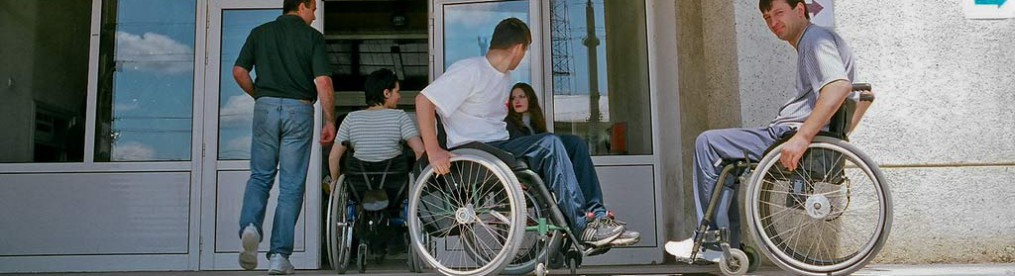
The Grand Challenge of Disability and Development

“We set sail on this new sea because there is new knowledge to be gained, and new rights to be won, and they must be won and used for the progress of all people….We choose to go to the moon. We choose to go to the moon in this decade and do the other things, not because they are easy, but because they are hard,” John F. Kennedy announced at Rice University on September 12th, 1962. And we did- America landed on the moon that same decade on July 20th, 1969. That is the original “moonshot thinking”, or the idea that we must tackle ambitious, impossible projects in order to create change.

“Grand Challenges” encapsulates moonshot thinking, although the term itself is credited to David Hilbert, who laid out 23 mathematical questions at the International Mathematical Congress in Paris in 1900.  Those original Grand Challenges detailed “technically complex societal problems that have stubbornly defied solution” (as defined by Lewis Branscomb) and challenged a cross-section of experts to work together on solutions.  While traditionally focusing on science and technology, Branscomb and others instead favor larger societally-focused projects. Their vision of the Grand Challenges conceptual framework has been embraced by USAID, the White House, and the UN. Examples of programs oriented on the Grand Challenges framework include the USAID and the Bill and Melinda Gates Foundation’s partnership on Ensuring Effective Health Supply Chain as well as other USAID projects like Scaling Off Grid Energy, Combating Zika and Future Threats, and All Children Reading.

The Grand Challenge is Sustainable Development Goals and its preceding Millennium Development Goals. The Sustainable Development Goals are a 15 year plan to tackle Grand Challenges across 17 different issue areas established in 2015. This look at systemic challenges worldwide creates an alternative mindset to development. In fact, they have become key in defining how we think about program effectiveness by giving targets and indicators to meet. These goals provide a unifying framework for state and nonstate actors worldwide to enact progress.

The SDGs made the UN framework more inclusive by including the grand challenge of disability and development with eleven explicit references to persons with disabilities. This is important because it will guide behavior by states. This has been furthered by high level work such as the UN Convention on the Rights of Persons with Disabilities (CRPD) in 2006 that shifted conceptual thinking from disabilities as a medical condition to a human right, which creates opportunities and higher equity for the traditionally marginalized 15% of every country’s population. This is an important step towards to true equality. While public policy focused on the inclusion of disabled persons may not spark the same initial general interest level as landing on the moon, it is surely a moonshot idea to radically shift how we think, talk, and create policy for this excluded group. This opens a window for a population whose potential contributions to society have been dismissed.

Molehills into Mountains: How smaller issues compound into Grand Challenges

When people discuss “grand challenges” facing our world today, defined often as “technically complex societal problems that have stubbornly defied solution” (Branscomb). While organizations such as USAID have several “grand challenges” which define their organizational priorities, global climate change is seen as the quintessential “Grand Challenge”; other environmental issues such as urbanization and deforestation also often take the fore. But just as the solutions for grand challenges require a vast and complex network, the challenges themselves also possess a network of further causes and effects, which can magnify understood problems into issues equally deserving of the moniker “Grand Challenge”.

To give an example, urban flooding has been extensively studied and understood; cities would plan for a variable amount of rain which would need to be drained away in quick order. Yet, as we have seen most recently in the Houston, Texas urban area, climate change and increasing urbanization have both exacerbated the potential of flooding events. Increasing sea-level temperatures, particularly within the Gulf of Mexico, strengthen hurricanes, elevating the frequency of exceptional weather events to form a new statistical norm.

The alarming frequency of “hundred-year” storms is not the only factor in worsening floods. The devastation of coastal cities multiplies as cities in flood-prone areas develop over lakes, parks, and other natural formations which might absorb some floodwater. Without these natural drains, more neighborhoods become inundated by higher levels of flooding, worsening the issue even beyond what the increased intensity of storms would do alone.

The use of “grand challenge” in numerous fields is a fairly recent development, designed to evoke ideas of heroism and struggle in what might otherwise be mundane or overtly technical tasks. The factors surrounding grand challenges are not a simple knot which can be undone with a singular “silver bullet” solution, but a Gordian knot which can only be untangled with great effort and knowledge. Even as one challenge’s solution is sought, however, we cannot lose sight of other challenges woven into the same rope.

Grand Challenges and International Development

Tom Kalil accurately describes Grand Challenges as, “ambitious yet achievable goals that capture the public’s imagination and that require innovation and breakthroughs in science and technology to achieve.” This notion of Grand Challenges coincides with our classroom conversation of “moonshot thinking.” Moonshot thinking also creates ambitious but achievable goals that answers, “not what should we do” but “what can we do.” In my opinion, moonshot thinking lead to the creation of the largest grand challenges in International Development, specifically the Sustainable Development Goals (SDGs). As a result, the world has developed clear, time sensitive action plans in order to achieve their lofty goals.

USAID’s The Grand Challenges for Development initiative cites two quintessential beliefs of international development. They are: (1), Science and technology, when applied appropriately, can have trans-formative effects and (2), Engaging the world in the quest for solutions is critical to instigating breakthrough progress. The second belief of engagement strongly mirrors the idea of moonshot thinking as well. The SDGs work to engage the world to tackle challenges. Within each goal, they highlight its significance, along with previous progress. Additionally, each goal expresses targets and indicators in order to track and assess future progress of each goal. Through this, the SDGs’ Grand Challenges become attainable.

Furthermore, USAID’s Grand Challenges for Development tackle global issues by utilizing non-traditional practices such as businesses, sciences, and researchers. This provides USAID with a critical lens that constantly assess the success of partnerships, grants and the applicability of science and technology. As a result, mechanisms used within these grand challenges can evolve throughout their timeframe and work to better achieve their set targets.

Grand Challenges bridge the gap between technology and society. As USAID’s Grand Challenges for Development state, science and technology have the ability to transform communities. For instance, David Pescovitz notes that technology can spur economic growth and the creation of jobs that require strong collaboration across institutions. Through this, society becomes stronger as they can work together to foster development that best suits their community. As a result, communities become stronger, the necessary steps of grand challenges become clearer, and the goals become achievable.

Community Moonshot thinking, or as Kalil states, “the captur[ing] of public imagination” catalyze Grand Challenges. They push partnerships, technological innovation, and collaboration because they all work towards a common goal. Global Grand Challenges are ever present facets of International Development, and will continue to evolve.

Intersectionality in Sustainable Development

Understanding that social groups, cultures and beliefs will be interconnected and cannot be viewed as separate in the development spectrum is crucial to remember. Intersectionality in provides us with the ability to be more effective in all areas of the development process whether it involves program management, program implementation, capacity management and building or monitoring and evaluation.

For my project, looking at intersectionality in Kibera and Kenya as a whole is the foundation for any proper project implementing. In particular, youth and ethnicity are two areas that share intersectionalities and need to be equally understood in the Kenyan context. In Kibera, its ethnic composition has resulted in the settlement having a sizable amount of ethnic conflicts in its history. In 2007, Umande Trust outlined the ethnic composition of the Kibera population as including:

Luo: 30%, Kikuyu: 20%, Kamba: 19%, Luhya: 14%, Others: 11%, Kalenjin: 6%

Youth in the African context is also integral to understand when it comes to the continent’s development. In Youth Development in Africa Policies and Trends at the Global Level, The 2006 United Nations Program on Youth was a small program within the Department of Economic and Social Affairs which had the main purpose of “informing and servicing intergovernmental processes on youth issues” (2). The program discusses the integration and intersectionalities of youth in development by grouping them into three clusters which include:

  1. Youth in a Global Economy: Globalization, Education, Employment, Hunger and Poverty
  2. Youth in Civil Society: Environment, Leisure, Participation, Intergenerational, ICT
  3. Youth and their Wellbeing: Health, HIV/AIDS, Drugs, Delinquency, Young Women, Armed Conflict

The document provides proposals for action which align well with my final project. Umande Trust has many youth projects which seek to address the intersectionalities between youth and the environment in Kibera. This document proposes for the environment that there is an integration of environmental training into formal media and an enhancing of the role of media as a tool for widespread dissemination of environmental issues for the youth.

In addition, in other literature regarding youth in Africa, we see the need for increased access to information and data to assess the well-being of African youth. As outlined in the Brookings Institution’s Africa Growth Initiative report, Youth Policy and the Future of African Development, the summary of the study explains how “limited data hinder the measurement of the well-being of African youth” (6). In assessing the factors behind youth and poverty in settlements in Kibera, it is important to note how the report also describes that “youth unemployment rates are relatively high, with significant regional difference and adverse consequences such as poverty, migration and diseases” (6). In order to understand the factors behind poverty in the Kenyan and African context, concepts surrounding the youth and ethnicity are just two examples of how intersectionality is a must in contemporary development.

The Global “Grand Challenge” of Inclusive Sustainable Development

According to USAID, The Grand Challenges for Development initiative is based on two integral beliefs about international development which include:


  • “Science and technology, when applied appropriately, can have transformational effects; and
  • Engaging the world in the quest for solutions is critical to instigating breakthrough progress”


In addition, these grand challenges place “global attention and resources on specific, well-defined international development problems, and promote innovative approaches, processes and solutions to solving them.” We understand how USAID describes their approach as engaging with “non-traditional solvers such as businesses, researchers, and scientists around critical development problems in a variety of ways through partnerships, prizes, challenges grant funding, crowdsourcing, and more to identify innovations that work.”

Moreover, USAID places eight Grand Challenges for Development:

  1. Scaling Off-Grid Energy: A Grand Challenge for Development
  2. Combating Zika and Future Threats
  3. Fighting Ebola
  4. Securing Water for Food
  5. Saving Lives at Birth
  6. All Children Reading
  7. Powering Agriculture
  8. Making All Voices Count

The second and eighth areas are both integral in my final project with the Kenyan non-governmental organization Umande Trust. The organization focuses on access to water rights and sanitation while working to improve the livelihoods of community members in the informal settlement of Kibera. Their work highly relies on sustainability and connects well to the work of USAID in terms of “looking for scientific and technological innovations to more effectively use and manage the water required to produce food in developing and emerging countries.” The USAID deems three areas as “critical to reducing water scarcity in the food value chain:”

  1. Water reuse and efficiency
  2. Water capture and storage, and
  3. Salinity

Umande Trust partners with Bankable Frontiers, a strategic international private sector consultancy firm to create The Bio-Center Initiative has currently installed over 52 bio-centers which serve as service points which helped to improve access to affordable sanitation, convert waste into biogas and fertilizer for urban greening along with providing income generation and access to information to community-based enterprises.

The Bio-Center Initiative combines the resources of a civil society agency, Umande Trust, and Bankable Frontiers, a strategic international private sector consultancy firm, to create and improve bio-centers in Nairobi and Kisumu. These 52+ bio-centers serve as multi-purpose service points, designed to improve access to decent and affordable sanitation, convert human waste into clean energy (biogas) and fertilizer for urban greening, and provide income generation and access to information to community-based enterprises.

Development Theory

Development theory is an exceedingly important aspect of IR theory. Development theory explores what can be defined as development and why the concept of development is important to begin with. Predictably, the answer to the question, What can be defined as development? is not as simple as it may seem. In fact, the concept of development as a whole is often criticized because it seems to paint western society as an ideal should be striven for or as the pinnacle of what can be achieved from a society. According to people who subscribe to such an argument, the very term “developed” and therefore “development” alludes to some fixed point or measure that has been established by western society and ideals. However, beyond the critiques of the study of development as a whole, a complex debate on what constitutes development and how development can be achieved also exists. As with any debate of this magnitude, there are copious amounts of literature pertaining to development theory. This class explored primarily the work of Amartya Sen and the lens through which he perceives and discusses development.

As Amartya Sen explains in his book, “Development as Freedom,” he perceives development as, “… A process of expanding the real freedoms that people enjoy.” He goes on later to explain in his book that, “Development requires the removal of major sources of unfreedom: poverty as well as tyranny, poor economic opportunities as well as systematic social deprivation, neglect of public facilities as well as intolerance or over-activity of repressive states.” In short, Sen perceives development as access to real freedoms that can only exist when tyranny and poverty are eliminated. Sen’s perspectives on development have shaped how other scholars perceive development as well.

Understanding Sen’s definition of development, and the many other perspectives on development are essential to understanding the subject as whole. As is to be expected, perceptions of what development is and how it can be accomplish profoundly shape the approach that the international community takes to addressing the issue of development as a whole. During a time when many new international agreements and goals are emerging pertaining to development, it is more important than ever to fully understand what development means and the various scholarly opinions surrounding the subject. Only then can one formulate their own opinions on what are effective means to achieving development and what types of policies should be implemented.

Intersectionality Until it Hurts

Any development scholar, policy maker, parent, or elementary school student requires an understanding of intersectionality to develop an accurate understanding of almost any domestic or international problem. The interactions of different identities for a single person or a population shapes every behavior of that entity to some degree, and without an understanding of these identities it is impossible for an outsider to fully understand the entities motives or goals. While I cannot exaggerate the importance of keeping intersectionality at the front of your mind regardless of who you are, when intersectionality becomes an impediment to progress, it must be seen as an impediment.

Let me clarify what sounds like a harsh perspective with an example. The site that I propose in my website will only being available so a relatively limited number of people. First, use of the site will require access to electricity and internet. Anyone who cannot afford internet access or transport to a place with access, they cannot receive the project’s benefit. Additionally, limits to my personal knowledge will keep the site only in English, and only in written text. This will prevent any non-English speaker, anyone who is illiterate, and any blind person from accessing the site without help from another person.

These limitations are substantial. It can be argued that my project does not help those suffering from learning and seeing disabilities, or those people who lack literacy. I would not contest any of those criticisms, but I will advocate for the project for years, regardless. The goal of universalizing internet access and electricity is a central focus of the UN and other international organizations. There are plenty of people who can translate a text and there are organizations working to make websites accessible to those who are illiterate of living with impaired sight. They can be brought in to the project at a later date, but immediate implementation of the project can help some people today. To ask one method to solve even one issue for every person limits any actor from enacting a new idea sometimes regardless of its strength. It is imperative that an actor create this website and the accompanying profiles quickly. Any member of any of the aforementioned stake-holding groups has a clear incentive to create the site. It is important to understand that whomever creates the site will have control the accreditation system and the site’s access costs. Each group will benefit from the site to some degree regardless of who creates it, but the creator of the site will be able to use their control to make it disproportionately beneficial to their interests. Intersectionality should be incorporated into every project as soon as possible, but total intersectionality should not stop good policy from helping people in need. Intersectionality

Inclusive Education

All are born into humankind, so all have a right to grow up and receive their education together. Breaking down all barriers that prevent this is an important part of human progress and the development of a sustainable future.” – Richard Rieser

Universal primary education is a priority of the SDGs as seen in SDG 4 to “ensure inclusive and equitable quality education and promote lifelong learning opportunities for all.” Two words in particular are of interest – “inclusive” and “equitable” – two concepts the world is farthest from achieving in relation to persons with disabilities (PWDs). It is estimated that between 93 and 150 million school aged children are living with a disability and many of these children face barriers that make primary education nearly impossible. As a result, many children aren’t “achieving the necessary basic skills for long term social and digital in  luxgion” (G3ICT Model Policy). According to WSIS, knowing how to use technology is a global skill for global citizenship.

There are four types of barriers to primary education that PWDs face – physical, cognitive, content, and didactical. Physical barriers fail to accommodate PWDs with a physical disability while cognitive barriers don’t accommodate for intellectual disabilities. In addition, content barriers are when information isn’t in the mother tongue of the learner and didactical barriers occur when classrooms aren’t flexible to the needs of each individual student. These barriers are not mutually exclusive and are different among each student.

According to UNICEF, every child has a right to education and “quality education is a critical component of child development and a means of self-empowerment, independence, and social integration.” Without education, children with disabilities are at risk to grow up to be emotionally and socially dependent and vulnerable to long term poverty. Therefore, in order to achieve other SDGs – like to eradicate poverty – the global development community must incorporate PWD specific policies into achieving SDG 4.

One possible solution to this issue is making information communication technologies (ICTs) inclusive for all children with disabilities. This can be done by mainstreaming technologies, creating assistive technologies for those who can’t use mainstream services as is, ensure compatibility between mainstream and assistive technologies, and make sure all media is accessible. If the development community can incorporate those components, education can be much more inclusive and the world will benefit.

Intersectionality in Sustainable Development

According to The Association for Women’s Rights in Development (AWID), “Intersectionality is a tool for analysis, advocacy and policy development that addresses multiple discriminations and helps us understand how different sets of identities impact on access to rights and opportunities.” Historically, white men have benefitted most from society (at least in the US) and all others have been substantially disadvantaged in a variety of ways. While societies have become substantially more progressive and inclusive, many people are still vulnerable and disprivileged from having a higher quality of life. This is largely in part because because people live multiple, layered identities that are rarely considered in their entirety. This is to say that often “vulnerable” people are generalized into larger groups but their personal overlap among those categorizations goes unrealized or ignored. For example, the UN developed “Major Groups and other Stakeholders” (MGoS) to better engage and incorporate specific sectors of society into sustainable development initiatives. These nine sectors of society are: women; children and youth; indigenous peoples; non-governmental organizations; local authorities; workers and trade unions; business and industry; scientific and technological community; and farmers. While this is a positive effort in achieving wider participation and consideration on global issues, it clearly falls short. For one, Persons with Disabilities are terribly ignored in this framework and they make up 15% of the world population. Moreover, intersectionalities are not supported by these groupings and thus people who carry several of these identities (which is the majority of populations) are forced into dividing their needs and thus identity. For example, a female, indigenous farmer would have to reach out to three major groups and explain how each aspect of her identity was discriminated or disadvantaged by certain policies, rather than how her problems have been a consequence of a combination of these identities and how she could be better assisted overall. This is not a inclusive nor sustainable way to achieve inclusive sustainable development. Instead, there needs to be a bottom-up approach and a wider framework for acknowledging and aiding members of more than one identity and how those identities simultaneously produce oppression. This not only illustrates how policies, programs, and services in one aspect of life are inevitably linked to others, but also provides a greater understanding of how various identities impact overall levels of opportunity, development and access to rights (AWID).

AWID: https://lgbtq.unc.edu/sites/lgbtq.unc.edu/files/documents/intersectionality_en.pdf

Major Groups: https://sustainabledevelopment.un.org/majorgroups/about

Digital “access” Divide

When I think of the digital divide, the first word that comes to mind is “access.” The digital divide refers to the existing gap between those who can access the internet and those who can’t. Internet access is one of the many resource that people in industrially developed areas take for granted. I think I can speak for my fellow college students (and probably most of our parents) when I say we get frustrated with slow internet connection – let alone no connection at all! We rely on the internet to engage with our community. Access to this form of communication has become a lifeline to the rest of the world – or at least that’s how the people see it who have used it.

Falling through the Net is one of the key documents that addresses the digital divide. In Part II, the authors focus on three main aspects of internet access and usage. Two are related to where and how the internet is accessed. Then, the final area focuses on how people use the internet. I venture to say that most people in industrially developed countries rarely have to consider the first two areas. We can connect to wireless, broadband internet from university campuses, our homes, office buildings, and even many public spaces. Accessibility is something that we take for granted – and this document forces its audience to consider how difficult it is for people in less developed regions to access internet.

Furthermore, whether the internet is accessed via phone or computer does not normally make much of a difference for those of us in the industrially developed world. We know that if for some reason we cannot access the internet through our computer, we can use our phone. Likewise, if we can’t access the internet at work, we can access it at home or any number of public places. It is important to point out that Falling through the Net reports that most people who access the internet outside of their homes do so through work. This says a lot about what we as a global society use internet access for. We not only use the internet for communication, but the nature of the communication has other societal byproducts. To continue this point, Macbride Commission Report argues that it would be shortsighted to see technological advancements as merely technological (78). The reason I am relating these two points is to demonstrate how central the internet is to our work life. It is not only a milestone in regards to technological advancements, but also in regards to economic and social connections.