Established in 2001 by the United Nations (UN), the World Urban Forum (WUF) is the global conference on urban issues. Convening every two years, the WUF brings together thousands of high-level political leaders (HPLF), urban development researches and professionals, expertise, activists, stakeholders, and members of the Major Groups to take on the major challenges of the world’s increasing urban population. These challenges cover a vast array of areas from communities, cities, economies, climate change, and politics.
World Urban Forum
The World Urban Forum
The World Urban Forum (WUF), established by the UN General Assembly in 2001 as a bi-annual event, examines pressing issues facing the world today regarding human settlements and the impact that rapid urbanization has on cities, communities, economics, and climate change. According to the UNDP, by 2050 more than two-thirds of the world’s population is projected to be living in urban areas. Building sustainable and inclusive cities is one of the world’s most pertinent issues. Continue reading
What is the World Urban Forum?
The World Urban Forum focuses on improving urban environments and is a sub-category under the UN Habitat. WUF9 focuses on implementing the New Urban Agenda that was adopted in Habitat III. The conference will take place in Kuala Lumpur in 2018 and the theme of WUF9 will be sustainable urbanization and it incorporates the SDGs and the NUA. It is the first WUF to directly work with the New Urban Agenda. WUF9 allows for different stakeholders to come together to talk about issues surrounding urbanization and how it can be made more sustainable and inclusive. For example in WUF9 there will be four major assemblies during the conference. They center around gender equality, businesses, children and youth rights, and the grassroots movement. All of the assemblies focus on initiatives that strengthen the rights of their constituents in the increasingly urbanized world. Past WUF conferences have focused on multiple issues surrounding urban spaces. WUF7 focused on quality in urban areas and WUF6 highlighted the challenges for an urban future and how to incorporate the SDGs into advancing that urban future. All of the WUF conferences have centered around the problems that come with an ever advancing urban world. The WUF shows that cities and States must come together to make concrete plans to secure urban areas and make sure that everyone is considered when these mega urban centers are being created.
Given that the WUF falls under the consideration of Habitat III, then the GAP plays an important role in the outcome of WUF. I think that the addition of the GAP in the WUF allows for different constituencies to be able to come to the table and discuss what they hope to see out of urbanization. On the other hand, because WUF works within the boundaries of Habitat III, it is possible that center groups that are not apart of the GAP are then left out of the discussion. However, the GAP encompasses 16 different groups, all of which are clearly named and given equal representation in the eyes of Habitat III. Due to the more inclusive nature of the GAP, I do not foresee there being an issue of one group getting left out of the discussions. One issue that could present itself is that because there are so many groups trying to advance their own viewpoints, it could become difficult to reach a consensus. The GAP and WUF are beneficial in that everyone is given a spot at the table to come together and look for ways to solidify and inclusive urban future.
Multi Stakeholder Governance at the World Urban Forum
The World Urban Forum was created in 2001 by the United Nations General Assembly resolution 56/206 as a biannual event to discuss the global trend of urbanization and its impact on communities everywhere. In fact, according to the UN, “in 2016, an estimated 54.5 percent of the world’s population lived in urban settlements. By 2030, urban areas are projected to house 60 percent of people globally and one in every three people will live in cities with at least half a million inhabitants”. This means that building sustainable cities is an important issue that affects not only the majority of people, but people of marginalized groups across the board.
The WUF conference prides itself on its inclusive multistakeholder nature at the highest level, claiming that by bringing these groups to the table, conversations will be more productive and beneficial to those lives it wishes to help. Some of the included groups are “national, regional and local governments, non-governmental organizations, community-based organizations, professionals, research institutions and academies, professionals, private sector, development finance institutions, foundations, media and United Nations organizations and other international agencies”. These groups all have an interest in sharing best practices and engaging in conversation about city planning to promote economic growth, accessibility, human rights, and more. They have a framework for participation in the General Assembly of Partners (GAP), but it is unfortunately expensive and constantly pulled in many directions at once. However, the major benefit is that all fourteen Partner Constituent Groups (PCGs) under the GAP contribute to the advancement of sustainable urbanization.
WUF9 will be held in Kuala Lumpur, the capital of Malaysia, in February of 2018. This location connects Asia back to WUF after a hiatus since the 2008 hosting of WUF in China. UN Habitat reports that it is also the first WUF conference to be held after the most recent Habitat conference in Quito. Building off work done at HabitatIII, WUF9 is to be called “Cities 2030, Cities for all: Implementing the New Urban Agenda”, specifically the role of technology in NUA. It brings together a multitude of frameworks by including the guidance of the SDGs and NUA, working towards four major goals: raising awareness of sustainable urbanization, improve collective knowledge, increase multi stakeholder cooperation, and incorporate those the inputs of multilateral organizations. The momentum gained through these conferences cannot slow down, instead using WUF9 as an opportunity to make real gains, networks, and a plan to implement the right to a city for every individual. By specifically including PCGs in the decision making process, sustainable urbanization becomes a grand challenge that actually looks attainable.
How Does the NUA Include Rural Development as an Essential Part of Its Implementation?
When the New Urban Agenda: Habitat III conference was held in October, 2016, the main focus of the conference was to promote the idea of sustainable cities and start developing ideas on how to implement strategies of urban development. Although this document’s main purpose focuses on the urban landscape, the first draft of the NUA III official document contains fifteen mentions of rural development as a part of the plan for urban development:
Article 43: integration of rural development in the framework of developing cities and human settlements
Article 44: integration through ” transport and mobility, technology and communication networks and infrastructure”
Article 62: working with both urban and rural areas, “strengthening the sustainable management of resources ”
Article 77: ensuring coherence of local governmental policies regarding land development keeping rural areas in mind
Although it may not be evident how including rural development helps meet the targets of Habitat III, it is essential to consider what dynamics exist between the two and how improving one can indeed improve the conditions for the other.
One of the biggest challenges that we are currently facing is the overpopulation of our cities and how to accommodate for increasing numbers. This increase in population is mostly due to the migration of poor populations living in rural areas that look towards the city for better work opportunities. If we are to resolve overpopulation of cities, we need to look to what can be done in the rural landscape to provide sufficient opportunities and benefits to rural populations to keep them from migrating to the cities. This is the main goal of articles 43 and 44, where a stronger integration of rural-urban development through technology, communications, and infrastructure can bring a level of development to the rural setting, providing more economic opportunities in those areas and mitigating rural-urban migration.
Another important aspect is the effect that urban development has on the rural landscape. As cities grow, the need for resources such as land, water, food, electricity, etc… increases and most of the time, the use of those resources impacts rural communities. A lot of the waste generated by cities ends up polluting rural communities, which affects the crop outputs and therefore the livelihoods of the populations living in areas most affected. Article 62 emphasizes a strong partnership between the two in order to advance the goal of sustainable cities that would benefit rural areas as well. The urban sector bring to the table new technologies that can help improve the efficiency of the resources it uses, such as creating the infrastructure for green energy (solar panels, hydroelectric, wind energy) and reduce the amount of pollutants that cities emit, and the rural sector provides the conditions under which these resources work best, and provides insight on the effects that the pollution has. Sustainability is therefore an issue that needs to be addressed with the rural sector in mind if it will work at the highest degree of success.
It is impossible to achieve the goal of “sustainable cities” without considering the effects that it has on rural communities and without taking into account the tightly wound relationships that exist between the two. This is why rural development plays an important part in the development of Habitat III and helps us reach most of the Sustainable Development Goals in the 2030 agenda.
World Urban Forum
According to the United Nations World Urban Forum (WUF) website, the World Urban Forum is “the world’s premier conference on urban issues.” Established in 2001 by the United Nations, The World Urban Forum analyzes rapid urbanization and its effects on communities, cities, economies, climate change, and policies. The World Urban Forum was organized and convened by UN-Habitat and allows for high-level participation that creates a premier international gathering about one of the most pressing global issues. The World Urban Forum has three objectives:
- raise awareness of sustainable urbanization among stakeholders and constituencies, including the generic public;
- improve the collective knowledge of sustainable urban development through inclusive open debates, sharing of lessons learned and the exchange of best practices and good policies; and
- increase coordination and cooperation between different stakeholders and constituencies for the advancement and implementation of sustainable urbanization.
The World Urban Forum meets every two years to work toward these objectives. Coming in February 2018, The WUF will take place in Kuala Lumpur, Malaysia. Many people are excited about the WUF being held in Asia again as it accounts for about 65% of expansion in urban areas across the world. Hosting the forum shows a dedication to sustainable development that would benefit many locations in Asia as rapid urbanization is a heavy burden in many Asian countries. Those involved hope to see many practices and new knowledge being shared by all stakeholders involved in the World Urban Forum.
The relevant stakeholders span a wide range of actors. National and local governments, non-governmental organizations, business, and communities alI hold a large interest in the WUF and its policies to attain the goals of Habitat III. National and local governments will be required to offer much of the funding for sustainable urban development as they must provide infrastructure to accommodate any development. Non-governmental organizations will hold stakes concerning environmental and social concerns while development is under way. NGOs will likely be the ones to hold businesses and governments accountable for these concerns. Businesses will play a role when they invest in an area, creating much of the development through economic opportunity and therefore hope to see beneficial policies from the WUF. Communities will be affected by all of the above as they live in these areas. If the governments do not comply with the policies set by the WUF, businesses will be less likely to invest as there isn’t proper infrastructure, NGOs will continue to see social concerns and attempt to mend these, and these communities will lose economic opportunity and in turn a chance for development.
Cities for All by All
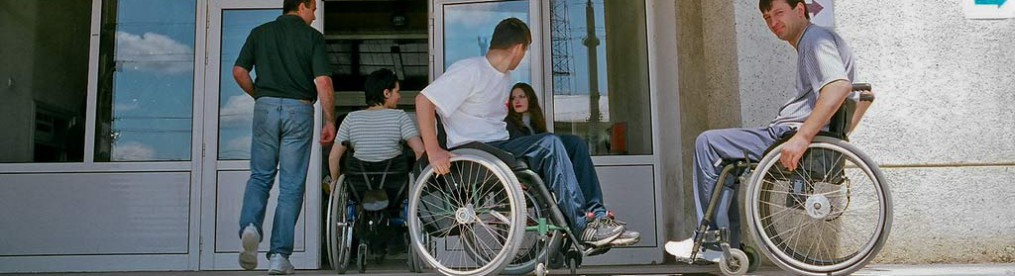
The 9th World Urban Forum (WUF9) will be held in Kuala Lumpur in 2018. The World Urban Forum is an important conference for governments to discuss and address urban issues. WUF9 will focus on implementation of the New Urban Agenda and using the New Urban Agenda as a tool for meeting the Sustainable Development Goals in 2030. This is an opportunity to examine the overlaps between the New Urban Agenda and the SDGs. No.11 of the SDGs “Make cities inclusive, safe, resilient and sustainable” is especially relevant to the New Urban Agenda. Holding WUF9 in Kuala Lumpur, Malaysia will also help push the progress in building “cities for all” forward since with the efforts of UN Economic and Social Commission for Asia and the Pacific , Southeast Asia sets an example for other regions of the world in implementing inclusive policies for persons with disabilities. Besides member states, the General Assembly of Partners will participate in WUF9 to influence the policy making and implementation process as well. Other stakeholders from various sectors that have their own vision on inclusive cities such as the Special Olympics should also be included in the process.
The conception of an inclusive city by the Special Olympics focuses on four aspects for persons with intellectual disabilities: attitudes, access, opportunities and social inclusion. While the definition of persons with disabilities in the SDGs and in the New Urban Agenda is broader, persons with intellectual disabilities are included in this definition. The Special Olympics recognizes the challenges posed by growing urban population and aims at improving inclusivity and accessibility of cities through their games and programs. For example, since the Special Olympics World Summer Games will be held in Abu Dhabi in 2019, Abu Dhabi is one of the four pilot cities for the inclusive city initiative of Special Olympics. While the Special Olympics is seeking ways to make a positive impact on the Middle East and North Africa region, UN Economic and Social Commission for Western Asia has a lot of space for improving accessibility and inclusivity of cities in the region. Knowledge transfer and experience sharing with other regional agencies of the UN can move things forward. But multistakeholders such as businesses and NGOs can also provide valuable insights on building “cities for all” in MENA region. Therefore, on international governance platforms like the WUF9, participation of stakeholders from different sectors is indispensible and should be encouraged.
 Disability Inclusive Development