Development Theory

Development, as so many other terms in the field of International Studies, is not easily definable. It has many interpretations, argued by extensive academics and practitioners with diverse backgrounds. Traditional development studies were largely based on the concept that development was directly related to development. Acemoglu and Robinson uphold this focus on economics for development in their recent work, Why Nations Fail, along with the concept of strong institutions. For this pair, these two concepts are the fundamental keys to whether a nation will prosper or, as titled, fail. While there are strengths to their arguments, their conviction in the economic model of development did not do much to change the minds of most development scholars and practitioners who have come to largely accept more humanistic approaches to development.

Thus far in my studies and work experience, Amartya Sen seems to be the leading figure in explaining what it means for a nation to be “developed.” Sen challenged the traditional beliefs that development is directly related to economic prosperity and income levels by proposing that, instead, development is much more dependent on freedom. In his own words, “Development consists of the removal of various types of unfreedoms that leave people with little choice and little opportunity of exercising their reasoned agency. The removal of substantial unfreedoms, it is argued here, is constitutive of development” (xii).

This view was innovative in that it essentially supports individuals as actors who contribute to the overall development of a nation and, more generally, the world, as opposed to policy-makers and national leaders. Additionally, Sen’s concept is very inclusionary as it supports freedom for all and recognizes the need for representation from every group in a country, not just the usual elites who lead decision-making. Acemoglu and Robinson do make mention of the importance of inclusion, explaining, “Inclusive economic institutions…are those that allow and encourage participation by the great mass of people in economic activities that make best use of their talents and skills and that enable individuals to make the choices they wish” (74). However, their exploration of inclusion is limited by the emphasis on economic institutions.

With the adoption of international frameworks like the past Millennium Development Goals and the current Sustainable Development Goals, it seems as if development practices are becoming increasingly attuned to the needs of individuals. However, as the MDGs continue to be criticized as a failure, it remains unclear if the SDGs and similar frameworks will do their job in supporting the assurance of freedom that Sen so avidly promotes and that many, including myself, have come to accept as the true nature of development.


Habitat III and the New Urban Agenda

One of the most significant driving forces of recent global development has been Urbanization. More than half the people on earth live in cities and the World Bank projects that this proportion could increase to seventy percent by the year 2050. Urbanization has provided a pathway out of poverty for decades. Cities are often centers of things like trade, government, and public services, all of which are critical to effectively developing a community. As of the beginning of this year, cities accounted for approximately eighty percent of worldwide GDP. To capitalize on this type of economic engine, the international community has included the need to create more inclusive cities in the Sustainable Development Goal 11 which seeks “inclusive, safe, resilient and sustainable” cities. The Goal recognizes that in 2016, approximately one third of people living in cities in the developing world live in what the United Nations call slums. The Habitat III Conference held in Ecuador in October of this year was intended to be a large step towards remedying this issue.

The Habitat III Conference was considered a resounding success by those who hosted it. Their most convincing evidence to this effect is the incredible number and variety of people who attended. Of the thirty thousand people in attendance, there were approximately ten thousand international participants from one hundred and sixty-seven countries. In the span of four days almost the Habitat III organization hosted over one thousand events hosting eight Plenary sessions, six High-level Roundtable sessions, four Assemblies, sixteen Stakeholder’s Roundtables, ten Policy Dialogues, twenty-two Special Sessions, three Urban Talks, an Urban Journalism Academy, and fifty-nine United Nations events. However, the organization cites not the quantity of their functions but the quality of the functions. Press releases from the organization and attendees show excellent progress forward in all three of what Habitat III calls the Transformative Commitments for Sustainable Urban Development. The transformative commitments for sustainable urban development have social, economic, and environmental dimensions which they consider integrated and indivisible. The social dimension focuses on issues like and tenure, the value of public space, and the sustainable leverage of natural and cultural heritage. The economic dimension involves housing policies as well as policies involving access to knowledge, skills, education, and the promotion of investments, innovations and entrepreneurship. The environmental policies address issues like climate change, unsustainable resource consumption, slum upgrading, energy efficiency and the social and ecological function of land.

Efficacy of Global Frameworks

The MDGs expired in 2015 without successfully achieving their very ambitious goal of eradicating poverty. Consequently, this remained the greatest global challenge and requirement for sustainable development. The MDGs failed in part because they only specified a desired outcome and didn’t adequately establish a process for achieving their objectives. The MDGs also didn’t recognize that nation states have individual priorities that often weren’t aligned with or put before the MDGs (Nayyar). The 2030 Agenda for Sustainable Development and the SDGs established a more inclusive and detailed plan in an attempt to counter the poor efficacy of the MDGs. The SDGs expanded upon the eight MDGs by extending the framework to include 17 specific objectives not only focused on eradicating poverty, but also on protecting the planet and fighting inequalities. Since the SDGs only went into effect at the start of this year, it’s far too early to tell how productive and impactful they will be, but their potential seems far more promising. The HLPF will be helpful in determining the progress of the SDGs’ targets and bring special attention to thematic areas each year. Moreover, specific aspects of the SDGs are connected to other global frameworks and thus the potential for sustainable collaborations is encouraging. In particular, cultivating stronger partnerships (SDG #17) between the SDGs, CRPD, NUA, and WSIS will help maximize development resources, global assistance, financial support, and political attention in fulfilling all 17 goals and their ties to all of these frameworks.

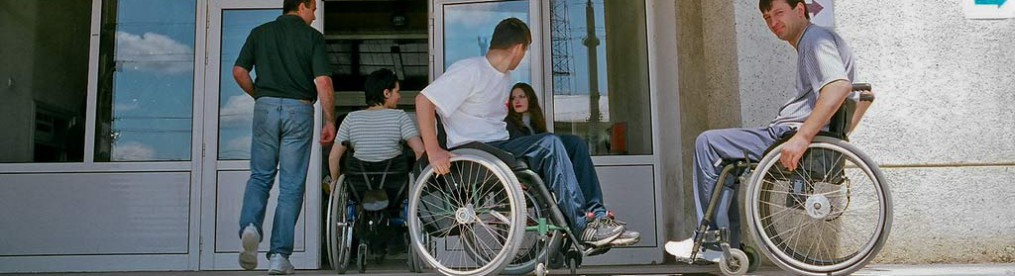
The United Nations Convention on the Rights of Persons with Disabilities (CRPD) is particularly important in realizing the “inclusive” aspect of sustainable development since it supports equal opportunities and access to the approximately 1 billion people (15% of total world population) living with a disability. There are several direct links between the language of the CRPD and the SDGs, with 33 of the CRPD’s core articles encompassing aspects of specific SDGs.  The New Urban Agenda (NUA) that was adopted in October 2016 as a result of the Habitat III Conference in Quito, Ecuador, is another important framework that relates to the SDGs and inclusive sustainable development. Habitat III provided a great opportunity for local and regional governments to work together and explore the interrelations of the NUA and the 2030 Agenda for Sustainable Development. The NUA is directly related to and strengthened by Goal 11: “Sustainable Cities and Communities” and its efforts to make “cities and human settlements inclusive, safe, resilient, and sustainable.” Both the NUA and the SDGs have policy frameworks that can be supported by local institutions and authorities as bottom-up approaches. Actors at the local and municipal levels are just as essential as world leaders in implementing the SDGs, particularly in regards to Goal 11’s targets. However, most communities lack the necessary financial and technical support or are constrained by political and institutional regulations to effectively implement Goal 11 and its similar targets. Because of this, it is vital for the NUA to help foster the required conditions to succeed in producing smarter cities and communities. Because the SDGs and the NUA are voluntary, though highly encouraged, frameworks, the support of a wide range of actors is necessary, as is effective communication and engagement with a larger audience. Lastly, the World Summit on the Information Society (WSIS) is another extensive framework that has significant overlap with the SDGs and its efficacy capabilities. The linkages between WSIS and the SDGs are comprehensive and explicit in a detailed report sponsored by the ITU, entitled “WSIS-SDG Matrix: Linking WSIS Action Lines with Sustainable Development Goals.” Since the main objective of WSIS is to advocate for the ability of ICTs to promote and contribute to development goals, its influence to the progress of the SDGs is undeniable. In conclusion, when considering the potential efficacy of sustainable initiatives, it’s necessary to understand how they complement one another rather than isolate or overshadow others.


Inclusive Cities and the Urban Poor

Just over a month ago, in October, the UN Conference on Housing and Sustainable Development was held in Quito, Ecuador. Often referred to simply as Habitat III, this event attracted some 30,000 people from 167 countries with the purpose of concluding the adoption of the New Urban Agenda. The New Urban Agenda is an “action-oriented document” that outlines the methods and practices the global community should follow in the quest to achieve sustainable urban development. The document pushes for cooperation between all relevant stakeholders and urban actors in both the private and public sectors.  This conference is the third of its type, following Habitat I in 1976 and Habitat II in 1996. With the urban population constituting over half of the total global population and continuing to grow at a steady rate, urban development is an increasingly important topic. While there are many aspects of this development, the one I find most interesting is the idea of “inclusive cities.”

Inclusive development seeks to ensure no groups are excluded in the development process. Commonly accepted marginalized groups include women, children, and persons with disabilities. In a report entitled “Inclusive Cities”, published by the Asian Development Bank, calls for the explicit inclusion of poor populations in urban development. In the introduction, authors Michael Lindfield and Florian Steinberg argue for the Asian community to focus on addressing not only urbanization but more importantly the “urbanization of poverty” (2). This term mainly has to do with the major consequence of urbanization: increasing slum populations.

After living and working in Nairobi for eight months, slum conditions and the matter of addressing these settlements without negatively affecting their populations has been an issue of great interest to me. One story that always perplexed me was the failed attempt by the Kenyan government to resettle residents of informal settlements to brand new apartment complexes. While it seemed, in theory, to be a great plan, it was actually a huge failure. Most people who were relocated ended up moving back to their original homes where they felt comfortable and knew there would be a sense of community, among several other additional reasons. The relocation plan failed to take the needs and wants of the slum communities into account, and instead, officials thought they knew what would be best. The New Urban Agenda plans to improve upon these cases of exclusionary decision-making processes by promoting approaches that involve various stakeholders who can contribute more rounded and inclusive practices. While processes like Habitat 3 and the New Urban Agenda are becoming increasingly open to participation, it is unclear just how much representation there is from the urban poor, which will likely pose problems similar to the case in Nairobi as nations move forward with urban development plans. To summarize this topic with a quote,

“If cities do not begin to deal more constructively with poverty, poverty may begin to deal more destructively with cities”

-1975, World Bank President, Robert McNamara

Habitat III and the New Urban Agenda

Habitat III is the UN Conference on Housing and Sustainable Urban Development. The conference focused on adopting the New Urban Agenda, which focuses on how the international community plans, manages, and lives in cities. The New Urban Agenda is a guide to building inclusive and sustainable cities. According to the United Nations, more than half of the world’s population is living in urban areas and by 2030, almost 60% of the world’s population will live in urban areas. The New Urban Agenda highlights the importance of the relationship between urbanization and development. A growth in population density can correlate to escalating adaption needs and substantial development deficits created by a shortage of human and financial resources. Instead of allowing urbanization to further exacerbate dilemmas, it is important to understand that urbanization presents an opportunity to incorporate inclusive and sustainable development practices in cities via policy, planning, and design. Given that the world’s concentration in urban areas is growing, it is critical that as cities grow, the practice of inclusive and sustainable development grows with it. This idea is culminated in both the New Urban Agenda and Sustainable Development Goal #11. Both international frameworks highlight the importance of inclusive cities.

This emphasis on inclusive cities is especially important for persons with disabilities. In “Enabling Justice: Spatializing Disability in the Built Environment”, Pineda asserts that dominant models of disability fail to address the disabling role of the environment. Pineda mentions that persons with disabilities are often viewed without consideration of the environment. He asserts that it is crucial to view a person as being disabled with respect to the environment. Pineda argues “people with disabilities have for too long been an invisible constituency for architects and planning practitioners who build the public and private spaces we inhabit.”

Inclusive cities aim to combat the unfreedoms that persons with disabilities face in an urban environment. The idea of inclusive cities is that they are available to everyone, including people of different economic backgrounds and persons with disabilities. The New Urban Agenda shares this commitment to the freedoms of persons with disabilities; this is evident in its’ fifteen references to persons with disabilities within the New Urban Agenda.

The New Urban Agenda and SDG 11 also share a commitment toward “smart cities.” Smart cities attract a young professional demographic and drive innovation. Jordan raises a critical point in addressing the goal toward achieving smart cities. While the NUA and SDG 11 share a commitment to both, smart cities and inclusive cities do not always coincide with one another. Achieving a balance between smart and inclusive cities will prove to be rather challenging.


Intersectionality: A Crossroads

Intersectionality is the idea that we cannot address a single social condition without also addressing the other social conditions that exist. For example, “white feminism” defines the brand of modern feminism that often leaves out women of color, women who identify as LGBTQ+, women in poverty, or other important aspects of a women’s identity that need to be addressed under the umbrella of women’s rights. Without intersectionality, progress is simply not possible.

The same holds true for sustainable development. For example, we must acknowledge intersectionality that exists across the “major groups” framework as well as the discrimination that exists within each. For example, a queer disabled woman of color faces unique and important issues that should be addressed by AND across each of the major groups. Unfortunately, across global frameworks, we see limited mention of these intersectional identities and their importance in sustainable development. Their importance comes into mainly in that development is not sustainable or inclusive when it leaves out the issues or identities of an entire population.

However, even with the division the “major groups” framework presents, it also can be utilized as a unique opportunity for collaboration and creation of intersectional understanding. For example, women in the Indigenous People group may meet with the Women group in order to discuss their overlapping thoughts and issues. After meeting, the two groups can work together to ensure their experiences, needs, and suggestions are heard at the higher level.

In the past, the major groups framework also raised issue by excluding a large number of groups but thankfully, the NUA at Habitat III introduced sixteen other stakeholder groups who cover a large number of identities and issues.

In addition, other frameworks such as the SDGs are moving in the right direction such as SDG 4, which I focused on in my capstone project. SDG 4 focuses on the right to education and includes mention of multiple intersectionalities such as gender equality under education as well as the importance of granting access to education for persons with disabilities.

Overall, intersectionality serves as a crossroads for many identities and issues and when included in the global frameworks can have a huge impact in working toward truly inclusive sustainable development.

From the MDGs to the NUA: Evolution of Global Frameworks

As one way to respond to Grand Challenges, the global frameworks we have studied are by no means perfect. But, I claim that they are the best that we have and that optimism can be found in the fact that with each new framework, we seen an evolution toward a more inclusive idea of development and how we wish to see the world.

Our initial global framework for global development was the GDP, which simply measured the income of a country. From there, we were able to grow into a more inclusive understanding of development with the introduction of the Millennium Development Goals, meant to take on challenges such as eradicating poverty by 2015. Clearly, we have not reached that point yet, making the point that these frameworks are not perfect. In addition, the Millennium Goals were not as clear with their targets and not as inclusive as they should have been. For example, there was no mention of persons with disabilities.

However, from the Millennium Development Goals came the more inclusive and specific SDGs, after which came the CRPD, and the NUA, all of which outlined goals even more inclusive of all people, with more specific targets, and with the potential for increased sustainability. As we move forward, each of these frameworks becomes more and more successful. Each of these documents has redefined development in a more progressive way.

An additional challenge stems from the fact that international law is incredibly difficult to enforce. While we have the International Court of Justice, it is difficult to navigate and often shaky in its role. What we can count on though, is the desire of nations to maintain norms, moral expectations and standards, and to meet the expectations of the United Nations rather than to come under scrutiny at the feet of the international community. The power of this desire is shown through the many successful laws and treaties upheld by the UN as well as by the large numbers in which countries sign and ratify the documents that become global frameworks.

While they are not perfect, the global frameworks we have continue to grow, evolve, and succeed.

Digital Divide(s)

As we dove further into the Digital Divide, I realized that physical access to ICT’s is just one small piece of a much larger puzzle. As with most development issues there are layers of complexity. I was particularly moved by the MacBride Report and its affects. There are so many issues with the media and accessing information that the report highlighted. I was particularly struck by the United States’ reaction to the report. The US was so offended by the communication problems that the report unearthed, like the concentration and commercialization of media, that they actually left UNESCO. This reaction exposes a deep, underlying issue in the Digital Divide and why it exists. Since all media outlets are in the North, the Global South has no control over the type of information they receive through the media. They have no agency over the information that is considered important or newsworthy. And furthermore, states like the US intend to keep the divide, hence the visceral reaction to the MacBride report. This creates a huge development challenge. What good is physical access to ICT’s if the intellectual material is still dictated by another? Just because someone has physical access to computers and internet does not mean that the Digital Divide is solved.

Another issue with the Digital Divide is the skills divide and the knowledge divide. Both of these divides highlight the continued commitment that needs to be made to truly bridge the gap between those who have access to technology and those who do not. If you do not know how to use the technology, then the skills divide will prevent you from accessing any information at all. Furthermore, if information is not available in your language, or reflects your political views, interests etc., then technology is not really accessible to you either. Technology should provide the opportunity for all to thrive and be connected. However, if you cannot access information that is relevant to you, then all the technology in the world is useless to you. This is a huge challenge for solving the Digital Divide, especially with languages. As more and more people gain access to technology, it will have to be adapted in more languages. It is not just the keypad or interfaces that needs to adjust, but the information itself. If there is no online content in your language, then the physical technology holds no purpose. The complexity of the Digital Divide goes far beyond physical access to ICT’s and it will take a lot of innovation and investment from the international community to solve this divide.

Governing the Internet

The biggest problem with governing the Internet is that not one entity can claim ownership over it. While it was developed originally in the United States as a military tool, the US cannot and should not maintain control over the entire web. This is not a problem in that one entity should claim ownership as it is and should remain a shared resource. The problem is that it requires a vast number of stakeholders in the Internet to come together to govern it together. When framed this way, it becomes less of a problem and more of a challenge or opportunity for collaboration.

This opportunity was taken advantage of with after the 2005 Summit in Tunis at which WSIS introduced a shared aim to maintain equal access to and treatment of different states in their access to the Internet as well as the importance of net neutrality. In response, the Internet Assigned Numbers Authority (IANA) has begun to transition away from being a United States dominated power and is now an international forum for monitoring of the logistics of the Internet.

Additionally, the Internet Governance Forum allows for a balanced and shared overseeing of the right to the Internet, access to it, and issues of neutrality. The IGF notably has a number of inclusive initiatives based on region, age (youth), and provides a “tool kit” for those outside of the organization looking to be involved and have their voice heard regarding the resource that connects us more than any technology ever has.

Not only is this magnificent in that it allows for shared overseeing of the right to the Internet as well as the importance of neutrality and increase access, this collaboration also marks a significant group of stakeholders working together for a shared goal. In what feels like an increasingly divided world, this is no small feat.

Digital Divide(s)

The term “Digital Divide” refers to the concept of a division in access to certain technologies that prevents communication and at times, further development with a community or country. Depending on the source utilized there can be one digital dived or multiple digital divides. Most of the discussed digital divides center upon demographical separations both domestically and internationally. These separations often occur along age, income, and geographical location divides. The presence of digital divides presents a large problem in our continuously globalizing society. Predictably, there are a number of different reports written on the subject.

This phenomenon of digital divides was explored thoroughly in the 1995 report titled, “Falling Through The Net.” The report, published by the United States National Telecommunications and Information Administration explores the digital divides that exist within the United States. Some of the most prominent divides found were between age and geographical location. The report is considered a key perspective in the discussion on ICTs and digital divides. However, “Falling Through the Net” was not the only report released that touched on the concept of digital divides. The 1981 report titled, “Many Voices, One World” explored similar topics. The report was published by the United Nations Educational Scientific and Cultural Organization (UNESCO) and is often referred to as the McBride Report. Chapter 6 specifically of Part II of the report explores the disparities in communication technologies. It also expresses the need to address these disparities. These two reports, “Many Voices, One Voice” and “Falling Through the Net” brought attention to the concept of a digital divide (or multiple digital divides) to the attention of the international community. They also facilitated the initial attempts to address the existence of digital divides and the various repercussions of their existence.

As stated previously, addressing digital divides is essential in an increasingly globalized society. As discussed in the two previous classes, ICTs are critical to developing more inclusive urban areas and the inclusive, sustainable development of society as a whole. In fact, many of the goals and ideals set forth in the New Urban Agenda will be exceedingly difficult to address should these digital divides persist. Therefore, it can be argued that the very existence of digital divides makes sustainable, inclusive development exceedingly difficult. Similar opinions, as is noted by Megan as well, are expressed in other documents associated with this class including the WISIS +10 outcome document and the WISIS +10 matrix. Looking into the future, addressing digital divides will be essential if the international community hopes to achieve true inclusive and sustainable development.