The readings from this previous week delved into the first chapters of Development as Freedom by Amartya Sen and International Development Studies by Sumner and Tribe. Amartya gives an initial overview as to what freedom means in development and how current indicators value policies and individual well being. He discussed how evaluative purposes should be based on substantive freedoms that consider functionings and capabilities. Functionings are certain things a person may value doing or being, such as being free of disease. Capabilities are the combinations of those functionings feasible for a person to achieve, and that capability represents the freedom to achieve. Freedom has two parts: the processes that allow for it and the opportunities people have. You can define a more developed society based on how much access to these freedoms (health care, education, employment, etc.) a person has. The World Economic Forum published an article back in 2016 where the New Economics Foundation attempted Continue reading
Breaking Down the Sustainable Development Goals and HLPF
As we have learned in class, the Sustainable Development Goals has seventeen goals — set with targets and indicators — addressing global challenges with inclusive and sustainable solutions for all. To assess the progress of these goals, the UN High Level Political Forum on Sustainable Development meets annually and also allows major groups and stakeholders to speak and recommend certain actions during the forum. While Sen’s readings for this past week were prior to the implementation of the SDGs, he highlights certain areas that are intrinsic to freedom and development that are also featured within some of the major goals. He touches upon challenges in development, such as eliminating endemic deprivation and preventing severe destitution, which coincides with SDGs 1 and 2 on eliminating poverty and hunger. He also emphasizes the agency role of women that impacts infant survival, reduces fertility rates, and empowers women through education and employment. The UN has a similar page that also highlights the benefits of economic empowerment for women, including increased organizational effectiveness and growth in businesses as well as overall productivity.
Making Cities Inclusive
This week’s readings focused on inclusive smart cities, Habitat III and the New Urban Agenda. The New Urban Agenda, or NUA, was a document adopted at the UN Conference on Housing and Sustainable Urban Development, or Habitat III (Habitat III). Habitat III took place in Quito, Ecuador in October 2016. Some of the main highlights in the document include readdressing the way cities and human settlements are planned, designed, and financed. It highlights a saying called “right to the city”, meaning that all inhabitants have a right to the public goods, facilities, and resources where they live. There should be equal means of access and opportunity. The document then lists several different paragraphs affirming their commitments and implementations, such as supporting local governments to determine their management structures in line with national policies. The US can take NUA and integrate its goals with US cities. An article by Matthew Cohen and Geoffrey Habron suggested that NUA can be incorporated into existing frameworks like the Sustainability Tools for Assessing and Rating Communities (STAR) to help improve areas such as equity. I think looking into how NUA has been applied to other cities in the US would be beneficial to understand our progress on inclusion in the last three years. Continue reading
Sustainable, inclusive cities: a grand challenge
When I was considering how to begin my capstone proposal, I didn’t know where to start. Envisioning a process for writing a framework that countries can follow to develop sustainable, accessible and inclusive cities seemed like a great idea when I began this class, but now, as the prospect of actually creating this thing is daunting. I decided to make a “mind map” (something that my professors had us do when I was abroad) to clear my mind and put some ideas on paper. What I ended up with was a spider-like diagram that was barely legible, containing only some of the parts that an inclusive sustainable city needs. My page was full, but I could still see things that were missing: what about the governance feedback loops? Should I spaces for community gardens? Will there be room for new businesses and entrepreneurs to make a living in the city? It struck me then that, although I had considered that urban planning for inclusivity and sustainability was a challenge, I had not considered how much of a grand challenge this would be.
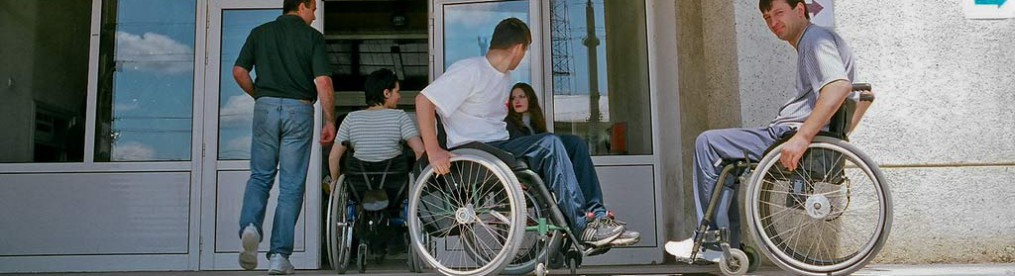
When we’re talking about sustainable urban planning, the normal aspects of “green” living come to mind: parks, street trees, rooftop gardens, etc. When discussing inclusive planning, other details of the urban landscape pop up: ample ramps, elevators in all buildings and public transit stops, cross walks that vibrate and tell you when to cross the street. The problem is that these two things are seldom thought of in tandem. Sustainability and inclusivity are often placed in two separate camps and addressed by separate groups of people.
If we conceptualize the main problem as population growth and climate change, which are also interconnected, grand challenges, it is easier to see how both inclusivity and sustainability need to be integrated. As population growth continues, more and more people will live in cities; cities that need to be denser and well-built. Building well means accounting for everyone’s needs and ensuring that all urban dwellers have the ability to choose what kind of life they want to lead. In the context of climate change, cities need to be resilient and built to withstand more frequent and intense weather events, and an integral part of this resiliency is making sure that people have access to necessities like healthcare, healthy food, transportation, and education.
Designing cities to be both sustainable and inclusive means reorganizing and rebuilding them better, not bigger. Persons with disabilities have been left out of the sustainability conversation for too long, and we cannot continue along this path if we hope to address this grand challenge. Everyone has a part to play, everyone has a voice. This is a challenge we must address together.
Technology, Accessibility, and Climate Resilience: Smart Cities
What does it mean for cities to develop in smart and inclusive ways? Many focus on technological innovation, as this is one of the most visible aspects of making a city “smart.” Technology enables day-to-day convenience for people’s lives and opportunities for environmental sustainability in ways that may have not been available before, like solar panels or other green technology. Smart cities are an overall net positive for society across the globe, but it does not come without challenges. Planning and design requires knowledge, money, and extensive research- both scientific and anthropologic. Not only can the building of infrastructure be expensive, but smart technology brings limitations in usefulness and cybersecurity and privacy problems.
Along with this, the necessity of inclusiveness, particularly with accessibility, must be addressed for cities to be considered smart. Article 9 of the CRPD lays out the right to accessibility to the built environment and infrastructure of cities, including roads, bridges, transportation, indoor and outdoor facilities, and more. The Right to the City, under the HLPF, states that cities should be those places where people enjoy equal rights and opportunities and as well as “to promote the visibility of local and national actions and struggles for the Right to the City at international forums, as well as to advocate for changes in political agendas at the international level and to monitor the implementation of existing commitments” (Human Rights, NUA and SDGs). Technology in smart cities should be used to increase inclusivity, not exacerbate unequal access. This is already being done through applications on our phones, like mapping applications that assist people in navigation to and inside of buildings.
In the context of climate change and impending natural disasters, inclusive technological innovation must be used for resilience of smart cities. With the potential in cities for climate chaos, ways to facilitate equal participation and management of risks and disaster reduction are crucial and must include all people. Even cities with strong environmental performance share the benefits of smart innovation and burdens like air pollution and heat are shared unequally (WEF). As the size of cities continue to grow exponentially, this inequality will continue to grow as well, unless explicitly addressed through inclusive and smart ways. SDG 11 is to make cities and human settlements inclusive, safe, resilient, and sustainable.
https://www.weforum.org/agenda/2018/12/how-global-cities-are-failing-to-be-inclusive/
The Future of Cities
Cities play an astonishing role in the global community on multiple levels. Not only do the congregate millions of people within such small parameters, but they are cultural, financial, and educational hubs. Living in a city gives an individual access to a plethora of resources they may otherwise not have access to. Though they provide a large assortment of resources they are the massively unsustainable. Though cities only take up about 2% of global land, they account for more than 60% of global energy consumption, 70% of greenhouse gas emissions, and 70% of global waste according to the New Urban Agenda.
Spatially equal city design
The readings for this week emphasized the point that disability, along with being a socially and culturally constructed label, is affected by spatial relations. One is only considered disabled with respect to an environment, especially the way in which an environment conceptualizes and distributes space. This is an especially important phenomenon to consider when designing, inclusive cities.
https://www.academia.edu/299654/Enabling_Justice_Spatializing_Disability_In_the_Built_Environment
When we talk about creating sustainable cities, persons with disabilities are usually left out of the conversation. We design immaculate, aesthetically pleasing cities that incorporate the newest, fastest technology, all without considering the needs of those with disabilities. Take DC, for example. Comparatively, the new metro system is faster, cleaner, and more dependable than the one before it. The cars are larger in size with more comfortable seating and wider doors. But it is still just as difficult for a person who is using a wheelchair to navigate their way through the throngs of people crowding platforms and refusing to make room for them on the cars. Don’t even get me started on the horrible state of elevators at the metro stations themselves.
The components of a city- transportation, recreation, navigability, cultural life, and the built environment- need to be accessible in order to be sustainable. Until we get this inclusive city thing right, we will just have to keep rebuilding, going back to the drawing board until we stop ignoring the needs of others. This would be simply done by incorporating those we are designing the city for in municipal governments and offices, and by getting feedback from those that have grievances or ideas of how to rework an urban space.
Designing a city to be accessible and inclusive would not only make it more environmentally sustainable, but socially sustainable as well. When we cultivate spaces for those that society has traditionally ignored, we bring them out of the woodwork and into urban cultural life. Cities are places where major life activities are carried out, and they define the circumstances under which people live. Life is a human right, and living life the way you want is a choice that all people are entitled to; everyone has a “right to the city,” so we need to design them that way.
SDGs & HLPF
The UN’s Sustainable Development Goals (SDGs) play a critical part in the international conversation on development and global interactions. In 2015, all UN member states adopted the 17 goals, “which are an urgent call for action by all countries – developed and developing – in a global partnership.” The goals cover a variety of issues from education to life below sea; all equally important to the betterment of the planet in both an environmental and human context. Further, what is significant about the SDGs is that they are intended to overlap as all issues are interconnected on some level.
HLPF: Is the “Major Groups” framework useful?
The United Nations’ High Level Political Forum, a platform for facilitation of the Sustainable Development Goals including targets, partnerships, publications, and documents. Described as the “most inclusive and participatory forum at the United Nations,” the HLPF is the process that governs the 15 year period SDG implementation and progress.
One inclusive aspect of the HLPF are the incorporation of “major groups” and stakeholders other than countries. The framework for the “major groups” came from the 1992 Earth Summit in the first United Nations Conference on Environment and Development. The groups include “nine sectors of society as the main channels through which broad participation would be facilitated in UN activities related to sustainable development” (United Nations). These groups specifically include: women, children and youth, indigenous peoples, Non-governmental Organizations, local authorities, workers and trade unions, business and industry, scientific and technological community, and farmers. These categories are a little surprising to me, given that they range quite significantly in levels of vulnerability and representation in societal decision-making. Representing workers and trade unions juxtaposed with representatives from business and industry could create a constructive dynamic of criticism and progress for both levels of capitalist society. Creating a separate category for farmers is a way to bring a group that makes up a large proportion of the world’s population, and in some ways constitutes the backbone of human society, to the forefront, and lifts their voices. That is the reason for creating these groups in the first place: making sure that those who may have not had “a seat at the table” before, do now.
That being said, within the multi-stakeholder environment, there are limitations with this framework. The major groups can attend all official meetings of the HLPF and intervene in official meetings; however, whereas governments can speak whenever they want, as many times as they want, major groups are limited, which ends up placing significant pressure on the chosen spokesperson. Even with a few caveats, the HLPF and “major groups” provide several mechanisms for people to not only physically participate in the processes that govern the 15 year period of the Sustainable Development Goals, but also shape discourse and advocate for their point of view.
Development Theory as a Rubik’s Cube
Development as a whole is an area of study that has a diverse set of beliefs and assumptions. Nevertheless, “a common theme within most definitions is that ‘development’ encompasses ‘change’ in a variety of aspects of the human condition” (Sumner & Tribe, 2008, p. 10). What distinguishes the path to this goal is the theories and approaches used to get there. Additionally, what must be considered in development theory is where or not change is considered good or bad on both a short and long term timeline.
Sumner and Tribe identify a three-dimensional puzzle, similar to a Rubik’s cube that encompasses multiple facets of development. Understanding each aspect of this puzzle helps decipher that different views that one can hold on development and how best to approach it. Continue reading
 Disability Inclusive Development
You must be logged in to post a comment.