Development Theory

There are different ways that people view development, different measures to go about it, and different definitions used to reach sustainable development goals. Many times people are faced with limitations and unfreedoms that block agendas and treaties from being implemented or pursued (Class Lecture). The class discussions and readings allowed me to better understand why it is that we are faced with obstacles when trying to further positive political, socio-economic and environment agendas.

Amartya Sen, who redefined development, mentions that there are no limitations to development; however, when closely viewing a society’s terms of living, there are a number of restrictions that hinder the community from being able to continue with its development. Participation is an important part of development, but it becomes difficult to do so when a community must conform to the established regulations and norms that take away the majority of their freedom. This form of unfreedom hinders many societies from being able to develop as a society (Sen). Why is it that it has been established that there aren’t any limitations on how to measure development but limitations on how to implement such measures so that a society can prosper?

Other than the concept of freedom to develop, I was aware that markets play a major role on how a country and its people can develop.  Inclusive economic institutions play a key role in encouraging development, but when countries decide to focus on a more “extractive economic institutions”, this can actually lead to poverty in the long-run even if this was used for short-term purposes (Why Nations Fail). Developed countries should continue to focus in creating inclusive economic institutions that underdeveloped countries should follow as well. This can then be able to create “increasing incentives for entrepreneurialism and economic growth in the long run (Why Nations Fail).

All the research that has been compiled is to be able to create a better understanding of development and its studies. In many different ways, we are all affected by developments and many researchers within the field of development theories are very much interested in making sure that their research turns into policy to aid in inclusive sustainable developments (Development Studies). Gaining more knowledge in this topic will help everyone better understand how to manage development and the different obstacles that come with it. Different disciplines should be used to advance the number of sustainable development ideas and goals.

Development Theory

Development is a broad, vague term that is comprised of a myriad of actors, institutions and a plethora of theoretical approaches. Development all too often renders images of post-earthquake Haiti or starving children in a continent that has been simplified into a country. However, as both “Development As Freedom” author Amartya Sen and “Why Nations Fail” writers Daron Acemoglu and James Robinson argue, development is much more complicated than the images that often surround us. According to Sen, development hinges on the individual capabilities, or freedoms, of a person to access a live that they have reason to value (18). This definition challenges the perceptions that development, and development theory, should focus solely on one indicator to measure development. Instead, development is a culmination of many factors working together to create a holistic system that allows individuals the right to access many capabilities and freedoms.

The right to access these freedoms is dependent upon the institutional foundations of countries during colonial periods (Acemoglu and Robinson, 9). While scholars have suggested a variety of other explanations for varying development levels across the globe, like the Geography Hypothesis, Culture Hypothesis and the Ignorance Hypothesis (48-67), Acemoglu and Robinson argue that the differences in a country’s level of development are heavily reliant on the political structures that formed the nation (9). During their in-depth analysis of Mexican and American political differences, they assert that it is the inclusive or extractive nature of the political, and consequently economic, institutions that set the neighbors on two drastically different development paths (74-81). One country was founded on the principals of citizen participation, land ownership and innovation, while the other was plagued with dictators, monopolies and inequality (30-37). While the citizens of Mexico are by no means helpless, their freedoms are severely trampled on by a government structure that does not allow full citizen participation in political decisions.

The importance of political structures is highlighted in both Sen and Acemoglu and Robinson’s work. They all recognize the fundamental importance of citizen participation as the cornerstone of development. If citizens cannot enjoy the benefits of inclusive political institutions, then their hopes of attaining economic or social freedoms are severely inhibited. Issues that haunt development workers, like poverty, access to markets and equal opportunities for education and healthcare are deprivations of basic capabilities that can begin to dissolve as political institutions start to structure themselves around citizens. As citizens gain a forum for discussion, communities can begin to enact policies that will positively influence their lives. This political freedom gives communities the agency they need to create a life they see value in.

Development Theory

Development is one of those international relations topics that can be viewed through a variety of lenses. Ultimately, development looks at change in the human condition, but this change can be observed, measured and explained in multiple ways (Sumner, Andrew, and Michael Tribe A. “What Is Development”). Some attempts at explaining the gap between developing and developed countries include the geography, culture and ignorance hypotheses, but these proposed explanations do not have much support and in general do not show a concrete connection to the problem (Acemoglu, Daron, and James Robinson A. “Theories That Don’t Work”). The most common view that most people tend to gravitate to when they hear the term development is the economic perspective of development. Under this approach, a country is seen as developed or not based on their economic and infrastructure capabilities. While this view has its merits and serves as a reasonable model for looking at development levels of countries, it leaves out a whole other set of factors that play a crucial road. Money alone does not determine or assure that a country is properly developed. Brazil, while not an extreme example, suffers from major economic inequality. The country itself is not poor, but the wealth of the nation is highly concentrated in the upper 1% of the population. Therefore, the majority of the country is still underdeveloped compared to the small pockets of success and the majority of the population does not have access to the resources and services of a developed country. So, is Brazil truly developed beyond just the economic perspective?

Others have noticed this gap in the economic view of development and among them is economist and philosopher Amartya Sen, who has truly re-conceptualized how we look at development and has taken a more holistic approach beyond just GDP. Amartya Sen’s work focuses on the quality of life of people and their substantive freedoms, because the way he see’s it, there are many limits to the material world (Sen, “The Perspective of Freedom”). Development as freedom is a capabilities approach that tries to ensure people have the freedom to make any choice and more importantly have access to these choices. This approach has gained a lot of momentum in the development field and it looks promising for the future. Personally, I used to tend to focus more on development as making sure societies had the necessary resources, but with time and especially after reading Amartya Sen’s work, I have grown to see how crucial it is that the sources also be equally accessible to everyone because that is the only way true development will take place.

One last thing I came across in the readings, which I have never put much thought into, is the issue of “over-development” (Sumner, Andrew, and Michael Tribe A. “What Is Development”). One always thinks of development as a positive thing, but it does not often cross people’s minds that too much of a good thing can be bad. I think now more than ever we are feeling the effects of over-development. Things such as obesity, terrorism and pandemics are very real challenges that are posing many issues to society. It is interesting to observe how today not only development is a focus but that now we have to also learn to handle issues of too much development, or at least find ways to counteract the problems that might arise from developing too quickly.

Grand Challenges

Society’s grand challenges are not a new phenomenon. They have always existed, but they have greatly evolved with time. Although the term “Grand Challenges” might seem daunting, it is important to remember that while these challenges are ambitious, at the same time they are also achievable (Tom Kalil). Thinking about the main issues that these challenges encompass, it can be hard to believe at times that these challenges will in fact be overcome. While things such as clean, affordable, reliable energy sources, high quality jobs and a cure for cancer, do not seem to be so out of reach they have stubbornly defied solution for quite sometime now (L. Branscomb). The key to making sure that these goals are achieved lie in the way we define them and measure our progress towards those ends. As White House’s Thomas Kalil states, it is critical that these challenges have measurable targets and a timeline for completion as well as a definition that is not too narrow.

When reading and thinking about these issues that humanity faces, the common belief seems to be that science is the solution. While I do not necessarily disagree, because ultimately I do believe science is going to be the thing that allows us to keep living our comfortable lifestyles while at the same time improving the world for all individuals, I believe science and education as a whole have to be done and taught from a different approach in order for more creativity and alternative thinking to enter the world of science. Mr. Branscomb argues that policy-promoting science needs to be more focused than just research and more creative than applied research, but I think it goes far beyond that. I believe our current education system is rather rigid and stiff and I do not think that it is conducive to the type of creative thinking we are going to need to overcome these challenges. I have faith that people will come together to find solutions and that furthermore they will be properly incentivized to do so, but I am worried that the solutions will not be as creative and innovative as we need them to be.

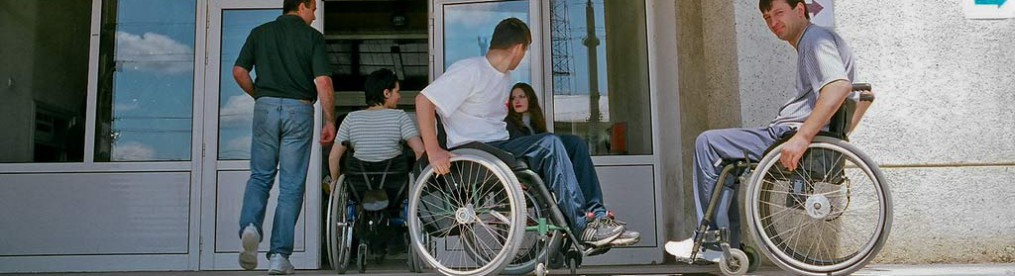
One last observation from this previous week’s discussion that left me rather disappointed was the fact that the MDGs did not include people with disabilities. Personally I was completely unaware of this, but given the fact that so many people live with disabilities, I cannot understand how they were “forgotten” by the entire international community. There might be more obstacles to achieving the set goals for the entire population but that is no excuse for entirely leaving them out. Just cause something is harder to achieve it does not mean you avoid it. I hope with time all of the SDGs will mention people with disabilities and that there will be major efforts to include them in all development projects.

Grand Challenges

There are many different types of challenges people face all over the world each and every day. Grand Challenges, however, typically encompass substantial issues that impact a large population and/or area. Although a formal universal definition has yet to be established, “Grand Challenges are ambitious but achievable goals” that require global acknowledgement and efforts to tackle (WHOSTP). I think the key word here is “achievable.” While these problems can be incredibly daunting, such as NASA’s Asteroid Grand Challenge, they are indeed considered feasible when all hands are on deck. Moreover, in attempts to solve Grand Challenges, positive social change is sparked as the “social contract” between science and society is enhanced via job creation, economic growth, and multi-sector collaboration (Kalil 2012). There is also a rhetoric shift from what is possible to what is necessary, creating a much more proactive and working dynamic.

At first I found it very interesting that the majority of the Grand Challenges listed on USAID’s website weren’t the same as the ones on The White House’s page, considering USAID is a government agency. However, as mentioned earlier there are a plethora of challenges and they can clearly fall into several categories. The White House naturally has national issues as its primary concern and priority, whereas USAID has a more global and developmental scope as its main interest. Since international development is my major’s thematic focus, I find USAID’s Grand Challenges particularly compelling. Grand Challenges for Development have explicit international engagement and look mainly to science and technology as a means for problem solving. Of USAID’s eight listed Global Challenges for Development, I was most surprised and intrigued by “Making All Voices Count” because it seemed quite progressive in acknowledging social injustices beyond what is considered basic necessities (USAID). Furthermore, my studies have been largely focused on the lack of accountability and transparency plaguing different world issues and their actors.

Although Grand Challenges are plentiful, it seems many are interrelated and could be tackled simultaneously as problem solving in one challenge would likely lead to problem solving in another. The first step in combatting Grand Challenges is research to understand the root of the problem. Then further research and innovation are necessary in order to discover and adapt alternatives and solutions. Because these challenges tend to be quite complex, trial and error is an expected and essential component, as well. I believe the Grand Challenge of finding and utilizing new energy sources is one of the most pressing world issues in sustainability and international development. We simply cannot afford or rely on continuing to use nonrenewable energy sources like oil. Already there has been significant development on renewable energy sources like wind and solar power, but I think they remain incredibly underused and are nowhere near their full potential impact. I believe there needs to be a complete shift in energy production from the extractive industry to one that utilizes the natural elements in order to tackle this Grand Challenge.


Week 1 Blog Post: Grand Challenges

Throughout the readings and our discussion from the first week of class, one of the main ideas I understood about our world’s Grand Challenges is that in order to achieve sustainable and effective development, our goals must be ambitious, yet still achievable (Kahlil). Additionally, the contribution that science will have on societal developments, such as creating cleaner energy resources (one of our Grand Challenges), will not only aid in alleviating environmental issues, but will also allow for growth in other sectors of society, such as economic growth through the creation of jobs, as well as growth in technology innovation as new ideas can contribute to various new inventions. Thus, finding solutions to our Grand Challenges can only make way for a more productive and healthy society.

Additionally, the first week’s readings also referred to the UN’s Sustainable Development Goals– or SDGs– which essentially target some of the world’s most detrimental issues, such as poverty and hunger. While the goal to eradicate (or mitigate) these issues by 2030 is a noble task, it does strike as a bit worrisome that these development goals seem too broad to really have any substantial meaning behind them. To create effective development solutions, I believe that every development plan should be tailored to the needs of individual communities in order to maximize the productivity of resources. Thus, the UN’s SDG’s would appear more achievable if the website perhaps gave a few examples of specific plans that they may have to reach different goals in various regions of the world.

Finally, at the start of this class, I was surprised to learn that I had never really been aware about the lack of responsibility that previous societal goals have taken on being inclusive of all members of society. It had never occurred to me that about 15% of our human population has some form of a disability which ends up not being accounted for in areas such as political representation, education, transportation options, and employment opportunities (Class Lecture). Not only is this a disadvantage for individuals with disabilities, but this is also a disadvantage to society as a whole since we are missing the opportunity for greater productivity in our communities. Such opportunities for productivity can come out of expanding the job market through greater inclusiveness (thus promoting greater economic growth), and additionally, increasing the focus on research for understanding disabilities and development as a means to promote technological innovation that may be beneficial to all members of society (UN Draft Resolution on Social Development), while also promoting social equality. I truly believe in and agree with Amartya Sen’s outlook on “development as freedom” (Class Lecture).

Grand Challenges

There are a number of daunting problems that are plaguing different parts of our globe. Some are easier to handle than others, although they are not impossible to overcome. Through out the assigned readings, I noticed that there was a common focus to the Grand Challenges that we are faced with and that is that these challenges are able to encourage and push forward new innovations, technological advances and even “tackle important problems” that are related to different sectors of our world; such as “health, education, the environment, national security and global development” (White House and Grand Challenges). I always believed that grand challenges posed a threat to our daily lives and cultures rather than give us new ways of dealing with different sustainable tasks at hand. Khalil’s statement that “grand challenges capture the public’s imagination” proves that certain obstacles can bring different communities together to help create a better inclusive sustainable development. I do agree with the readings that if a Grand Challenge is “too narrowly defined” will need a “technical solution” that can also “reduce the opportunity for new approaches” (Khalil 2012).

When reading about MDGs, I was not aware of what they were or their concepts and targets in regards to an inclusive sustainable development. The Millennium Development Goals seemed to have much more weaknesses than strengths, and their strengths also were their weaknesses (Millennium Development Goals). They were silent on the means in which to purse grand challenges and lacked fundamental approaches on how to deal with the “process of change from one state to the other” (Millennium Development Goals). I highly disagree with their “one-size fits all” assumption. Each country and community have their own set of unique challenges that they face and, even though they can be similar, some have to be dealt with in a completely different manner and with different types of innovations and technologies. So I find it incorrect to generalize all grand challenges to be the same and be dealt with in the same manner.

Within the field of International Relations, there are many challenges to be dealt with that require different sets of skills, knowledge and technology, and with grand challenges, this field requires a set of minds that are able to find new and innovative ways to achieve the goals of the challenges at hand. It is essential to rethink the importance of what goes with the process of international development. This class will give me the tools necessary to better understand inclusive sustainable development and what are ways that I can contribute to creating a more inclusive environment.