Disability Inclusive Education

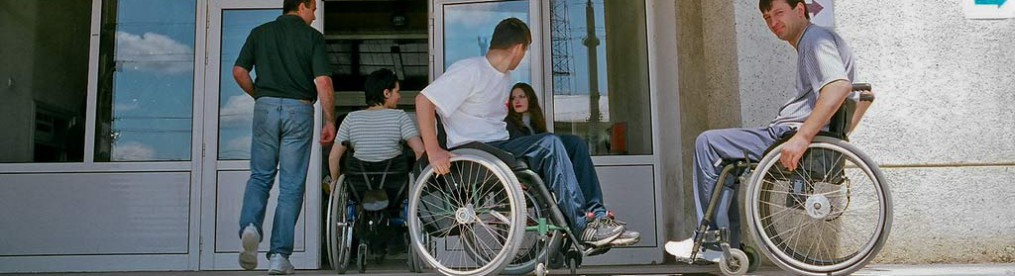
Disability-inclusive education is education that meets the individual needs of every student. Disability-inclusive education includes raising awareness of the rights of children with disabilities not just to governments, but also to teachers, their parents and other families. Often times, children with disabilities are considered too different than other children and therefore should not be allowed to attend school. The stigma or superstitions surrounding children with disabilities often is a factor in keeping them out of school. Besides raising awareness, disability inclusive education includes training parents and teachers on how to work with children with disabilities. Schools then need to be built that are designed with certain standards that make the school inclusive and accessible to all students. This includes things like Braille books, tactile maps and literacy and numeracy teaching aids to help students with intellectual disabilities. Additionally, there should be rooms within the school that are devoted for children with disabilities, and teachers that are properly trained to work with students with disabilities. Finally, disability inclusive education works with governments and schools to create inclusive education policies. Once policies are created, there need to be resources dedicated to implementing them, which can be a struggle considering the getting basic education to rural and/or developing parts of the world is already difficult enough.

Education is an important step in social and economic development, because it can open so many doors for further development. Education is beneficial not just to persons with disabilities, but to all minority or underrepresented groups. Education is seen as a way to a better life, but it is not met without its own challenges. For example, fees for books, uniforms, and other school materials can make it difficult for persons with disabilities and other marginalized groups to afford to attend school. If children were also considered earners in their households, it would also be difficult for them to attend school, as their family would be losing money. Providing financing or loans would be one way to make sure students are able to attend schools.

Once students are able to attend schools, it is important that the schools be able to accommodate the children with disabilities. ICTs can play a crucial role in this. Technology can provide schools and teachers with multiple platforms to accommodate those students who have disabilities. However, there is an issue of cost and infrastructure for putting ICTs into rural and developing schools, which makes it harder for schools to be truly inclusive. High costs and stigma against children with disabilities are difficult challenges that must be overcome to provide disability inclusive education.

Inclusive education has become a bit of a buzzword, yet to fully realize true “inclusive education” for students with disabilities, and in fact all students from marginalized groups, “a process of structural change throughout the education system” must be employed according to Richard Rieser in Teaching and Learning in Diverse and Inclusive Classrooms: Key Issues for New Teachers. This structural change to the education system is necessary because much of education was designed by and for elites. One way to achieve this change is through the use of information and communication technologies (ITCs) to disrupt the existing structure of education systems around the world.

Take for example the experience of a university student in Brunei who has been able to become a very high achiever while overcoming many challenges due to his blindness. Some challenges, unfortunately, continue to plague this particular student according to a paper published in the Asian Journal of University Education. Some persistent challenges include the physical structure of the university itself. The article documents the experience of this high performing blind student, and notes that the university he attends has many open potholes and drains that make navigation difficult. It is also difficult for this blind student to locate unfamiliar buildings and lecture halls on campus, and this student requires his family’s help driving to and from campus.

These issues centered around mobility and the physical space of the campus could be solved with ITCs. This student’s university in Brunei already formed a specialized committee made up of the Dean of the Faculty of Business and Economic Policy, the Head of Department, the university’s Student Affairs Officer, a Disability Officer, a librarian, instructional technology personnel and all the lecturers involved in teaching the student. This committee could easily be given an expanded mandate to craft all-online courses that would allow for students with disabilities to eliminate the need to navigate a less than disability friendly campus. Lecturers are already engaged in crafting specialized content, along with adapting lessons to the needs of this particular blind student. This existing and remarkable work done by the committee could be used as the foundation for a structural shift as Rieser recommends by way of ITCs.

The Grand Challenge of Inclusive Education

A very pressing Grand Challenge is inclusive education. Inclusive education requires the collaboration of many different disciplines because there are so many different aspects of making education accessible. Inclusive education is also a new frontier because the systems of education that exist are inaccessible and exclusionary, so drastic changes to the educational system must be made. One innovation that has drastically changed the educational system and made it far more accessible is technology. Technology makes it possible for educators and students to communicate even when they are not in the same place or even time zone. This is incredibly important for students with disabilities who may have mobility issues that prevent them from coming to a traditional classroom. Technology like blackboard collaborate makes it possible for students to attend a class without physically attending. In recent years there has been an increase in educational programs that allow students to participate remotely. One example is the IDPP international masters program which allowed students with disabilities from all over the world to participate and earn their masters without having to come to Washington D.C. Programs like this show the innovative role technology is playing in making education more inclusive.

There are many challenges to inclusive education, however. One is unequal access to technology and unequal technological capabilities. As seen with the Maitland Commission Report and Falling Through the Net, not everyone or every country has the same amount of access to technology. Non-reliable or no internet access can prevent potential students from participating remotely in educational programs. Lack of internet can also lead to a lack of information about these programs and opportunities. Equal access to technology should be made a priority, because without equal access, much of the world’s disabled population could be excluded from education. For places that currently do not have as much access to technology, traditional classroom settings must also be made to be more inclusive. More educational materials should be made available in braille and schools should provide a sign language interpreter to every student who needs one. All children should also learn sign language in school so that they can communicate with their deaf and hard of hearing classmates. Schools should also be physically accessible with ramps and elevators. Inclusive education is a grand challenge and incredibly important because education is the future. If people with disabilities are not getting the education they need, we are missing out on the hundreds of new ideas and innovations they could come up with.

Inclusive International Education

Education is a key component of development. Unequal access to education resources and opportunities is a global challenge. While international organizations recognize the importance of inclusive education, there are still some missing components. For example, in SDG 4 Quality Education, the emphasis for promoting inclusive and quality education is on pre-school, primary and secondary school, and adult vocational training. Not much is said at the level of higher education. I believe that higher education is as important as other stages of education, and an inclusive international higher education can create next generation of global leaders who have greater cultural sensitivity and understanding of inclusive development.

In 2015-2016 academic year, 325,339 American students studied abroad, which takes up 1.6 percent of all American students enrolled in higher education institutions. Among the students who studied abroad, 8.8 percent are students with disabilities. In fact, there has been a growing trend of American students with disabilities to study abroad, from only 0.1 percent in 2011 to today’s 8.8 percent. This is indeed an astounding jump and one big step towards inclusive education. While their peers have the opportunity to study abroad, students with disabilities are increasingly able to enjoy the same education resources. With experience living and studying abroad, students can build better cross-cultural communication skills and are more likely to take initiatives on global issues.

While study abroad for American students is becoming more inclusive and accessible, it might not be the case for students in others countries. Achieving inclusive international education is a long-term process that requires not only efforts of education experts, but also cooperation between different actors including government officials, legislators, private sector actors, etc. Inclusive education initiative in one country might benefit students from other countries in the globalized world. Master’s of International Affairs in Comparative and International Disability at the IDPP is an example of inclusive international education, since international students with disabilities can fully participate in this program. It is through initiatives like this that students who are traditionally underrepresented in international education can also benefit from it and earn degrees on issues that affect them. This empowerment will enable them to better advocate for their own rights in global governance in the future since they are trained on language and practice that are common in the global policy-making scene. What’s more, a diverse pool of students studying together, although virtually, enhances their mutual understanding.

Inclusive international education is not captured by many global strategic frameworks. But it is an essential component in the concept of inclusive education in globalization. It requires more initiatives like the ones taken by the IDPP to move international education towards a more inclusive direction so that people who benefit from inclusive international education can one day make an impact and fill in this blank in global strategic frameworks.

Inclusive Education as a Human Right

Education is a basic human right. If education is a human right, then all education shall be inclusive education. Providing inclusive education is paramount for the establishment of quality education for all those who seek to learn. Increased education is directly correlated to overall development. The Salamanca Statement cites inclusive education as, “recognition of the need to work towards ‘schools for all’ – institutions which include everybody, celebrate differences, support learning, and respond to individual needs’. Inclusive education works largely to ensure that people with disabilities are able to access high levels of education. Furthermore, the United Nations Convention of the Right of Persons with Disabilities describes people with disabilities as, “those who have long-term, physical, mental, intellectual or sensory impairments which in interaction with various barriers may hinder their full and effective participation in society on an equal basis with others’. Because disabilities range across a large spectrum, inclusive education must take into account all of these factors.

Inclusive education also works to change societal norms regarding persons with disabilities. Its goal is to become a norm that persons with disabilities are able to access education and education facilities without obstacles or extra costs.


The United Nations Educational, Scientific, and Cultural Organization (UNESCO) and the Global Initiative for Inclusive Information and Communication Technologies has worked to create, The Model Policy for Inclusive ICTs in Education for Persons with Disabilities. This document works to develop a “model policy” for nations to utilize as a template. It also works to encourage countries to further implement the UNCRPD. It includes processes for policy development and reform to achieve smaller and wider goals of expanding education sectors within countries and regions. The initiative emphasizes inclusive ICTs within education for individuals who have disabilities. It states that no person shall be a victim to the exclusion of education at any level.


The policy also talks about funding opportunities for persons with disabilities and inclusive education. Often times, inclusive education can be costly. It states the following recommendations to ensure proper budgeting and funding:

-Decentralising the use of funds within the education system that allows flexibility in supporting the use of inclusive ICTs in education.

-Defining the roles and responsibilities of all main stakeholders at the national, regional and organizational levels in relation to the budget implementation strategy.

-Securing and effectively co-ordinating inclusive ICT-related funding from different ministerial budgets (information society, social affairs, health, education, etc.)


Overall, inclusive education is an important facet of inclusive sustainable development and shall constantly work to include marginalized groups.

Inclusive Education

Education is something that everyone should be entitled to; everyone should have access to a good education. The fourth Sustainable Development Goal (SDG) is centered around education, with the end goal being to achieve inclusive and equitable education for all. The term “inclusive education” emphasizes that education is for everyone, no matter your background. Rich, poor, white, African-American, Asian, autistic, old, young – it does not matter. Everyone should be able to get a good education.

Inclusive education is much more than providing access to education for persons with disabilities. Girls and women all over the world have struggled for access to education throughout history, something that we can still see in the United States today with the gender pay gap. While many people will look at the term “inclusive education” and think about providing accessible education to persons with disabilities, there are a lot of other marginalized populations that also need to be considered and cannot be forgotten. To be inclusive is to include everyone, no matter his or her background. SDG 4 outlines this by aiming to “ensure that all girls and boys complete free, equitable and quality primary and secondary education.” If everyone had a quality educational background, it would allow for opportunities that currently do not exist. The UN continues by aiming to “eliminate gender disparities in education and ensure equal access to all levels of education and vocational training for the vulnerable, including persons with disabilities, indigenous peoples, and children in vulnerable situations.”

Education is a key to future success. By not providing accessible education, it limits future possibilities. Many jobs require college degrees, yet without accessible education, many people will not be able to get high school diplomas. The challenge is the process to make education accessible. In many countries in the world, education is free to the citizens of the country, subsidized by the government in order to provide access to everyone. In the United States, however, a free education is unheard of; college tuition often ends up costing about the same as a house. But in the United States, there is a lot of money available for scholarships, especially for first generation college students and other marginalized populations. The world as a whole has come a long way, even in the last few years, but there is still a far way to go. In 2017, the UN updated the progress by giving examples of how far we still have to go in order to achieve the goal of quality education. In 2019, Goal 4 is slated to be reviewed by the High Level Political Forum.

Inclusive Education: Research to Implementation

SDG 4 “Quality Education” and CRPD article 24 for “Inclusive Education” work together to create a quality education system that is accessible to the needs of all. In fact, article 24 defines its goals as “ directed to:  

  1. The full development of human potential and sense of dignity and self-worth, and the strengthening of respect for human rights, fundamental freedoms and human diversity;
  2. The development by persons with disabilities of their personality, talents and creativity, as well as their mental and physical abilities, to their fullest potential;
  3. Enabling persons with disabilities to participate effectively in a free society.”

SDG 4 defines its goal more broadly as “ensure inclusive and quality education for all and promote lifelong learning”, but also includes specific targets and indicators for implementation. These international frameworks guide and unify behavior on the part of States and non-state parties like civil society and the private sector. This is necessary because as a marginalized group, persons with disabilities face barriers in transportation, employment, education, political representation, and access to ICTs.

Much has been done to implement action on the part of the grand challenge of accessible and inclusive education. For example, the G3ict has produced a “Model Policy for Inclusive ICTs in Education for Persons with Disabilities” discussing the implementation of the CRPD articles 9 (Accessibility), 21 (Freedom of Expression and Opinion, and Access
to Information), and 24 (Inclusive Education) explicitly for policy makers. In fact, the World Report on Disability 2011 estimates that there are between 93 and 150 million school-aged children with disabilities globally, making this a active and urgent field. Their ideal policies include mainstream technologies like computers and cell phones that contain in-built accessibility features, assistive technologies like screen readers, alternative keyboards, augmentative and alternative communication devices, etc, videos with captioning, DAISY (Digital Accessible Information System) books, EPUB, etc., and more.

The ASEAN region, where an estimated 400 million persons with disabilities reside, is particularly active in disability work. These 10 countries include Indonesia, Malaysia, Philippines, Singapore, Thailand, Brunei Darussalam, Vietnam, and more. UNICEF’s 2003 report evaluates education policies like the those of the Royal Thai Government, the Golden Key Project in China, and the Disability Action Council in Cambodia.

The Institute for Disability and Public Policy, or IDPP, has worked heavily in this area as well by using its function as a virtual organization to use technology and cyber learning to drive accessibility through the creation of a virtual graduate institute in conjunction with a large network all over the world. This work offered a fully online Masters of Public Policy through AU (the first of its kind), continuing education through certificate programs, workshops, and capacity building, etc.

The research produced by the organizations is invaluable, but only if it is actually implemented. As with the ASEAN region’s Incheon Strategy “Make the Right Real Campaign”, the knowledge of existing gaps must be used in order to actually increase living standards of persons with disabilities and bringing them to the table in how education is actually used.

Inclusive Education

Inclusive education is a topic that greatly interests me. It is an international strategy that was first advocated for in the 90’s in international documents. Inclusive education, while not a right in all countries, is an educational model that encourages the inclusion of students with disabilities in mainstream classrooms. Its pedagogical approach hinges on the belief that students with disabilities can and should be included with students without disabilities and students with disabilities are capable of being held to the same academic standards. The push for inclusive education has been simultaneously successful and challenging. Countries are now encouraged to enroll students with disabilities in general public schools, so their enrollment rates are increasing.

However, once students with disabilities are inside the classroom, they face another battle for the quality of their education. It is difficult to include students with disabilities in mainstream classrooms because whether it is an intellectual or physical disability, they often need specialized and individualized instruction. This presents a very difficult situation for mainstream teachers. Many mainstream teachers are not trained in special education, differentiated teaching or individualized instruction, so they are often at a loss for ways to truly include students with disabilities in the classroom.

Additionally, some disability communities do not want inclusive education. As I mentioned in the efficacy of global frameworks piece, these global goals and strategies are not universal, nor are they effective for everyone. While inclusive education may be an excellent option for some disability communities, others are advocating for their own special schools. Recently in another class, I had two professors from Gallaudet University come and discuss education for deaf persons. Through personal experience, they testified that special schools for deaf students are often the most effective way for these students to obtain a high quality of education. Even though they are separated from mainstream students, they have a tight knit community and the resources to effectively educate their students.

While in a mainstream school, one of the professors shared his challenges with the quality of education. Without the money, resources or knowledge to provide materials for him to learn, he was left sitting by himself, unengaged in class with only his textbook to inform him. When he transferred to a school for the deaf, he was able to make friends, have classroom discussions and participate in after school activities. While this experience does not speak for all deaf communities, it is important to remember that inclusive education is not a blanket solution to education for persons with disabilities.

Inclusive Education

In terms of inclusive education and its relation to the development spectrum, I took particular interest in the role of inclusive ICTs in education policy. In the publication, Model Policy for Inclusive ICTs in Education for Persons with Disabilities, we learn the risks posed to learners with disabilities in the overall educational system. The World Report on Disability estimates between 93 and 150 million school-aged children with disabilities globally. These high numbers along with the strong vulnerability these children face to education exclusion is very problematic. ICTs can help bridge this gap by helping to increase the participation of students with disabilities. In particular, these ICTs include media and publication formats such as:

  1. MSWord, PowerPoint and PDF files
  2. Hypertext Markup Language (HTML 5)
  3. Videos with captioning
  4. DAISY (Digital Accessible Information System)
  5. Books
  6. EPUB

As part of its policy objectives, the publication also explains the importance of providing access to an appropriate learning environment which is supported by inclusive ICTs for learners with disabilities. The policy objective has the long term outcome of learners with disabilities being able to effectively use inclusive ICTs towards their own learning preferences.

Inclusive education is an important contemporary issue in the development sector because an access to education provides the necessary framework to tackle many of the Sustainable Development Goals. In order to provide information access to community members in the informal settlement of Kibera, it is important to assess the education facilities within the community. Jitahidi Academy is a primary school in Kibera which plays an important role and serves as a great opportunity to implement these international objectives on inclusive education. Kenyan NGO Umande Trust implemented a sanitation and hygiene training program in the school. As outlined in their project report, “Promoting Eco-Sanitation and Water Services in People Settlement in Kibera, Wimma Likkuta,” the program was “meant to address the sanitation challenges facing the school” and teach aspects related to hygiene promotion and handwashing. The program involved fifty-seven students in which they were trained on important areas of sanitation such as handwashing and were informed of their sanitation options in the community. The students were then encouraged to share the information learned with other members of the community including friends, family and neighbors. Under the supervision of staff at Umande Trust, I was able to create a video project covering this project. This video project seeks to serve as a starting point for necessary ICTs for inclusive education within the settlement of Kibera.

Inclusive Education

Over the years, I have been lucky enough to have grown up in an environment where access to quality  education seems to be a basic commodity that most people have been able to take advantage of (at least until high school) if pursuing an education was the path they chose to follow. Education has often been thought of as one of the keys to economic success as it enables you with the knowledge and skills necessary in order to obtain a job with a sufficient enough salary to live a relatively comfortable life and to be able to support one’s family. Unfortunately, widespread access to quality education for all persons is not always the case for millions of people around the world. Often time, different groups, such as women, pwds, or low-income individuals, are faced with unequal access to education, thus inhibiting them from gaining the the skills and capabilities necessary in order to reach a higher potential of productivity in society (if that is the goal that one seeks to reach). Thus, SDG 4,  to “Ensure inclusive and quality education for all and promote lifelong learning”, has been one of the goals that the international community has agreed should be stressed upon, in order to promote higher levels of development worldwide.

The Model Policy for Inclusive ICTs in Education for Persons with Disabilities aims to assist UNESCO member states in “promoting the effective use of inclusive ICTs in education for learners with disabilities” (unesco.org). This model is interesting in the way that it aims to increase access to ICTs (which is a goal within itself) for more inclusive education, while also aiming to ensure that these ICTs are accessible by various groups of pwds to make sure that no one group is neglected in their overall access to the means of a quality education. I also believe that this model policy will be more effective in the sense that it also targets “any learners who are vulnerable to exclusion from any sector of education” (unesco.org), which correlates to the idea of “inclusive” education.

Along with aiming for more inclusive education, it is also important to uphold a certain standard of quality of the education. For example, in the article “ Inclusive Education Initiatives for Children with Disabilities: Lessons from the East Asia and Pacific Region”, one of the lessons that is mentioned is that “it is important to maintain a balance between rapid expansion and good quality educational provision” (pg 33). I think often time in development projects, people tend to analyze the importance of numbers more than the actual outcome of a project (in regards to its quality). Thus, it is important for international development actors to keep in mind that while helping more and more children access a facility for education, it is also important to keep track of other quality indicators, such as the quality of a teacher, or the quality of the school facility itself in making sure that every part of the facility is safe, and accessible by all students.