SDGs and the HLPF

In this past week, we discussed the way in which the new Sustainable Development Goals have been organized, and ways in which international institutions have tried to reform the goals themselves as well as how we enforce and monitor them.  As we know, the Millennial Development Goals (MDGs) expired in 2015, and have since been replaced with the Sustainable Development Goals (SDGs).  The UN has improved the organization of these goals, but has certainly added a lot to the already-ambitious agenda.  The new MDGs will expire in 2030.

The MDGs may seem overwhelming to some, as there are 17 of them.  There has been a lot of controversy over whether the UN has put too much on its plate.  However, while there are more goals this time around, very specific goals and indicators have been laid out.  I find this to be very important, since monitoring and enforcement has always been the biggest challenge to such projects.  There are checkpoints to each goal that they plan to complete by certain deadlines.  For example, one indicator for the goal to eradicate poverty is to eradicate “extreme poverty” for all, measuring that as those currently living on less than $1.25 per day.

The HLPF is another great way these goals are being monitored and enforced.  The HLPF (High Level Political Forum) was specifically set up to monitor the progress of the Sustainable Development Goals.  This committee has been meeting yearly to look at the status of different SDGs and to establish new deadlines, indicators and goals.

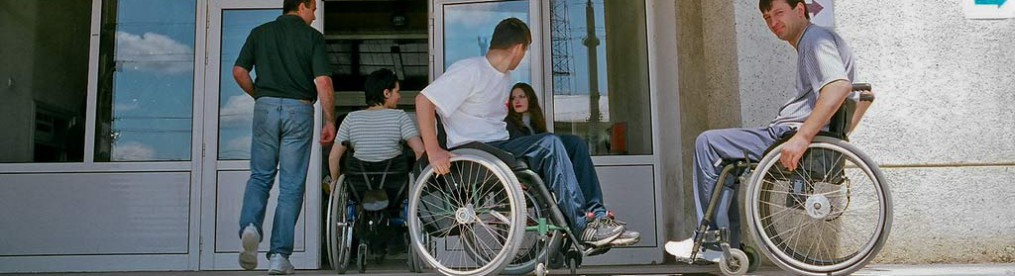
In my opinion, the most important and yet surprising change has been the inclusion of persons with disabilities.  This important stakeholder group was barely mentioned in the MDGs, but the UN realized the importance of including them with the fact that 15% of the world’s population is living with a form of disability, and that inclusive development practices are needed to speed up the process.

I believe the current development practices has greatly improved, since it has become more commonplace to recognize the complexity of the problem.  Development needs everyone to contribute in order to succeed, and fixing these problems require those affected by the policies as well as professionals from many different disciplines.  The Major Groups System is an inclusive way of working on today’s international development issues, as stakeholders from many different groups (women, children, indigenous groups, businesses, etc) have the right to participate in development conferences.  It is going to get more and more difficult to include all those who need a voice in the situation, but I believe it absolutely crucial that everyone have a seat at the table.

SDGs and the HLPF

Although much progress was made by the MDGs in terms of reducing poverty, with their expiration in 2015, the SDGs were adopted with a much more ambitious agenda. Not only do they look to end poverty rather than just reduce it, but they also make it a point to specifically advance where the MDGs fell short (Class Lecture). Another strong point of the SDGs is that they are much more detailed and focused which makes it easier to plan and oversee their implementation. With clear targets and indicators in place, oversight will be much more effective since there will be little confusion in regards to the goals and how they must be measured. However, one of the most important features of this new vision for the world we want is the fact that in the SDGs unlike in the MDGs, people with disabilities are specifically referenced eleven times within the document and a couple of the goals are explicitly relevant to their needs. Nevertheless, while this is a victory for the disabled community, it is only the first step towards the ultimate goal of having people with disabilities mentioned and included in everything else moving forward. The small victory is good for now, but it is not enough. In order for our world to develop in the way it should be at this point in time, more attention needs to be directed towards ensuring that people with disabilities are included into every aspect of life, because despite this advancement, traditional stereotypes of people with disabilities still consciously and unconsciously exist and in turn affect their wellbeing (Rimmerman).

As with all goals that are put in place, the critical part is implementation and the overseeing of that process. The unit in charge of overseeing the implementation of the SDGs is the High Level Political Forum (HLPF). However, there is one major issue with the forum and that is the barriers it has to inclusion despite claiming to be the “most inclusive and participatory forum at the UN”. At least the major groups were finally expanded to include PWDs, which is a major victory but again not enough. Nevertheless, it is great to see the progress that is being made to include and acknowledge people with disabilities. Although it might be slow, it is moving in the right direction and that is all we can ask for.

SDGs and the HLPF

The SDGs, as discussed in class, are a framework to continue sustainable development goals that were put in place by the MDGs. By countries adhering to these targets and projects, it enables them to compare how well each country is implementing and enforcing the targets and indicators. Measuring the impact(s) of the goals is important in knowing how well the countries are adapting to the enforced/implemented targets. Compared to the MDGs, the SDGs are more focused in the disability inclusion (Class lecture). Because it is an international goal, there must be an organization overseeing that all the targets are being ratified and implemented. This is where the High Level Political Forum (HLPF) steps in. As an organization that is said to be inclusive, they are the most exclusive organization (Class lecture). The requirements for someone to be a part of the HLPF discussions limit a large number of people who would benefit in being a part of the discussion, including those that are part of the Major Groups. This goes against Sen’s view of how democracy is an important part of developing and strengthening development (Sen). It is true that people have to acknowledge the fact that many institutions cannot be viewed as a “mechanical device for development” (Sen), but as an organization that specifically deals in overseeing the implementation of sustainable development, they should be democratic in the way they manage discussions and who can participate in them.

Since the main goal of the SDGs is to continue promoting and implementing inclusive sustainable developments, reading the Universal Declaration of Human Rights made me realize that the HLPF is not abiding by the basic rights that humans have to make sure that sustainable developments can progress in their country. Countries must abide by the UDHR to make sure that any changes occurring within a developed/developing country do not hinder a person’s or community’s desire to progress with their sustainable development. The same way that this document lets all people have the basic rights and freedoms that they are entitled to, I believe the HLPF should give whomever wishes to participate in the discussion, the opportunity to view how they are managing an international dilemma (UDHR). In addition, every person/community has the right to education, health and social security (UDHR). The SDGs intend to continue implementing universal education and health so that developing nations and their Major Groups can continue to prosper.