
Development Theories

The topic discussed this week was development and how it is defined, as well as the theoretical and cultural frameworks surrounding the discourse and its implementation. Development is inherently an ambiguous word that has been defined in a multitude of manners. Within our class we have been exploring these definitions through various authors.

The Sumer and Tribe reading provides a critical outlook on how development is defined, by highlighting three-traditional frameworks in which development has been confined to, these frameworks are: Historical, Policy, and Post-Modernist approaches. The first conceptualization is historical which defines development as “the long-term practice of structural change”. The policy framework defines development as “short-to-medium term outcomes of desirable targets”. The postmodernist conceptualization is a critique of how development is viewed in the global north but also how it is a mechanism in which the developed nations control Global South.

On the other hand, we have development defined as freedom by Amartya Sen. His argument is that “development is the advancement of our lives and the freedoms we enjoy” and that wealth is a determinate of the quality of life that one lives. He later correlates the expansion of instrumental freedoms to development. Stating that the expansion of instrumental freedoms such as political, economic facilities, social opportunities etc., contribute to development. What I find interesting is that he places the expansion of these freedoms on individuals and governments. Individuals need to be proactive, and governments need to strengthen and protect human capabilities through institutions. The only way for development can work is for government and citizen work together, which inherently links Sen’s definition of development to democratic regimes.

The most compelling argument is that of Amartya Sen. Sen correlates development to the capacity in which individuals have their own autonomy to make their own decisions but discuss how the human condition affects agency a therefore development. We see this when he discusses poverty as capacity depriving, because it takes into account that poverty deprives people of agency because they are confined within economic boundaries. We see this example within the US and how communities such as African Americans and Latinxs are marginalized economically, socially and politically. Poverty is capacity depriving because it limits what school parents can send their children to, what foods they are able to afford as well as what is made available to them and the environmental conditions people live in.
Development Theory

For this week’s readings, the term development was thoroughly analyzed. Historically, societies have looked at development as an economic term that translates to urban high rises, higher incomes, etc. Instead of considering “development” as an economic term, the authors associate it with freedoms. They describe development as the process of expanding individual freedoms or the real freedoms people can enjoy. This can be more access to healthy food, good education, water, internet, etc. These increased individuals freedoms are supposed to help improve the quality and, above all, the happiness of individuals in a country.

This new perspective of looking at development is very different compared to the way current governments see the term. When governments look at their economy, they look at economical metrics like Gross Domestic Product (GDP), income per capita, wealth, etc. Freedoms are not associated with measuring the current or potential state of a country’s economy. In their view, economies are already free and liberal to an extent because they allow individuals to make something out of themselves if they really wanted to. The readings show great examples that show that numbers do not capture the whole situation. For example, you can be technically richer in the U.S., but be in a worse living situation than someone in a poorer country. Other examples relating to African American completely astonished me. The fact that African Americans have lower survival rates than the average Chinese civilian is depressing and shows inequalities in the U.S. Relating development with freedoms gives a more holistic view because it shows the capabilities and advantages that people have.

People would assume that living in a very rich country like the United States would benefit people and be an advantage, but for the African American, it is not. As an immigrant, I have always thought that living in America is a privilege and that people of color are better off here. All these graphs show that I’m wrong.

Other sections of the reading discuss how institutions play a critical role in helping achieve more individual freedoms and happiness. Institutions that can make it better for individuals in society are public schools, better courts, etc. They are not described as tools that make it easier in a society, but as tools that give accessibilities to individuals so they can be stable and happy. Public schools and public health insurance do not have to be used for economic development that countries have always longed for, but for human development. If countries start putting individuals first and focus on human development, then the rest will follow. My question is though, how can governments focus on human development without first achieving economic development?

Sen’s Development Theory

Amartya Sen’s perspective on the importance of individual freedoms is more convincing than differing developmental theories.  In chapter two of his book Development as Freedom, Sen writes, “Development…is the process of expanding human freedoms, and the assessment of development has to be informed by this consideration” (1999, 36).  Sen (1999) explores the relationship between individual freedoms and development, as well as the ways in which freedom is both a fundamental component of development and an enabling springboard to other aspects.  Dominant views of development tend to revolve around GDP growth, industrialization, and technological advances.  Sen (1999) defies those models, highlighting three themes that I see emerge from his writing:  first, urbanization does not mean development; second, social welfare must come before economic growth; third, growth in the community means focusing on social and economic human rights.  Framed by these three themes, I argue that Sen’s focus on substantive human freedoms challenges other development theories, such as Modernization’s, idealized set of Eurocentric assumptions about what a developed society ought to include.  Continue reading

Development and Development Theory

Despite the ontology of development studies (DS) having an unclear definition and dependent on the disciplinary perspective one takes in engaging in DS, its cross-disciplinary, or the term I prefer, trans-disciplinary nature makes it a fascinating field to delve into. In my studies so far, I have engaged with grand theory in DS—primarily by critiquing purely economics-based theory as western ethnocentrism. As I am warming up to my capstone project and begin background research, however, I intend to grapple with context specific theory to understand how human trafficking of persons with disability can occur in a country which has ratified inclusive development treaties and been an active player advocating for human rights in the international community. Continue reading

Grand Challenges

Grand Challenges are defined as multidimensional issues that affect the international community, they are ambitious tasks that are achievable through the use of scientific and technological innovations. What makes Grand Challenges unique is that they require cooperation on multiple fronts. Some of the examples of Grand Challenges we discussed in class are: Finding new energy sources, cures for cancer, etc. The example that stood out most to me was the moon shot. In 1962 President John F. Kennedy’s delivered a speech, the quote that was emphasized was:

“We choose to go to the moon. We choose to go to the moon in this decade and do the other things, not because they are easy, but because they are hard, because that goal will serve to organize and measure the best of our energies and skills, because that challenge is one that we are willing to accept, one we are unwilling to postpone, and one which we intend to win, and the others, too.” – JFK

The quote above highlights why societies choose to take on Grand Challenges- because they are difficult, and because they require the best and brightest minds from an array of different disciplines to come together and attain results. The moon shoot was one of the many results of the “Space Race” during the Cold War Era between the U.S. and the USSR. Like many aspects of the Cold War the “Space Race”engaged every aspect of society on both side, especially the civil sector. My classmate ANNELISESTRAW analyzed this aspect, stating that the United States pushed STEM classes heavily throughout high schools across the nation in order to ensure that the mantel would be picked up by future generations. I couldn’t agree more with Annelise’s analysis, one of the unique attribute of Grand Challenges that I have notice is that it cultivates a sense of responsibility within a community in order to achieve its goal.

Grand Challenges are unique both in the goal that they are trying to achieve and the sociological factors involved in order to achieve them. With that said, I look forward to exploring the Grand Challenges posed in my research this semester.

Intersectionality in Sustainable Development

Intersectionality explores the intersections of race, sexual orientation, gender, religion, and class. Issues regarding race, gender, religion, and class can be heightened when combined. It is essential to understand how marginalized communities are further set back by the combination of varying identities, such as race, gender, sexual orientation, religion, and class. In the United States, homelessness disproportionately affects gay, lesbian, bisexual, or transgender youth. These groups represent 20 to 40 percent of the 1.6 to 2.8 million homeless youths in America (Center for American Progress, 2010). When creating policy or implementing programs, the advantages and disadvantages of social placement must be considered to ensure policy and programs benefit everyone equally. In the case of homeless youth in the United States, specific programs and policies must address the fact that gender, race, and sexual orientation are major factors for homelessness among youth.

All factors that contribute to ones advantages or disadvantage must be acknowledged for peace and equality. The United Nations has made a concerted effort to include the voices and perspectives of the most marginalized groups in the world after recognizing the sustainable development was impossible without active participation of all societal members. The High Level Political Forum provides a platform for nine often marginalized groups consisting of:

  1. Women
  2. Children and Youth
  3. Indigenous peoples
  4. Non-Governmental Organizations
  5. Local Authorities
  6. Workers and Trade Unions
  7. Business and Industry
  8. Scientific and Technological Community
  9. Farmers

Member States decide upon how these groups participate in intergovernmental processes related to Sustainable Development. While the creation of these groups is a step forward, I question whether or not Member States interests may be valued over the perspectives of the Major Groups, especially in countries with political instability and corruption.

All in all, intersectionality as a social theory is a relatively new concept. The Working Groups of the United Nations show the progress and importance of giving marginalized communities a platform to express their concerns and ideas towards sustainable development.

References:

Quintana, Nico and Josh Rosenthal, and Jeff Krehely. On the Streets: The Federal Response to Gay and Transgender Homeless Youth. Center for American Progress. June 2010.


Inclusive Education

The disability community represents over one billion people in world. Regardless of this large percentage, equal opportunities are not provided, especially amongst the education sector. Technological literacy is fundamental for social and digital inclusion, however many disabled learners to not have access to proper education opportunities to advance these skills. The UNESCO Model Policy for Inclusive ICTs in Education assists countries in the pursuits of creating an inclusive education framework based upon Information Communication Technologies (ICTs). Inclusive ICTS for education aim to mainstream technologies to all individuals. This includes making computers, web browsers, mobile phones, and word processors accessible to learners with and without disabilities. This could be as easy as supplementing technological instructions with an online video with captioning. However, one must have a computer to access this, which is a further determinant for exclusive education.

Inclusive ICTS for learners depends on eliminating the digital divide. The digital divide refers to “the gap between those who can benefit from digital technology and those who cannot ”(2012, 46). Eliminating the digital divide requires public funding and subsidies and depends on a public-private partnerships.Considering the private sector plays a large role in the R&D stages, inclusivity and accessibility must be acknowledged and integrated. If certain companies do not assume inclusivity and accessibility in R&D stages, it will be nearly impossible to achieve inclusive education. Not only do Inclusive ICTs expand opportunities for marginalized communities, they can also expand market opportunities for private corporations, thus generating greater profits for Inclusive R&D.

Education is integral to social and economic development. Inclusive ICTs have the opportunity to give a voice to the voiceless, cultivate greater awareness of social, political, and environmental issues. Most importantly, ICTs can bring different people and cultures together.


Model Policy for Inclusive ICTS in Education for Persons with Disabilities. (2014). UNESCO. United Nations Educational, Scientific, and Cultural Organization. France.

Efficacy of Global and Regional Frameworks

The Millennium Development Goals (MDGs) were presented at the Millenium Summit of the United Nations in 2000. These goals addressed global challenges such as the eradication of poverty and hunger, environmental sustainability, and to develop global partnerships for development. Prior to the implementation of these goals from 1980 to 2000, the developed world experienced economic growth and an increase in economic inequity. The MDGs aimed to expand the benefits of development to excluded and deprived populations. The MDGs introduced a new monitoring mechanism to hold national governments and the international community responsible for ensuring goals were accompanied with action.

A major limitation for the achievement of the MDGs was accountability. Many developing countries where these challenged persisted, lacked resources and a voice to truly implement programs towards goal achievement. Furthermore, the dominant ideology regarding the success of the MDGs was linked with economic growth, aid, and sound governance. This view is limiting because it isolates economics from politics and society.

While the MDGs focused on long-term goals, short-term targets and processes are not clearly defined. The global framework for development also set a one-size-fit-all model for development, assuming all countries were at the same starting point. The transition path was undefined, which painted goals as idealistic and unachievable. Monitoring processes were also highly quantitative and depended upon statistical data to determine progress. While quantitative data can say a lot about a countries development, it does not fully reflect the well-being of vulnerable populations and in cases where data is inaccessible.

While the MDGs were deemed unsuccessful, they provided a framework and a global opportunity for improvement and cooperation. With the international community and national governments aware of the limitations of the MDGs, the framework still provided a point of reference and vast opportunities for reconfiguration. The 2030 Sustainable Development Goals  (SDGS) served as the replacement agenda for the 2015 Millennium Development Goals. The SDGs aimed to fill in the gaps of the MDGs by proposing greater short-term targets and indicators of development. The SDGs also place high important on global partnerships between all sectors of society, especially amongst the private and public sector.


References:

Nayyar, Deepak. (2012). UN System Task Team on the Post-2015 UN Development Agenda. UN Expert Group. New York.

Inclusive Cities

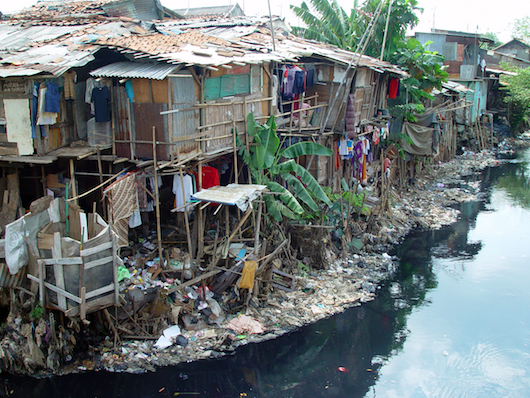
Rapid urbanization and population growth will amplify global inequities if development initiatives are not inclusive of the poor and vulnerable. The Asian Development Bank (ADB) developed Strategy 2020, a long-term framework, 2008-2020, committed to inclusive development and livable cities. In Asia, one-third of the population resides in slums (ADB). UN Habitat defines slums as as:

“a group of individuals living under the same roof who lack one or more (in some cities, two or more) of the following conditions: security of tenure, structural quality and durability of dwellings, access to safe water, access to sanitation facilities, or sufficient living area.” (ESCAP, 2008)


Katchi-Abadis-Slums

South Asian Slum

The conditions that define a slum coincide with human rights violations, such as the human right to water and security. On the other hand, Asia, with the People’s Republic of China and India, lifted 125 million people out of slum conditions. However, rapid urbanization and population growth have contributed to an increase of the worlds slums. Addressing the needs and challenges of the poor requires direct interventions within slums. This requires greater inclusion of the poor in city planning and development initiatives. Amartya Sen asserts that the removal of poverty, poor economic opportunities, and systemic social deprivation is fundamental for development. Sen further determines that income cannot be the sole measurement of capability deprivation, and handicaps, such as age or illness, can further inhibit one’s ability to translate income into capabilities. The capability lens should be used when implementing programs in creating more inclusive and livable cities.

References:

UN-HABITAT. 2010. State of the World’s Cities: Bridging the Urban Divide 2010/11. UK–USA: Earthscan. p. x.

United Nations Economic and Social Commission for Asia and the Pacific (ESCAP). 2008. Statistical Year Book for Asia and the Pacific